
Last updated November 15, 2026
 Wrought iron
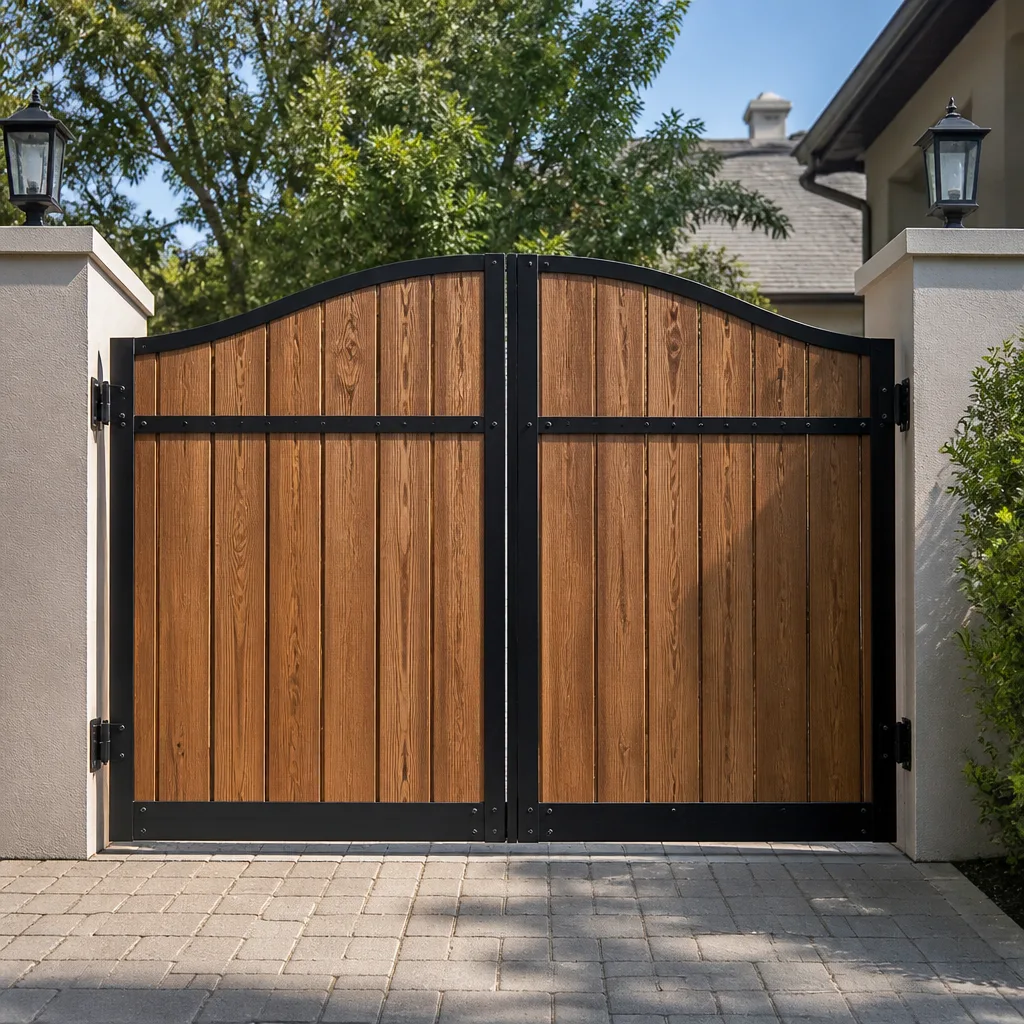 Wood & steel frame
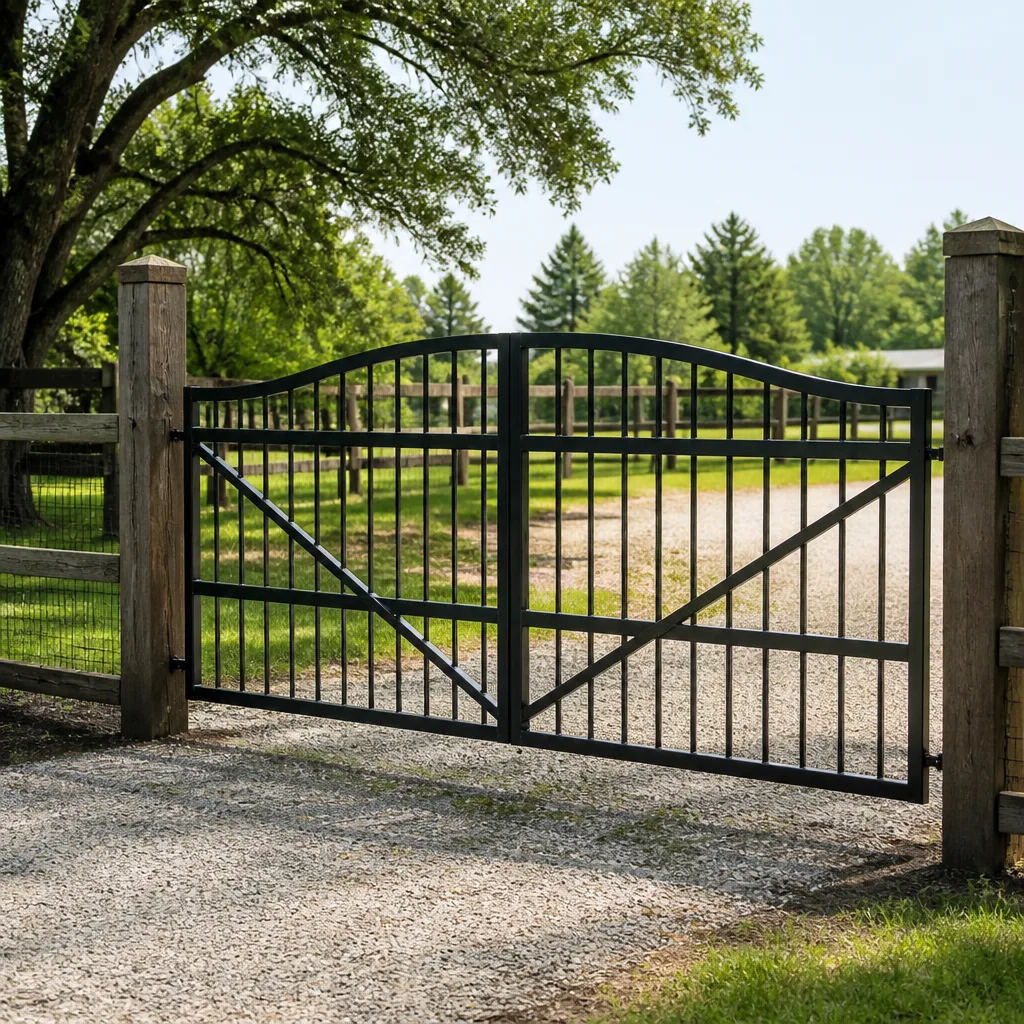 Farm & ranch
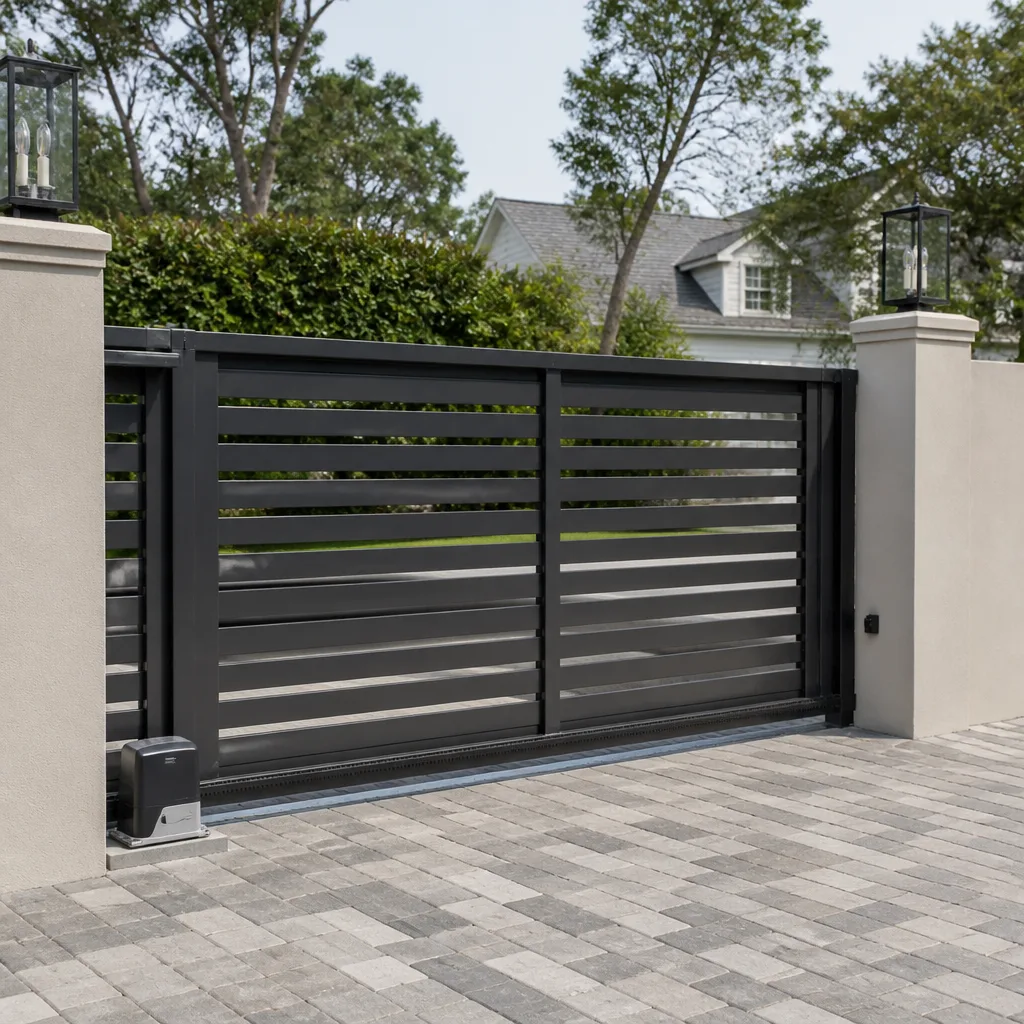 Sliding driveway gates
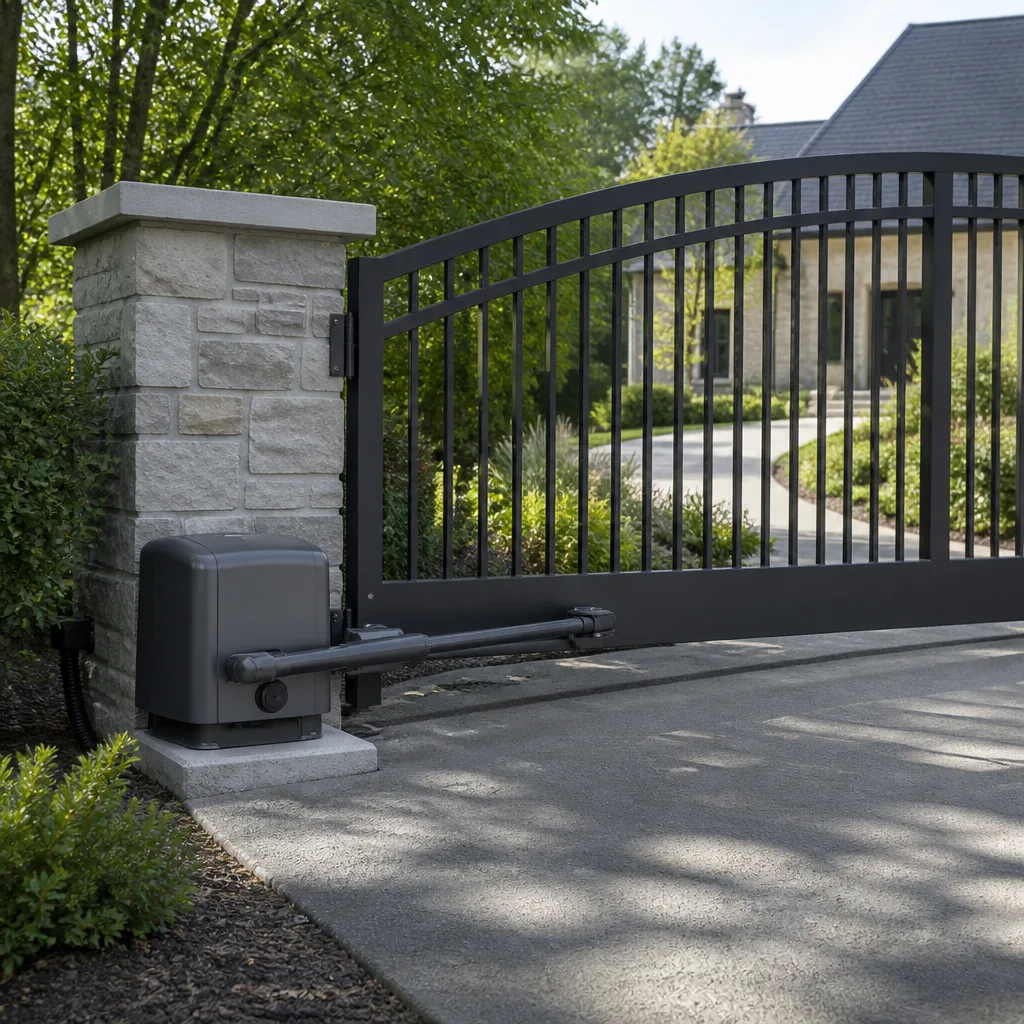 LiftMaster operators
Free on-site gate assessment - hinges, posts, and your LiftMaster or Nice gate operator checked before anything is quoted
The assessment is free and the quote is the invoice.
Get your free estimateDIY vs Professional Gate Repair: The Lehigh Acres Homeowner’s Decision Guide
Most gate advice online treats DIY versus professional as a question of nerve. It isn’t. The real dividing line is which layer of the gate you’re touching. Changing the open and close limit on a residential operator is a legitimate five-minute job with a flathead screwdriver. The same operator’s control board runs on 120V or 240V, and opening that housing without isolating the power first has put homeowners in the emergency room. A gate is a mechanical system sitting on top of an electrical system, and those two categories carry different risks, different warranty rules, and in Florida, different legal requirements. This guide draws that line precisely, so you spend your Saturday on the tasks that are genuinely yours and call a specialist for the ones that aren’t. We’ll cover what you can safely handle around Lehigh Acres, what voids a warranty, what Florida law says about operator wiring, and what a failed DIY attempt really costs.
Quick Answer
Homeowners can safely handle the mechanical and low-voltage side of gate maintenance: lubrication, limit adjustment, remote re-pairing, obstruction clearing, and visual inspections. Anything involving the 120V or 240V supply, the control board’s line-voltage terminals, buried wiring, or a heavy panel that has come off its track belongs to a licensed professional. The dividing line isn’t skill, it’s which layer of the system you’re touching.
Styles & brands we work with
- Wrought iron
- Wood & steel frame
- Farm & ranch
- Sliding driveway gates
- LiftMaster operators
Table of Contents
- What homeowners can safely do themselves
- What requires a professional
- Which tasks void manufacturer warranties
- How Florida electrical licensing applies to gate operators
- The hidden cost of a DIY attempt gone wrong
- The tools a Lehigh Acres homeowner should own
- Why Lehigh Acres conditions matter for gate wear
- Repair first, replace only when it makes sense
What Homeowners Can Safely Do Themselves
There’s a real DIY tier of gate ownership, and it’s bigger than most people think. None of it requires opening an electrical enclosure. All of it extends the life of the gate and the operator. The tasks below are the ones we routinely tell callers to try before booking anyone, because a surprising share of “my gate stopped working” calls are actually a dead remote battery or a branch sitting on the safety sensor.
- Lubricate the hinges and rollers. On a swing gate, a few drops of silicone or lithium-based lubricant on each hinge pin once a season keeps the panel moving freely and takes load off the operator. On a slide gate, clean and lubricate the track and the rollers. Skip the grease on the track itself, it attracts grit.
- Adjust the open and close limits. Most residential operators have two limit screws or a programming menu that sets how far the gate travels in each direction. A gate that stops short or slams hard is often just out of adjustment. This is a screwdriver-and-manual task.
- Re-pair a remote. Remotes lose their pairing after a battery change or a power interruption. Every brand does this slightly differently, but it’s a documented button sequence on the operator, not a repair.
- Clear obstructions. A single palm frond or a chewed toy resting against a safety sensor will stop a gate cold. Walk the arc of travel and check both photo-eyes before you assume the motor has failed.
- Visual inspection. Look for cracked hinges, loose bolts, sagging panels, and rust points. Catching a worn hinge before it fails saves the operator a lot of strain.
None of these tasks require a permit, a license, or a technician. They’re the equivalent of checking your oil. If you’re in Lehigh Acres and the gate moves but behaves oddly, work through this list first. It’s free, and it resolves more problems than you’d expect.
What Requires a Professional
Now the other side of the line. Everything below involves either line voltage, structural risk, or a component that can injure someone if it fails under load. These are the jobs where “I’ll watch a video” is a bad plan. We say that as a company that would happily take fewer emergency calls.
- Anything touching the 120V or 240V supply. That includes the disconnect, the breaker, the line-voltage terminals on the control board, and the buried conduit running out to a driveway operator. Gate operators in Florida are typically fed from a dedicated circuit at the house or a pedestal near the gate, and that wiring is electrical work.
- Control board diagnosis and replacement. The low-voltage logic side of the board looks harmless, but it sits inches from live line terminals on most models. A board that’s burned, water-damaged, or giving a fault code needs a technician who knows the brand’s diagnostic sequence. FAAC and BFT boards, for example, read faults in ways that don’t match a LiftMaster or Linear board at all.
- Safety sensor and photo-eye troubleshooting beyond cleaning. If the sensors are aligned and clean and the gate still reverses, the problem is usually in the wiring or the board, not the sensor head.
- A gate panel off its track or a broken hinge under load. A sliding gate panel weighs hundreds of pounds. A swing gate under wind load can swing with real force. Never try to brace or lift a heavy panel alone.
- Operator mounting and replacement. A new operator has to be aligned to the gate’s actual travel, and a misaligned arm will destroy itself in a few months.
- Any work on a commercial access system. DoorKing and similar commercial-grade systems on multi-unit properties have more wiring, more inputs, and more safety requirements. They’re never a homeowner task.
If you’re in Lehigh Acres and you’re unsure which side of the line your problem falls on, describe it over the phone and we’ll tell you honestly whether it’s something you can handle.
Which Tasks Void Manufacturer Warranties
Warranty terms vary by brand, and they matter more than most homeowners realize. The general rule across the industry is that a warranty covers defects in materials and workmanship, not damage caused by improper installation, unauthorized repair, or modification. What counts as “unauthorized” is where the brands diverge, and we can’t speak for every policy. But the pattern is consistent enough to be useful.
- Opening the operator housing on some brands is grounds to void coverage if the failure is inside the housing. If you’re still within the warranty window, check the manual before you unscrew anything.
- Changing the control board or motor with a part that isn’t the OEM part almost always voids coverage on the affected component. Third-party boards are common, and some of them work, but they change the warranty equation.
- Rewiring the operator’s inputs outside the manufacturer’s diagram voids coverage on the electrical side without argument. This is also the exact task Florida licensing rules address, so the warranty point is almost secondary.
- Adjusting limits, lubricating, and re-pairing remotes are considered normal maintenance by every brand we work with. They don’t void anything.
LiftMaster and Viking handle warranty claims differently in practice, and so do the other lines we service. We work on the brand you already have, so we know which parts are OEM and what documentation a warranty claim needs. If your operator is still under coverage and something inside it has failed, that’s a strong argument for having a technician look at it before you touch the housing.
How Florida Electrical Licensing Applies to Gate Operators
Florida regulates electrical work, and a gate operator’s power supply falls under that regulation. The practical meaning for a homeowner is straightforward: the 120V or 240V circuit feeding the operator, the disconnect, the conduit, and any buried line from the house is work that has to be done by a licensed electrical contractor or an appropriately licensed specialty contractor. A homeowner doing their own maintenance inside their own home is a different category from an unlicensed person doing electrical work for hire, and the rules are built around who is doing the work and for whom. When in doubt, call your local building department and ask. They answer this question all day.
Here’s the part that catches people: “not a permit-required project” doesn’t mean “not regulated.” Many routine repairs and replacements don’t require a permit, but they still fall under licensing rules. A permit is about the building department’s inspection of the work. A license is about who is legally allowed to perform it. Those are two different questions, and passing the first doesn’t resolve the second.
For a Lehigh Acres homeowner, the practical takeaway is this: if the job involves the line-voltage side of the operator, it’s not a DIY task regardless of permit status. If it involves the low-voltage inputs, the mechanical adjustment, or the gate hardware, it usually is. For those wiring jobs we can order an electric gate repair so the work is handled correctly the first time.
The Hidden Cost of a DIY Attempt Gone Wrong
The bill for a failed DIY attempt isn’t just the cost of the actual repair. It’s the diagnostic time a technician has to spend untangling what was done before the original problem can be addressed. When a homeowner has swapped a board, moved a wire to the wrong terminal, or left a limit screw far out of position, the first job on our end is figuring out what changed. That takes time, and time is what you’re paying for.
There’s also the cascade cost. A misadjusted limit can drive a gate into its stop and stall the motor, which shortens the life of the operator. A board wired wrong can take out a sensor. A gate braced badly during a DIY repair can bend a track that then has to be replaced. Each of those is a larger repair than the one the homeowner started with.
And there’s the safety side. A gate that reverses incorrectly, or doesn’t reverse at all, is a real hazard to a child, a pet, or a vehicle. Safety sensors exist because gates have injured people. If you’re not confident in what a repair does to the safety circuit, don’t do the repair.
We’re not interested in scaring anyone off maintenance. We’d rather you lubricate your hinges every season and call us when something’s actually wrong. The honest cost comparison is between a small professional repair and an untangling job that started as a small professional repair and grew.
The Tools a Lehigh Acres Homeowner Should Own
The tools you keep in the garage tell you a lot about which tier of maintenance you’re realistically doing. These are the ones worth owning for gate upkeep. None of them cost much, and all of them are useful for other jobs too.
- Flathead and Phillips screwdrivers in a couple of sizes. Limit screws, terminal covers, and sensor brackets all use them.
- A small adjustable wrench. Hinge bolts, sensor mounts, and mounting brackets.
- Silicone or lithium-based lubricant. The right choice for hinges and rollers.
- A soft brush and a rag. For clearing the track and wiping sensors.
- A multimeter. Useful for checking whether a battery in a remote or a backup battery is holding charge. Low-voltage testing only, never line voltage.
- The operator manual. Every brand documents limit adjustment and remote pairing. Have it, and read the safety section.
On the other side, there are tools that signal you’ve crossed into professional territory: a clamp meter for reading current draw, an insulated screwdriver set rated for electrical work, wire strippers, a torque wrench for mounting bolts, and anything that requires opening a line-voltage enclosure. If you find yourself shopping for those to fix a gate, stop shopping and call someone. We’ll give you a free estimate and an honest read on what the gate actually needs.
Why Lehigh Acres Conditions Matter for Gate Wear
Southwest Florida is hard on gate hardware in specific, predictable ways. The heat and humidity alone accelerate wear on lubricants and rubber components. The rainy season means standing water and saturated ground near gate posts, and a gate that sits in wet soil year after year can shift out of plumb. That’s one reason limit settings drift on gates in Lehigh Acres: the gate itself has moved, not the operator.
UV exposure is the other factor. Rubber seals on sensors and operator housings crack over a few summers, and a cracked housing is an entry point for water. Palms and oaks drop debris that clogs slide tracks and blocks photo-eyes, and the afternoon storms drop enough water at once to find every gap in a seal. None of that is a defect; it’s a maintenance rhythm. Cleaning the track and checking the sensor alignment after storm season is more useful here than it would be in a drier climate. If you’re up in the northern parts of Lehigh Acres with more open lots, wind-blown dirt is an additional problem for slide tracks.
The takeaway for the DIY tier: in this climate, lubrication and track cleaning aren’t optional. They’re the cheapest maintenance you’ll ever do. For the professional tier, worn seals and water intrusion in the control enclosure are the most common failure routes, and those are jobs to schedule before the rainy season, not after the gate stops.
Repair First, Replace Only When It Makes Sense
When an operator fails, the first question is always whether to repair it or replace it. Our default is to repair. Most gate failures are a single component: a control board, a motor, a sensor, a hinge, a limit switch. Those are fixable, and fixing them is usually the cheaper and faster path. Replacement enters the conversation only under specific conditions, and it’s worth knowing them before you call.
- The operator is obsolete. Parts are no longer available for the model, and the alternatives don’t fit the existing mount.
- The failure has been recurring. Three motor failures in two years usually means the operator is undersized or the gate itself is binding, and a new operator matched to the gate is the right answer.
- The gate is changing. Renovating the entryway, widening the opening, or moving from a swing to a slide changes what the operator needs to be.
- Safety compliance requires it. If the existing operator can’t be made to reverse correctly or can’t run the required safety sensors, replacement may be the only compliant option.
Everything else, in our experience, is a repair. We handle repair and installation under one roof, so the same team that diagnoses the problem can tell you which way makes sense for your gate. You’ll get a straight answer, not an upsell. For a broader look at what we cover, see gate repair.
Common Mistakes to Avoid
- Opening the line-voltage enclosure without isolating power. Turn off the breaker at the panel, not just the operator switch. The operator switch doesn’t always kill line voltage at the terminals.
- Buying a “universal” control board. Most of them aren’t. A board that doesn’t match the operator’s logic will fault immediately or, worse, behave erratically.
- Skipping the manual on an unfamiliar brand. A FAAC, a BFT, and a Linear operator don’t share the same programming sequence, and pushing the wrong combination on a BFT board can lock it into installer mode.
- Spraying grease on a slide gate track. It attracts grit, which wears the rollers faster than a dry track. Use the manufacturer’s recommendation.
- Ignoring a reversing gate. If the gate reverses on nothing, or doesn’t reverse at all when it should, that’s a safety circuit failure. Stop using the gate until it’s fixed.
- Assuming a permit-required or permit-free status settles the licensing question. It doesn’t. The two are separate, and the electrical side is a licensing question.
- Bracing a heavy panel alone. A sliding gate off its track is a two-person job with proper equipment. It’s not a homeowner task with a floor jack.
See the difference
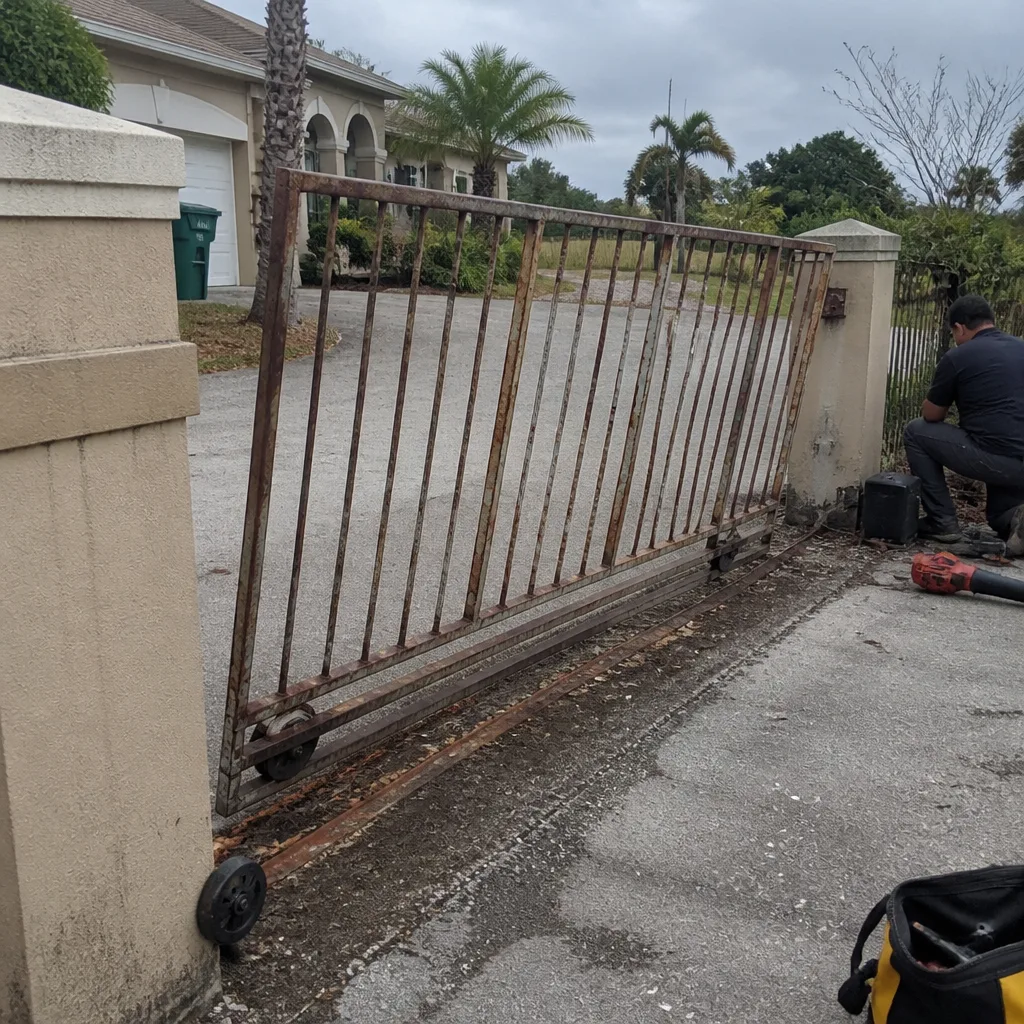 Before
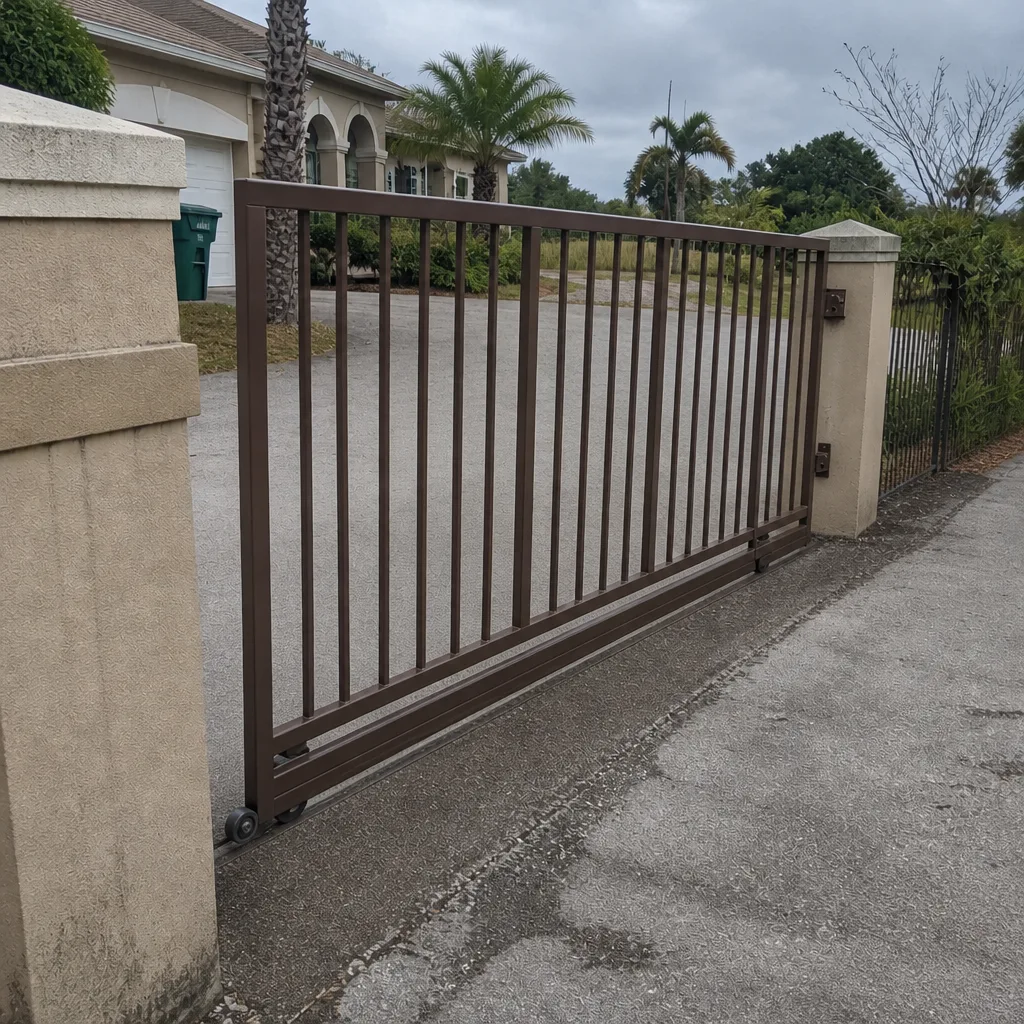 After
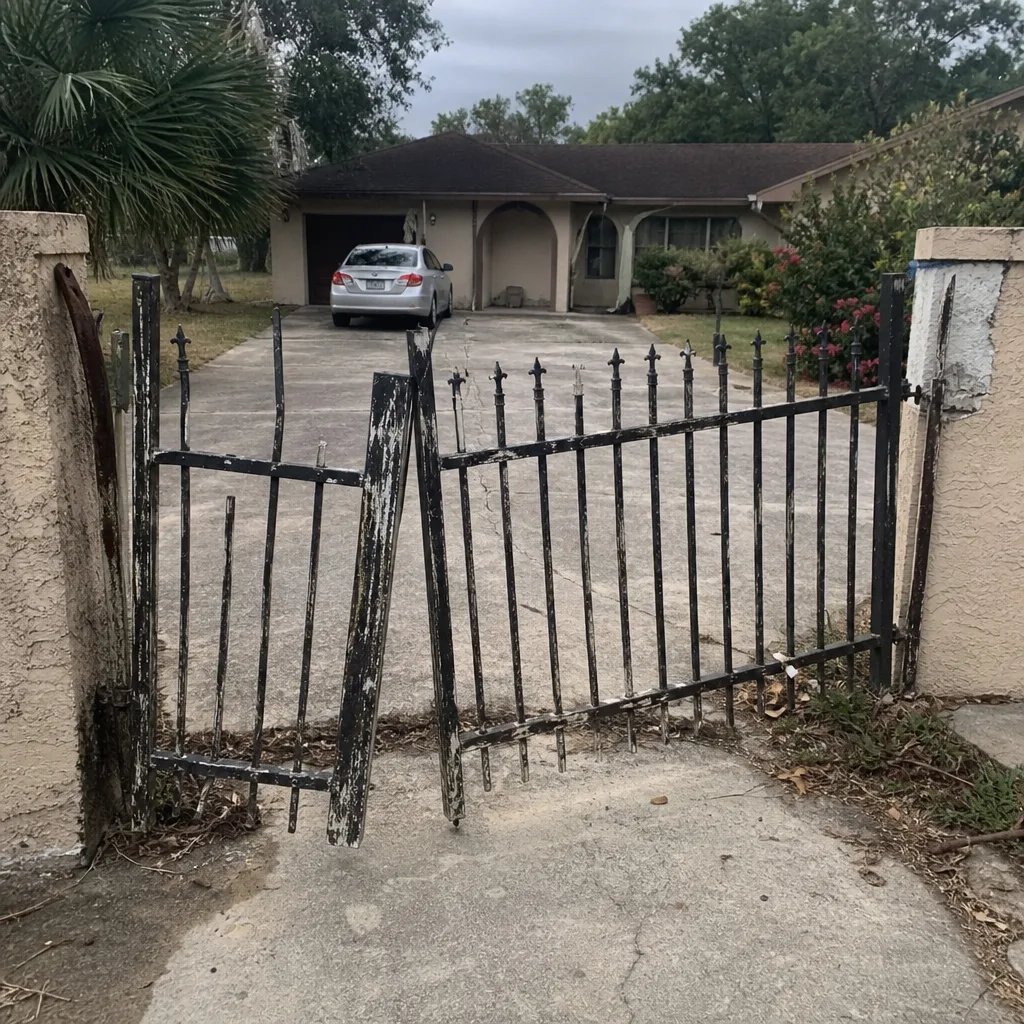 Before
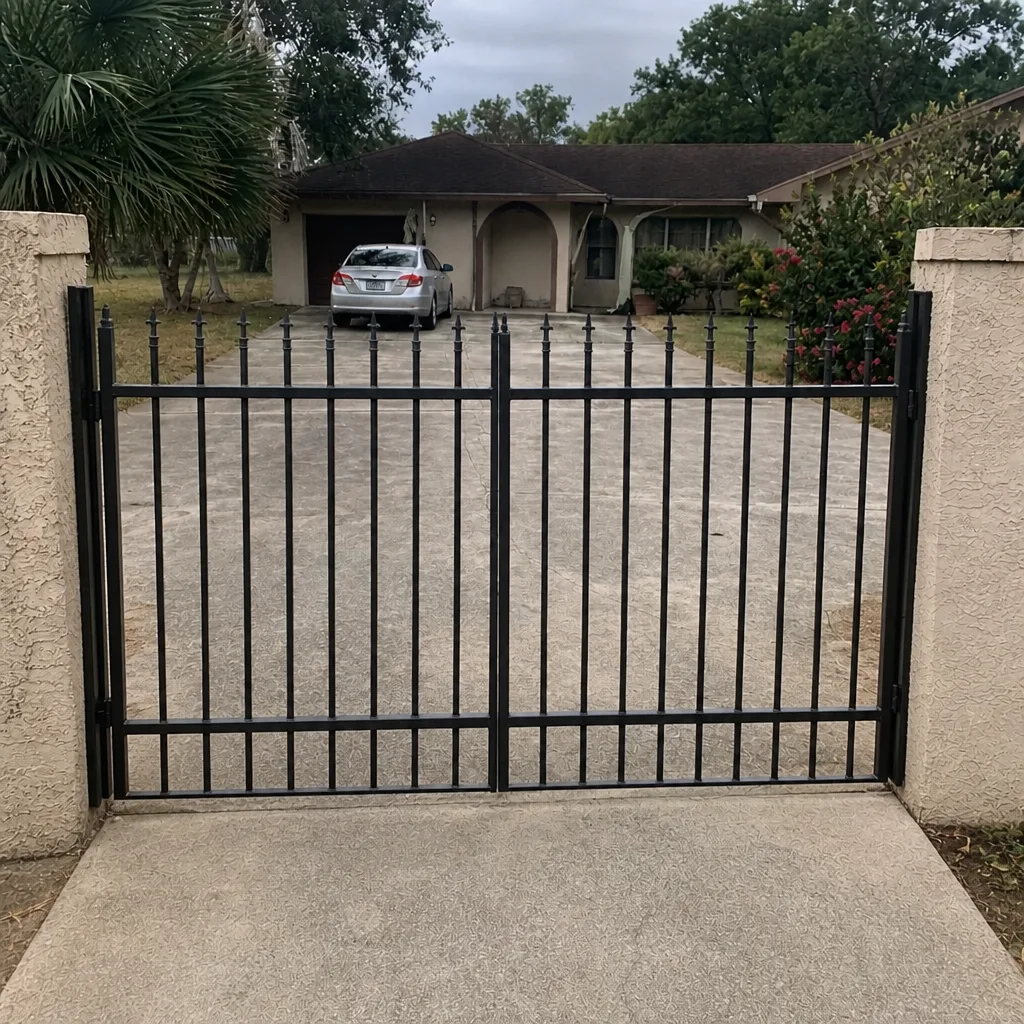 After
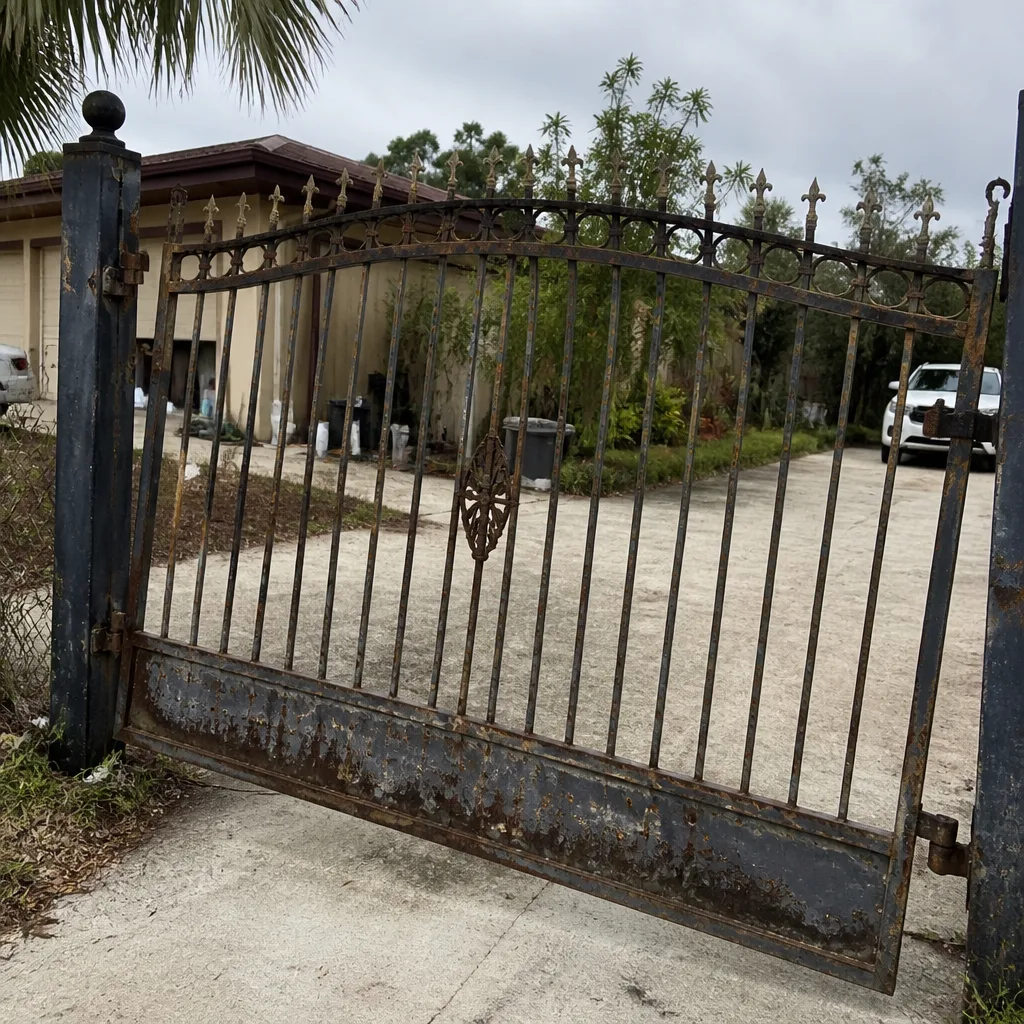 Before
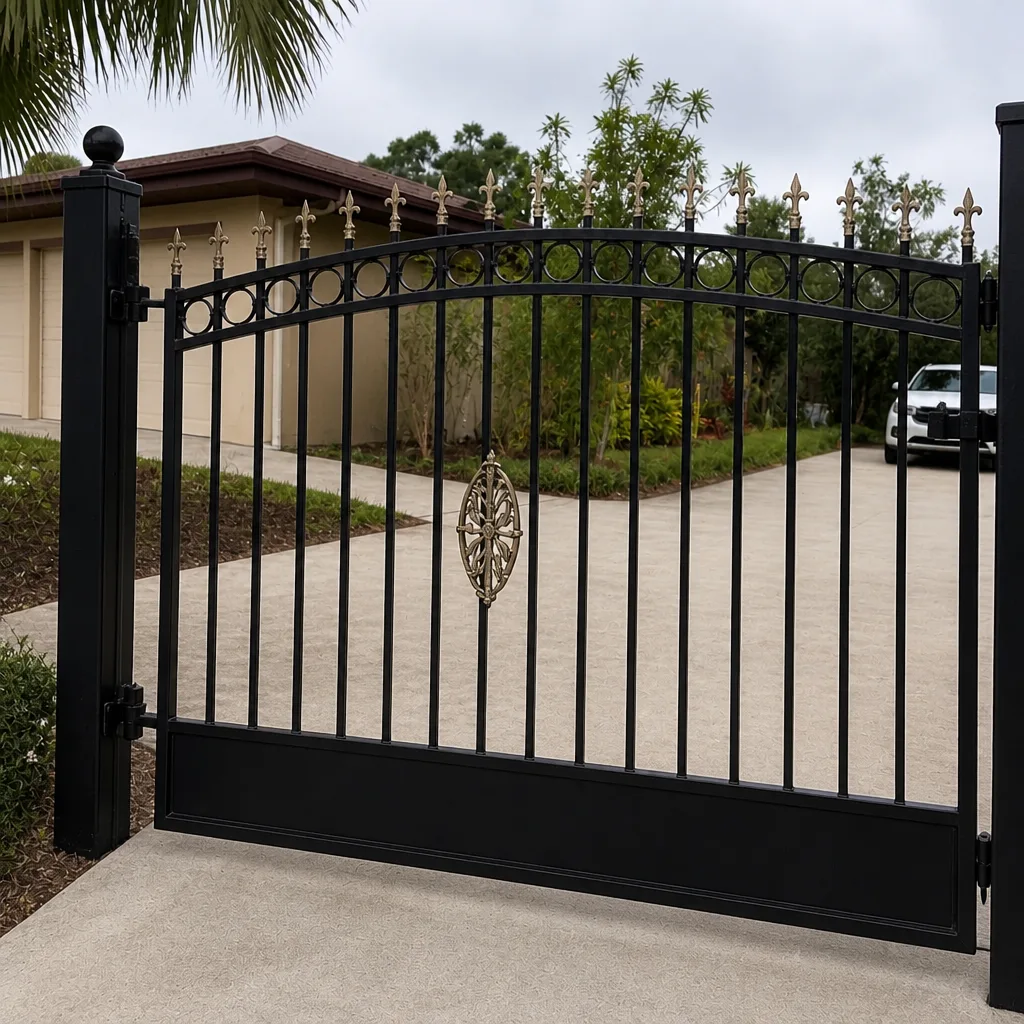 After
When to Call a Professional
Call a professional when the problem is inside the operator housing, when it involves the 120V or 240V supply or the wiring running out to the gate, when a control board is faulting, when the gate reverses incorrectly or won’t reverse at all, or when a heavy panel has come off its track. Call when a LiftMaster, Viking, Linear, or any other branded operator is behaving in a way the manual can’t explain. Call before rainy season if your operator enclosure has been taking on water. And call if you’ve tried the DIY tier and the gate is still misbehaving. Gate Repair Lehigh Acres offers free estimates in Lehigh Acres. We answer 24/7, with fast dispatch from 7am to 7pm, Sunday through Friday. Call (888) 361-0704.
Frequently Asked Questions
Yes, on most residential operators, adjusting the open and close limits is a legitimate DIY task. You use a screwdriver or a programming menu on the operator, working from the manual. The task stays safe because you never open the line-voltage enclosure. If the manual calls for opening the housing to reach the limit screws, that crosses into professional territory.
That depends on your local building department, so ask them directly. What we can say is that the permit question and the licensing question are separate. A project can be permit-exempt and still require a licensed electrical contractor for the line-voltage work, and gate operator wiring is electrical work. Call your city’s building department for the current rules on your specific job, then call (888) 361-0704 for a free estimate on the work itself.
Not if you stick to the maintenance tier: lubrication, limit adjustment, and remote pairing. Those are considered normal upkeep by every brand we work with. Opening the operator housing, changing the motor or control board with non-OEM parts, or rewiring the operator’s inputs is where warranties tend to get voided, and the specifics differ between LiftMaster, Viking, and the other brands. Check your manual before you go past the maintenance tier.
Water intrusion is the most common cause of season-specific gate failures in this climate. A cracked sensor seal, a housing gasket that’s UV-dried, or a poorly sealed conduit is enough to let in water and short a board or a sensor. The fix is usually a seal or a component replacement, not a new operator. Have a technician look at the enclosure and the sensor heads before the next storm front arrives.
A mechanical problem is in the gate itself or the moving parts of the operator: a binding hinge, a sagging panel, a worn roller, a bent track. An electrical problem is in the power supply, the wiring, the control board, the sensors, or the motor. The two often look the same from the driveway. A gate that stops halfway could be a limit setting, a binding hinge, a failing board, or a sensor fault. Diagnosing which layer is where a brand-familiar technician saves you money.
In most cases, yes. We work on LiftMaster, FAAC, BFT, Linear, Viking, Ghost Controls, DoorKing, Elite, and Mighty Mule systems, from residential swing-arm openers to commercial-grade access systems. If you have a brand outside that list or a very old model, describe it over the phone and we’ll tell you honestly whether we can help. Call (888) 361-0704 and we’ll figure it out together.
The Bottom Line
The DIY versus professional decision for gate repair comes down to which layer of the system you’re touching. Lubrication, limit adjustments, remote pairing, obstruction clearing, and visual inspection are yours, and doing them regularly will extend the life of any gate in Lehigh Acres. Line-voltage wiring, control board replacement, safety circuit work, and heavy panel handling belong to a professional, both for safety and because Florida’s electrical rules treat that work differently. Trying the first tier is smart. Crossing into the second tier usually costs more than calling. If you’re not sure where your problem sits, call (888) 361-0704 for a free estimate. We answer 24/7, with fast dispatch from 7am to 7pm, Sunday through Friday.
Written by the team at Gate Repair Lehigh Acres.