
Last updated November 15, 2026
 Wrought iron
 Wood & steel frame
 Farm & ranch
 Sliding driveway gates
 LiftMaster operators
Free on-site gate assessment - hinges, posts, and your LiftMaster or Nice gate operator checked before anything is quoted
The assessment is free and the quote is the invoice.
Get your free estimateGate Repair Warning Signs: A Lehigh Acres Homeowner’s Reference Guide
A gate that grinds only on cold mornings, rare in Lehigh Acres but possible in a January cold snap, almost always points to a failing capacitor in the motor rather than a mechanical obstruction. Yet most owners spend hours clearing brush and inspecting the track, looking for a physical cause that isn’t there. From the driveway, one faulty symptom looks much like another. This guide teaches you to read the pattern instead of the symptom, so you know which system is talking to you and when a gate should be shut down before someone gets hurt.
Quick Answer
Gate repair warning signs cluster into three groups: mechanical (grinding, dragging, uneven travel), electrical (random stops, dead remotes, blown fuses), and safety (a gate that won’t reverse, a broken safety edge, erratic limit stops). A consistent symptom that repeats at the same point every cycle points to a mechanical or setting issue, while a random symptom points to electrical or control-board trouble. Any gate that fails to reverse on contact should be taken out of service immediately and inspected by a trained technician.
Styles & brands we work with
- Wrought iron
- Wood & steel frame
- Farm & ranch
- Sliding driveway gates
- LiftMaster operators
Table of Contents
- How to Read a Symptom Pattern
- Swing-Arm vs. Slide Gate: Different Gates, Different Failures
- Battery Backup vs. Control Board: Telling Them Apart
- Visual Signs You Can Spot from the Ground
- Signs That Mean Shut It Down Now
- Signs You Can Schedule a Non-Emergency Repair
- Seasonal and Climate Factors in Lehigh Acres
- When Repair Stops Making Sense
How to Read a Symptom Pattern Before You Call
The single most useful thing you can do before calling for gate repair is to describe the pattern, not just the symptom. A gate that hesitates at the same spot every time tells a technician something very different from one that stops at random. Both look identical from the driver’s seat, but the diagnosis branches in opposite directions.
Use this symptom matrix to narrow things down. Each combination points toward a specific family of problems.
Intermittent vs. Consistent Failure
- Consistent at the same point: mechanical obstruction, worn hinge, misaligned limit switch, or a damaged tooth on a rack. The gate travels fine until it hits a specific physical spot.
- Consistent every cycle but at varying points: a control-board logic fault or a slipping drive clutch. The gate moves but can’t complete the same sequence twice.
- Intermittent and random: power issues, loose wiring, a failing capacitor, or a remote receiver picking up interference. The fault is electrical and heat, load, or a bad connection triggers it.
- Intermittent only in hot weather: a capacitor or thermal overload in the motor. Components that struggle with heat show it first in the afternoon.
Directional vs. Full Failure
A gate that opens but won’t close (or closes but won’t open) almost always has a directional logic issue: a bad limit switch on one side, a blocked safety sensor, or a stuck reversing edge. A gate that fails in both directions has a power, motor, or control-board problem. That difference alone saves a technician diagnostic time and gets you a straight answer faster. It also tells you whether the gate is safe to leave partly open for now or should be latched manually.
Electrical vs. Mechanical Sounds
Listen from a few feet away. A mechanical sound has a physical texture: grinding, scraping, a thud, a click at a specific point. An electrical problem sounds smoother but wrong: the motor hums and doesn’t move, the gate tries to start and gives up, or the operator clicks but never engages. If the motor is silent when you press the remote, the problem is upstream of the motor. If the motor hums without moving, the problem is at the motor or in the drive. Our technicians have up to 14 years of experience reading exactly these patterns, and it’s the fastest way to skip the guesswork.
Swing-Arm vs. Slide Gate: Different Gates, Different Failures
Swing-arm and slide operators fail in fundamentally different ways, and knowing which you have changes what you should inspect first. A swing gate rotates on hinges; a slide gate travels on rollers and a track. The wear points, the sounds, and the small repairs belong to two separate lists.
Swing-Arm Operator Warning Signs
- Jolting or surging in the first few inches: the arm is binding against the gate, or the hinge has dropped and the geometry has shifted.
- Straining near fully open or fully closed: the limit switch is set slightly too far, so the operator pushes against a stop it can’t see.
- A drooping gate that drags the ground: hinge wear or a settled post, not an operator fault. Replacing the operator won’t fix it.
- Audible click then a delayed start: a capacitor on its way out, common on older LiftMaster and Ghost Controls units.
Slide Gate Operator Warning Signs
- Grinding or squealing along the ground: worn rollers or debris packed in the track. In Lehigh Acres, sand, leaf litter, and storm runoff regularly foul tracks.
- The gate climbing the track or jumping off: a bent track, a misaligned roller, or a foundation that has shifted. This is a genuine safety issue because a heavy gate can come down or swing off.
- Sluggish travel on one section: a warped rack or a worn pinion gear on the motor. Linear and Viking slide operators often show this first.
- The gate stops and reverses partway: a safety sensor is being triggered by a shadow, a plant, or a misaligned reflector at the same point each pass.
We’ve seen too many slide gates where a homeowner was told the operator was dead and it turned out to be a $40 roller. From the motor to the hinge, the whole gate has to be looked at, not just the box bolted to the post.
Battery Backup vs. Control Board: Telling Them Apart
These two failures produce almost identical symptoms, and that’s why so many gates get the wrong repair. A dying battery backup and a failing control board both leave you with a gate that opens slowly, stops halfway, or behaves normally one day and dead the next. The difference in cost is real: a battery is a routine replacement, while a control board is a genuinely significant repair. Getting the call right matters.
Use this numbered sequence to separate the two:
- Check whether the gate behaves differently with the battery disconnected. If the operator runs normally on AC power alone and only stumbles when the battery is in circuit, the battery is the suspect, not the board.
- Look at the fault LED on the control board. Most brands (DoorKing, Linear, BFT, FAAC) flash a distinct code for battery fault vs. board logic fault. A continuous or rapid flash reads differently than a slow blink.
- Note the timing of the failure. A battery problem shows up during peak load: the heaviest part of the cycle, or the second or third opening in a short window. A board problem is more random and can trigger with no load at all.
- Listen for the relay click. If the board clicks but nothing happens, the board is trying to command the motor and the fault is downstream. If the board won’t click at all, the board itself may be the problem.
Batteries age out on a predictable curve, and heat accelerates it. In Lehigh Acres, battery compartments bake in the sun, so a backup that lasted years in a milder climate can fail faster here. Heat is the single worst enemy of any gate electronics enclosure.
Visual Signs You Can Spot from the Ground
You don’t need tools or a ladder to catch most mechanical problems early. A five-minute walk around your gate once a month will tell you more than a hundred cycles of listening. Watch for these:
- Rust or metal shavings at the hinges: fine grit around a hinge pin means it’s grinding every cycle. It’s cheap to catch now and expensive when the pin seizes.
- A visible gap or lean at the post: a leaning post changes the entire geometry of a swing gate. A gate that used to close flush and now needs a shove means the post moved.
- Track debris and uneven wear on slide rollers: a flat spot or a shiny worn face on a roller means replacement is coming. Sand and leaf litter in Lehigh Acres speed this up.
- Loose or frayed wiring at the operator: any exposed copper, cracked insulation, or a wire pulled taut between the enclosure and the gate is a hazard and a functional fault.
- Sun-faded or cracked safety edges and sensors: UV exposure breaks down rubber and plastic. A cracked reversing edge may look fine and fail on contact.
- A sagging gate that won’t sit level: hinge wear or frame fatigue. Common on older gates after a decade of daily cycles.
Any of these worth a second look is worth a call. We work on the brand you already have, so a Linear or Mighty Mule on a residential driveway gets the same attention as a commercial DoorKing system on a small property.
Signs That Mean Shut It Down Now
Some warning signs require the gate to be taken out of service immediately, not scheduled for next week. These are the patterns where continued use risks injury or serious property damage.
- The gate fails to reverse on contact: a gate that closes on an object or a person without stopping is a life-safety failure. Disconnect power and latch the gate manually until it’s inspected.
- The gate falls or drops: any swing gate that drops at the hinge, or slide gate that comes off the track or climbs it, is a crush hazard. Keep everyone clear.
- Sparking, smoking, or burning smell from the operator: an electrical fault inside the enclosure. Disconnect the breaker immediately; do not open the enclosure yourself.
- A slide gate moving erratically after a storm: water intrusion into the operator, a flooded control box, or a shifted foundation. Do not cycle it to “see if it works.”
- Missing or damaged safety sensors: if a photo-eye has been knocked off its mount or a reversing edge is torn, the gate cannot be trusted to stop.
The wiring and power side of an electric gate is genuinely dangerous, and heavy panels can crush. We recommend a trained technician for anything that involves opening the operator enclosure or diagnosing a live circuit. If your gate has failed in any of these ways, call us and we’ll take it seriously.
Signs You Can Schedule a Non-Emergency Repair
Not every warning sign is a shutdown. Several patterns let you keep using the gate normally while you book a repair in the next few days.
- Grinding or squealing that hasn’t caused a failure: track debris or a dried hinge. Keep using it, but get it looked at before the wear gets worse.
- A remote that works only when you’re close: a dying remote battery or a degraded receiver. Annoying, not dangerous.
- One remote that fails while others work: the remote itself, not the gate. Easy to resolve at the next visit.
- Slow or hesitant travel with no reversal failures: a worn drive or a weak capacitor showing early. Get it on the schedule before it strands you.
- Cosmetic rust or faded paint that hasn’t reached structural parts: worth noting, but not an urgent fix.
The general rule of thumb: if the gate still reverses correctly on contact, still travels the full path, and settles cleanly, it’s safe to use while you schedule the repair. If any of those three breaks down, shut it off. Calling a specialist for electric gate repair while the gate still works beats calling after it strands you at the driveway with the car outside.
Seasonal and Climate Factors in Lehigh Acres
Lehigh Acres winters are mild, and that changes how some warning signs present. A gate that grinds only on a cold morning (rare but possible in January) is usually a capacitor that struggles in lower temperatures. That’s an internal electrical fault, not a mechanical one, even though the sound suggests otherwise. Owners often clear brush for hours looking for a physical cause that isn’t there.
The bigger seasonal driver here is the summer rainy season. Afternoon storms deliver fast, heavy water that gets into the wrong places:
- Operator enclosures fill with moisture: condensation and water intrusion attack control boards, especially cheap enclosures. A board that works fine in the dry months can start throwing false faults in July.
- Sand and debris pack slide tracks: runoff pushes grit and leaf litter onto the track. A slide gate that suddenly grinds after a storm is almost always fouled, not broken.
- Post settling accelerates with water: a post that was fine a year ago can shift after heavy saturation. Watch for a growing gap under a hinge or a gate that needs a nudge to close.
- Safety sensors get knocked out of alignment: storms bend brackets or move reflectors, and the gate starts reversing partway every cycle.
- Batteries and rubber age faster in the heat: the sun bakes battery compartments and dries out safety edges. Both components fail sooner in Lehigh Acres than they would in a cooler climate.
Our team has worked in these conditions across Lehigh Acres for years, and the pattern is reliable: mechanical wear shows up in late winter, electrical faults show up in late summer after the first heavy rain. Knowing the season tells you where to look first.
When Repair Stops Making Sense
Repair first, replace only when it makes sense. That’s the honest order. But there are warning signs that a gate is telling you a replacement is more cost-effective than another round of fixes. Weigh these when you’re deciding.
- The same control board fails twice within a year: a board that keeps dying is usually showing a downstream fault, and continuing to replace it alone won’t solve the problem.
- Multiple major systems failing at once: if the motor, board, and safety edges are all showing wear together, the total repair can approach the cost of a fresh install.
- A gate with a bent frame or collapsed foundation: if the structure itself is failing, no amount of operator repair will make it safe or reliable.
- An operator discontinued years ago with no parts support: the brand and the model matter here. When the parts chain closes, repair stops being an option.
Because we install as well as repair, we can give you a straight comparison: what it costs to fix what you have vs. what a new system would involve. Nine brands, one specialist. That’s why we can tell you honestly when a Lehigh Acres driveway gate is worth saving and when it’s time to start fresh.
Common Mistakes to Avoid
- Clearing brush before checking electrical fault codes. If the motor hums but doesn’t move, the problem is inside the operator, not in the weeds. Start with the fault LED.
- Assuming a slow gate is a dying motor. It’s often a worn roller, a bad capacitor, or a failing battery. Replacing the motor first is the most expensive way to be wrong.
- Adjusting limit switches when the gate is dragging. A sagging gate on worn hinges trips its limits constantly. Fix the hinge, then the limits.
- Ignoring a gate that reverses on contact. A reversing failure is a life-safety issue, not a nuisance. Shut it down and call a professional.
- Running a slide gate through debris. In Lehigh Acres, a track fouled with sand and leaf litter wears rollers fast. Clean the track before you call it broken.
- Replacing the control board before testing the battery. Both produce similar symptoms, and one is far simpler to fix than the other.
- Assuming any fence company handles electric gates. Gate operators are their own trade, with their own wiring, boards, and safety rules. Ask whether the technician works on gates as their specialty.
See the difference
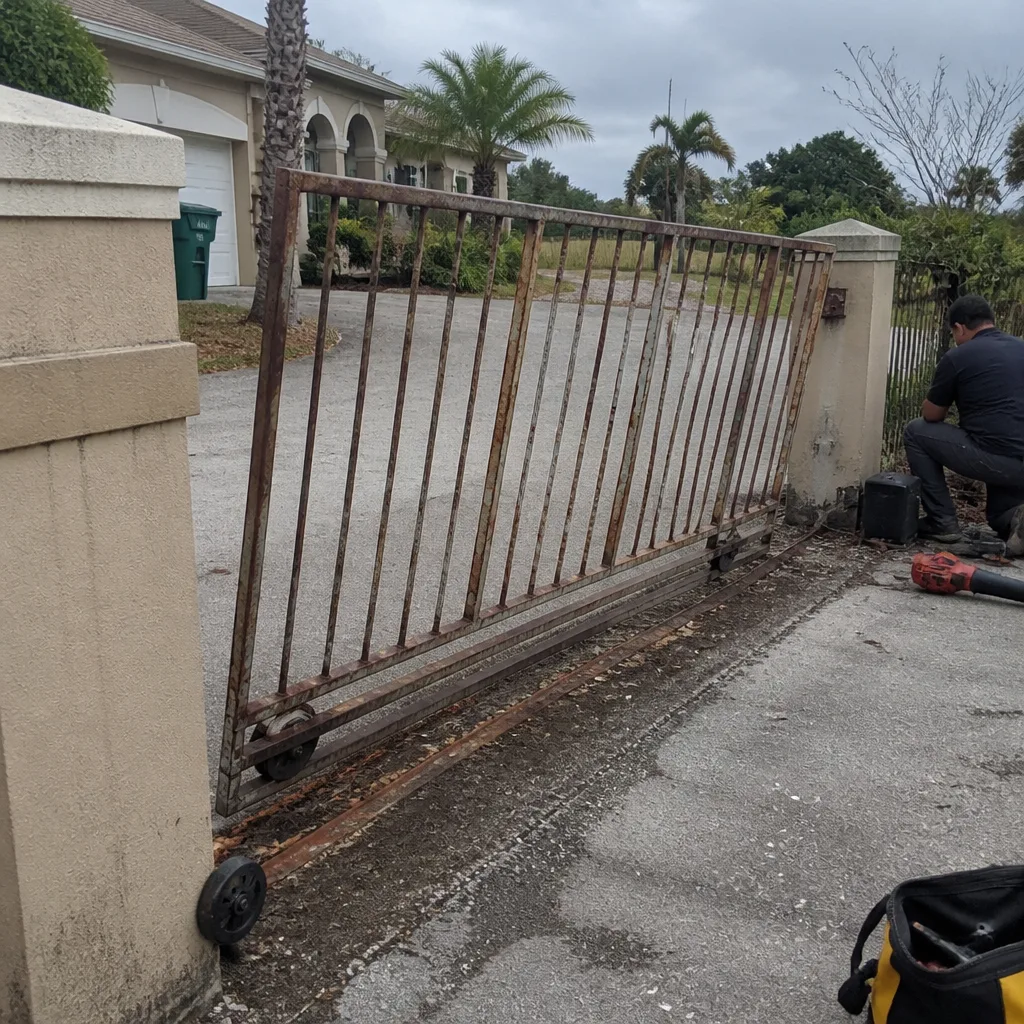 Before
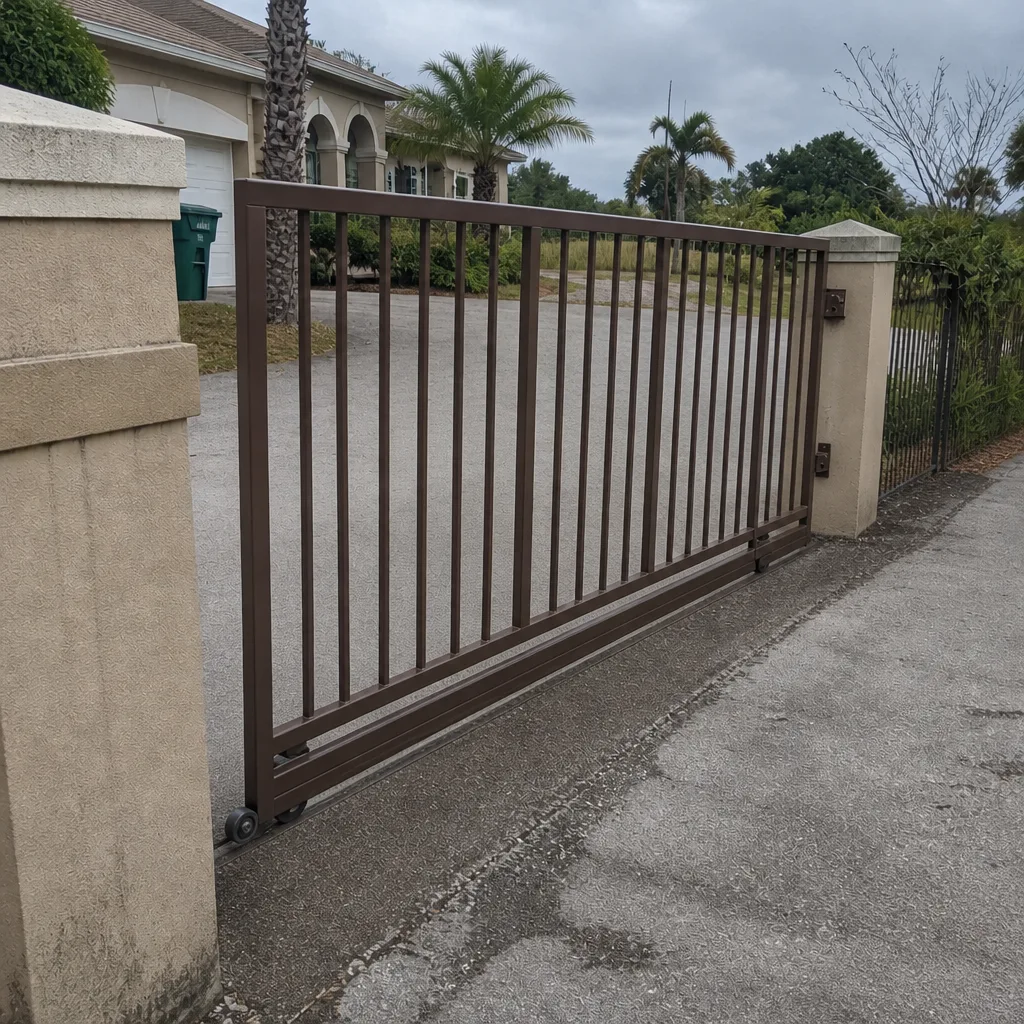 After
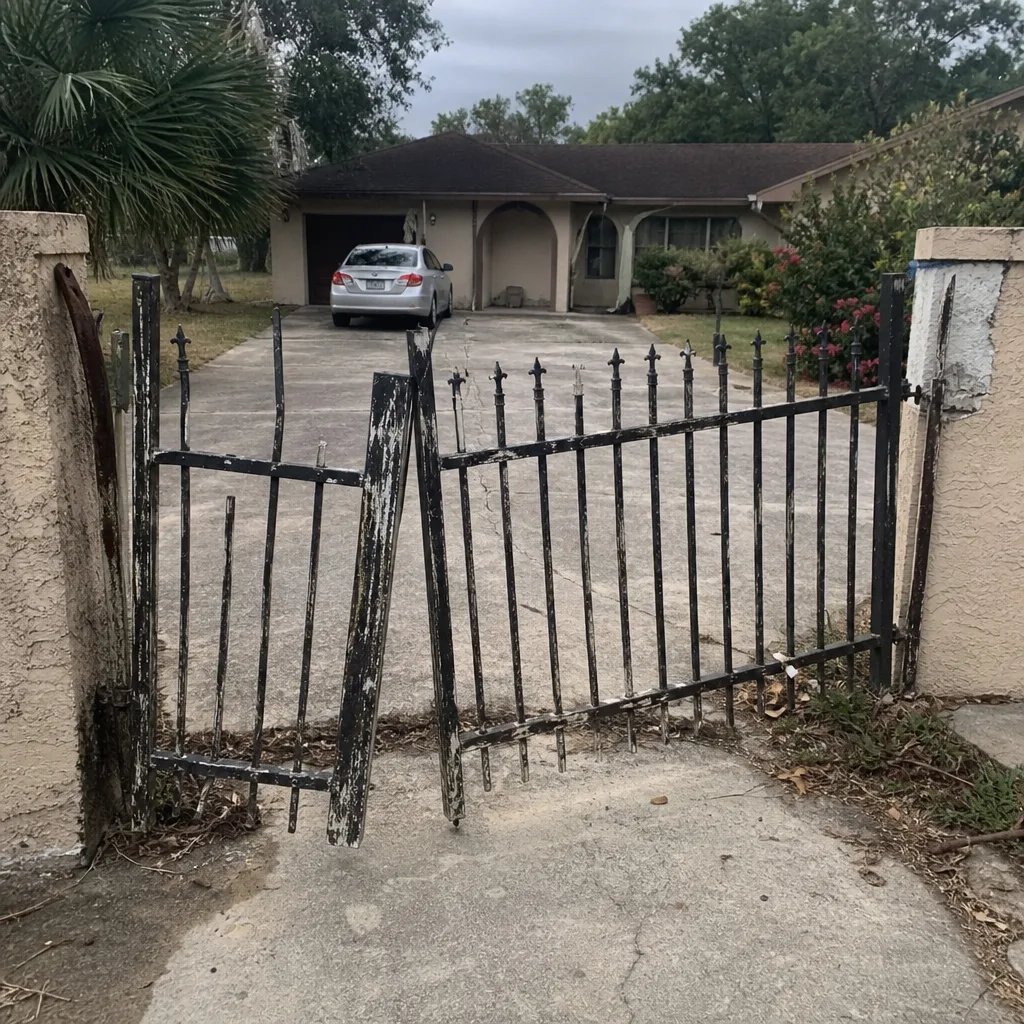 Before
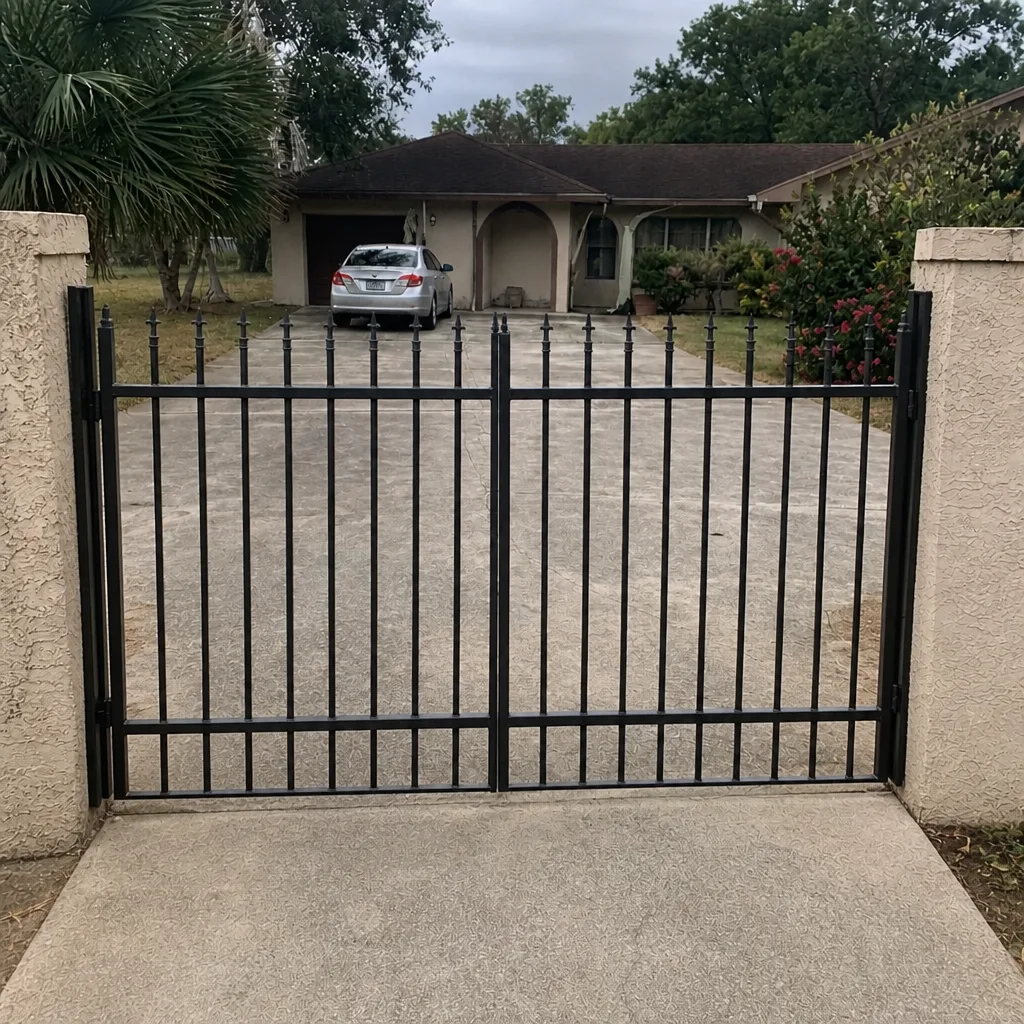 After
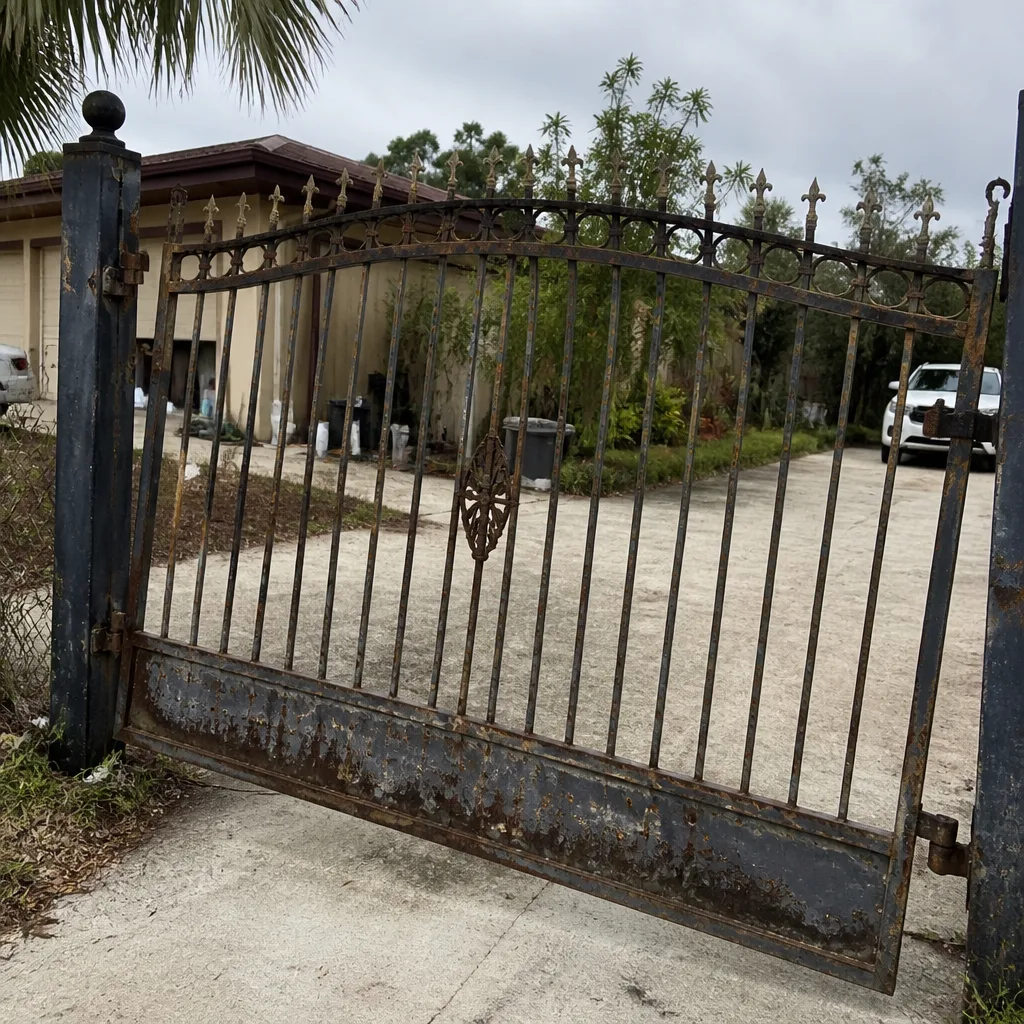 Before
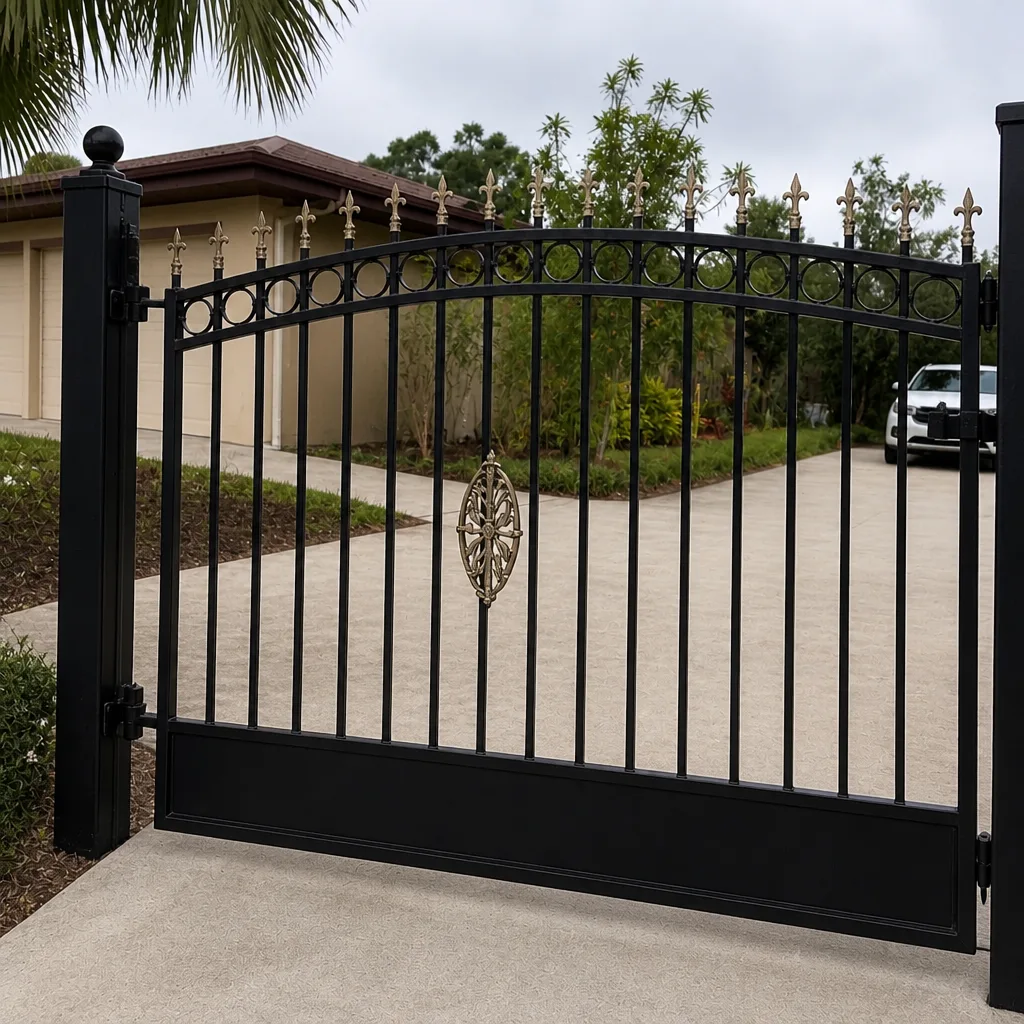 After
When to Call a Professional
Call a professional immediately if the gate fails to reverse on contact, drops or comes off its track, sparks or smokes, or responds erratically after a storm. These are the patterns that put people at risk, and a trained technician is the only safe way to diagnose them. For non-urgent signs, grinding you’ve noticed but haven’t fixed, a remote that’s getting stubborn, slow travel that’s been getting slower, call once you have a clear picture of the pattern. Describe the timing, direction, and sound, and you’ll get a straight answer faster. Gate Repair Lehigh Acres offers free estimates in Lehigh Acres. Our team works on both manual and electric systems across the Lehigh Acres area, and a written estimate sets the price before any work starts. Call (888) 361-0704. We answer 24/7. Fast dispatch from 7am to 7pm, Sunday through Friday.
Frequently Asked Questions
The earliest reliable sign is a gate that starts hesitating at the same point every cycle, because that points to a specific mechanical spot or misaligned limit before anything has failed outright. A new grinding or clicking sound is the other early warning. Both are cheap to catch and more expensive to ignore. Call (888) 361-0704 for a free estimate.
If the gate runs normally on AC power with the battery disconnected, the battery is the likely fault, but if it stumbles regardless, the control board is the suspect. The fault LED on the operator usually confirms it: most brands flash a distinct code for each. A technician can tell in minutes. Call (888) 361-0704 for an exact diagnosis.
Yes, if the gate still reverses correctly on contact, travels its full path, and settles cleanly, it’s safe to use while you schedule a repair. If any of those three fails, shut it off. Grinding alone is not an emergency. A gate that won’t reverse is. Call (888) 361-0704 and describe the pattern.
Heat stresses capacitors and thermal protection in the motor, so a component on the edge of failure will show it in the hottest part of the day first. In Lehigh Acres this shows up in summer afternoons. It’s an electrical fault, not a mechanical one. Call (888) 361-0704 for a free estimate.
If the same part fails twice within a year, or the frame or foundation is failing, replacement is usually more cost-effective than another repair. If only one component is failing, repair is the better call. We give a straight comparison. Call (888) 361-0704 for a free estimate in Lehigh Acres.
We work on the brand you already have, across a range that includes LiftMaster, FAAC, BFT, Linear, Viking, Ghost Controls, DoorKing, Elite, and Mighty Mule. That range covers both residential openers and commercial-grade operators. Call (888) 361-0704 and tell us the brand and the symptom.
The Bottom Line
Warning signs are only useful if you can tell them apart. A consistent failure at the same point means a mechanical spot to inspect. A random failure means an electrical fault. Swing gates fail at the hinges and posts; slide gates fail at the rollers and track. A failing battery and a failing control board look identical, so check the battery first. And any gate that won’t reverse, drops, sparks, or comes off its track should be shut down before it hurts someone. Learn the pattern, and you’ll know exactly what to tell a technician, so the first visit is the right one.
For expert Gate Repair Lehigh Acres service, call (888) 361-0704. We answer 24/7. Fast dispatch from 7am to 7pm, Sunday through Friday. Estimates are free, and the price is quoted and agreed before any work starts. Reach out today and let’s get your gate back to reliable.
Written by the team at Gate Repair Lehigh Acres.