
Last updated November 15, 2026
 Wrought iron
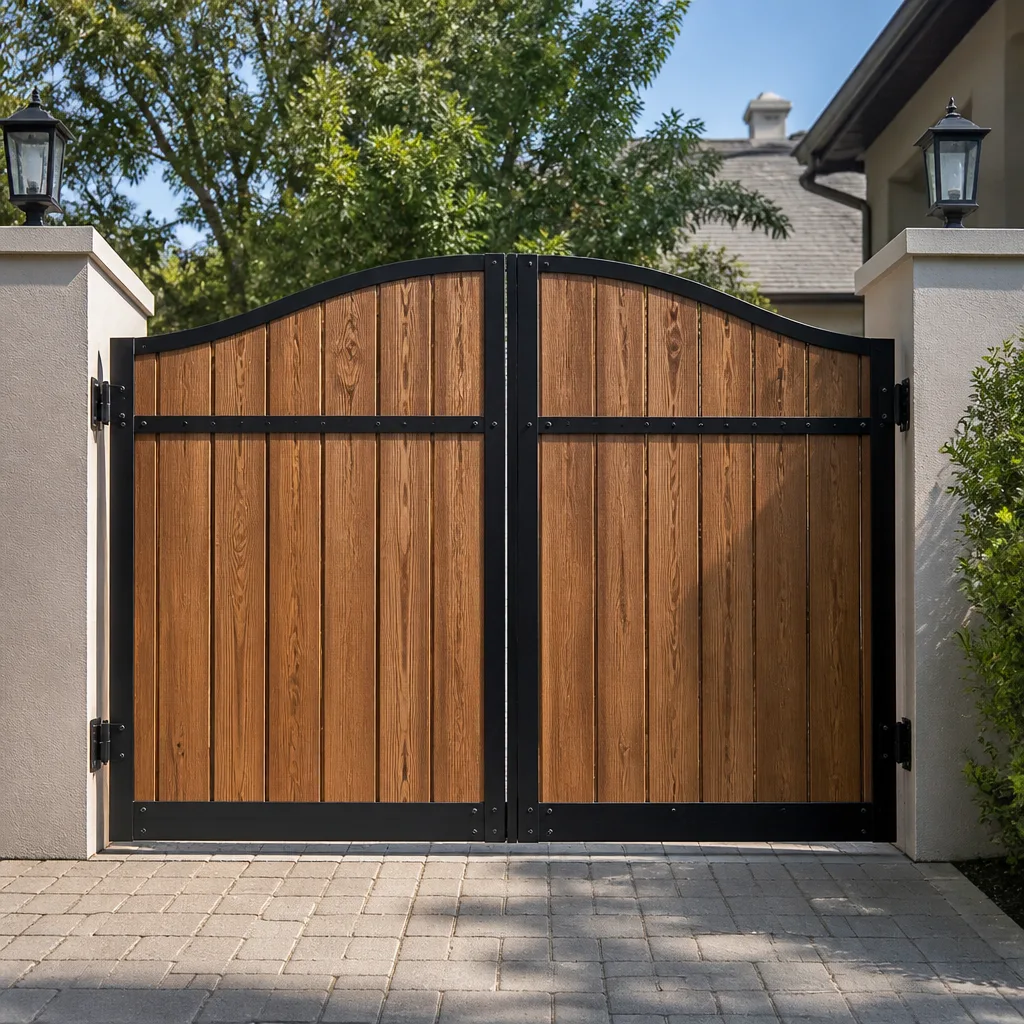 Wood & steel frame
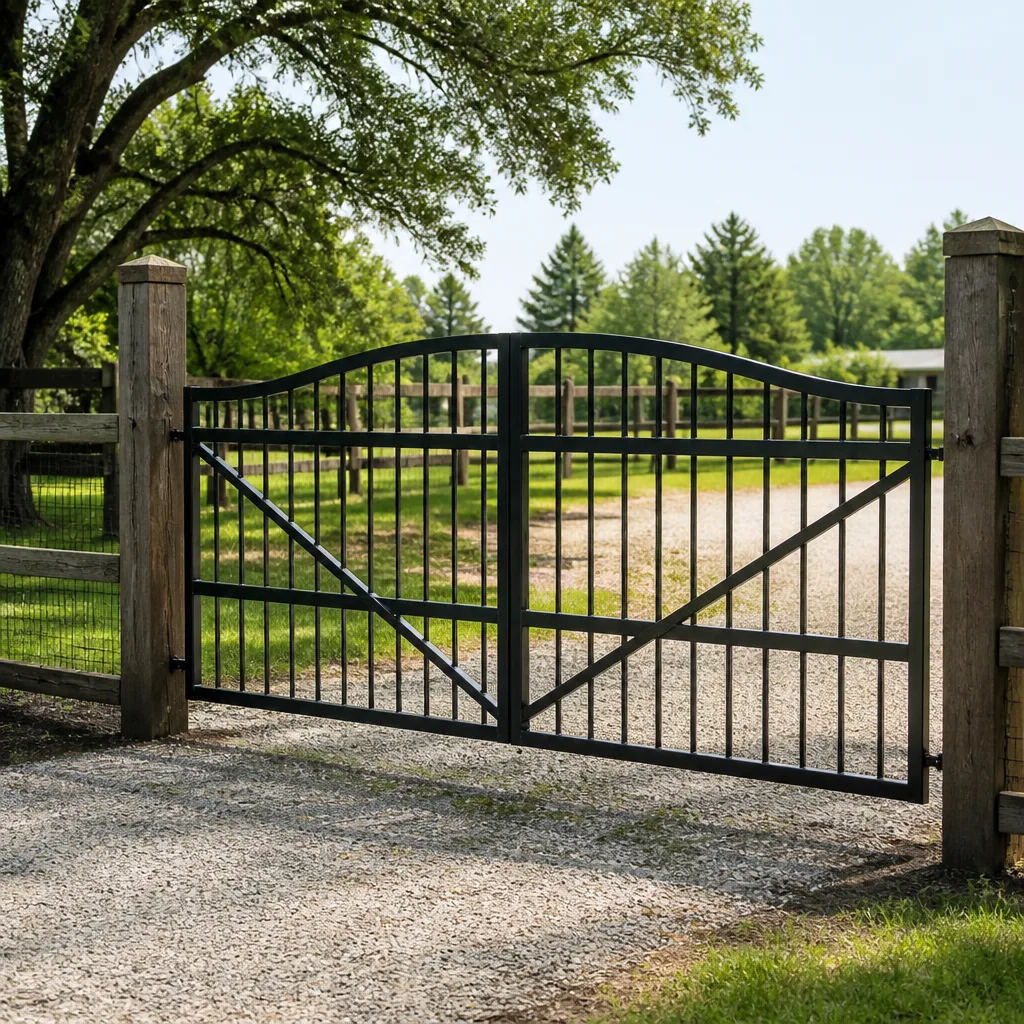 Farm & ranch
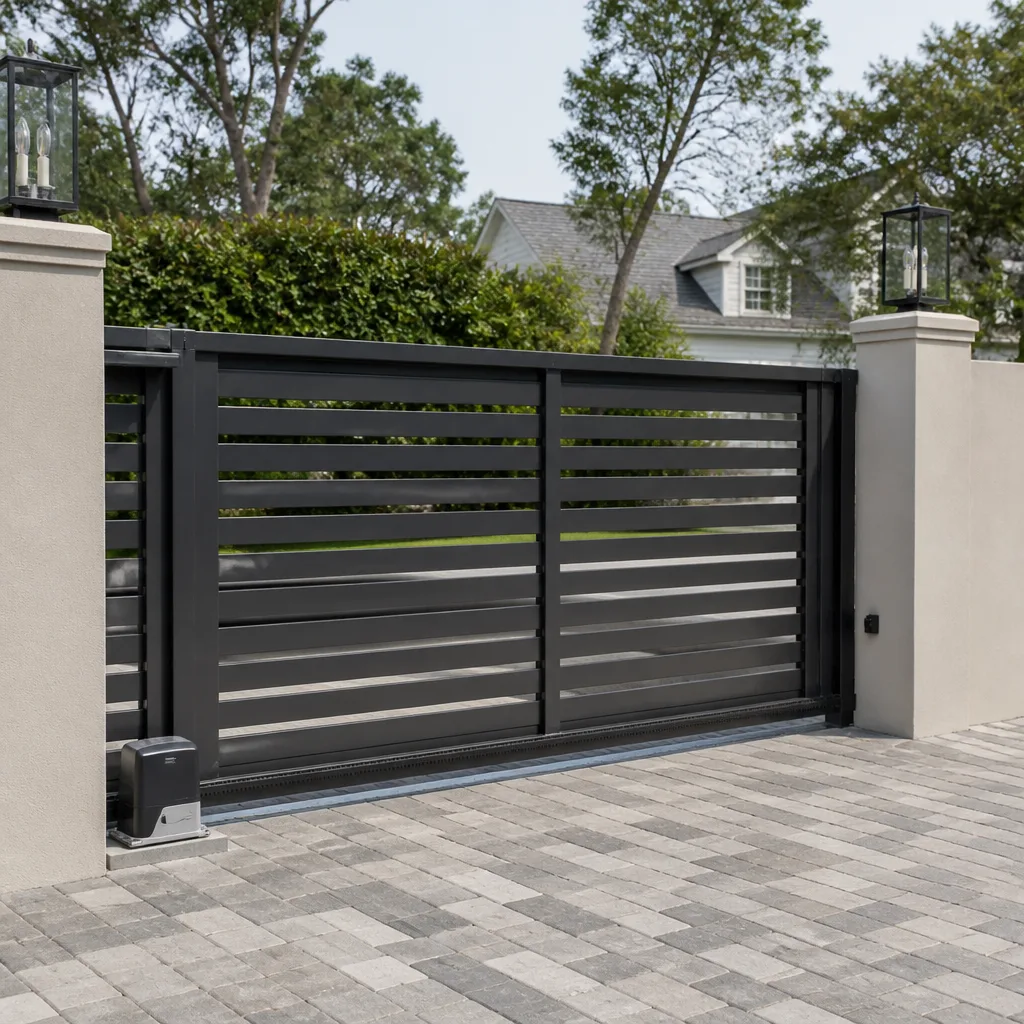 Sliding driveway gates
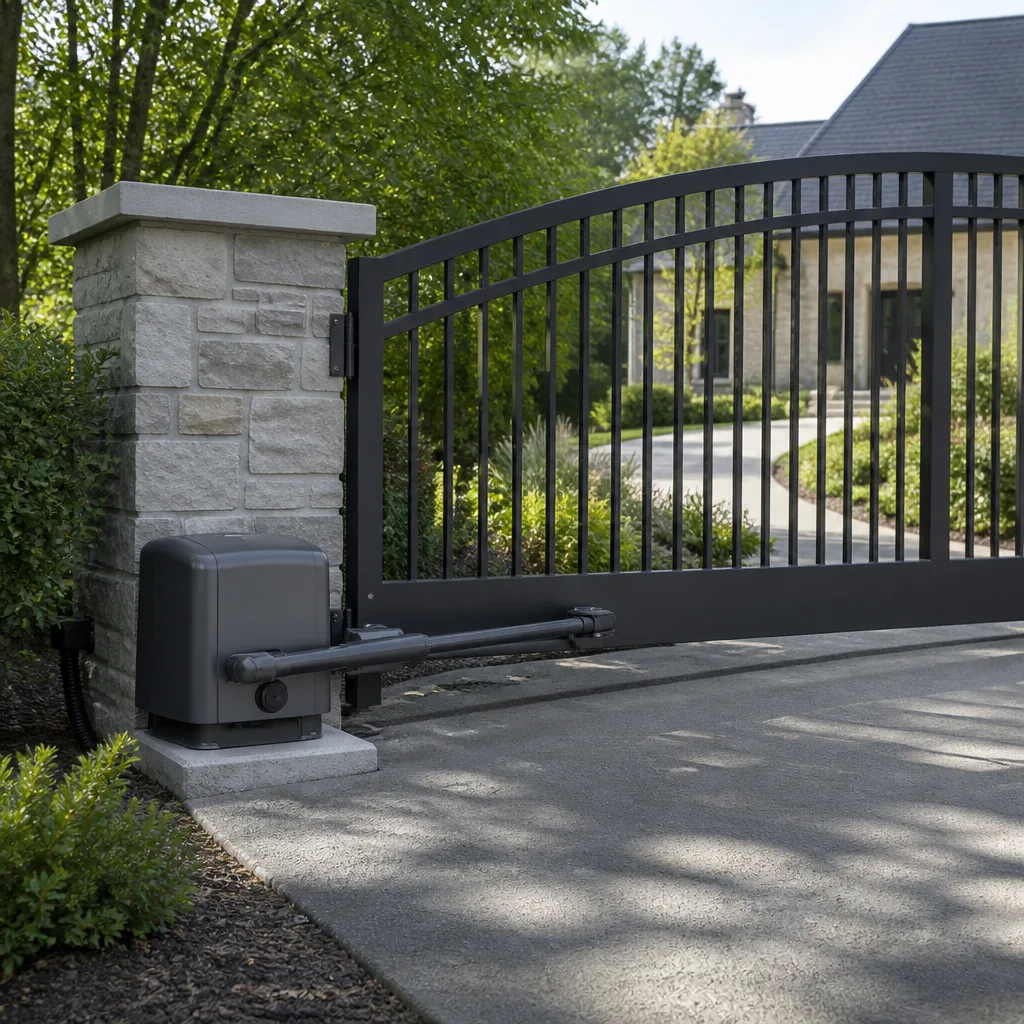 LiftMaster operators
Free on-site gate assessment - hinges, posts, and your LiftMaster or Nice gate operator checked before anything is quoted
The assessment is free and the quote is the invoice.
Get your free estimateGate Repair Emergency Preparedness Guide for Lehigh Acres Homes
Most gate owners assume their emergency plan is already handled, because the gate came with a manual release and the manual release lives in a box on the operator. Here’s the part that surprises people: knowing the release exists and being able to use it under pressure are two very different things. At two in the morning, locked inside your own driveway, is the wrong moment to learn which lever to pull. This guide walks through both failure modes that matter in Lehigh Acres – a gate stuck shut when you need out, and a gate stuck open when weather is closing in – and gives you the steps to prepare before either happens.
Quick Answer
A gate emergency is either a gate you can’t open or a gate you can’t secure, and each one has a different first move. For a gate stuck closed, find and operate the manual release, then call for repair. For a gate stuck open ahead of wind, close and lock it manually if the hardware allows, and if it doesn’t, brace the gate against the direction of the wind at its hinge side rather than the latch side. Preparing the release and the lock-down procedure now takes about twenty minutes and prevents both problems later.
Styles & brands we work with
- Wrought iron
- Wood & steel frame
- Farm & ranch
- Sliding driveway gates
- LiftMaster operators
Table of Contents
- Manual Release: Finding It, Testing It, Using It
- Release Differences Across the Brands Most Common in Lehigh Acres
- Power Outage Protocol: Battery Backup Reality Check
- Securing an Open Gate Before a Storm or High Wind
- Pre-Storm Gate Positioning: Open or Closed?
- What to Tell a Repair Service When You Call
- When to Call a Professional
Manual Release: Finding It, Testing It, Using It
The manual release is the component that converts an electric gate back to a manual gate. Every automated gate operator installed in roughly the last two decades has one. Where it sits, how it works, and how much force it takes to operate depends on the operator, but the concept is the same: you disengage the motor from the gate, and the gate swings or slides freely by hand.
Here’s the number that concerns us. In our experience, a large share of homeowners with an automated gate cannot locate the release, let alone operate it, when asked to do so without warning. That’s not a criticism of the owner. It’s a design feature of the way gate operators get installed and forgotten. The release is often tucked under the operator housing, behind a cover, or on the far side of the gate post where it’s hard to reach from the driveway.
Testing it once, in daylight, with no pressure, solves the problem permanently. Here’s the procedure:
- Locate the release. On swing operators it’s usually a lever or a keyed handle on the operator arm or housing. On slide operators it’s typically a lever on the motor housing or a keyed release on the chain or belt drive. Check your operator manual if you don’t see it immediately.
- Note the key. Many releases are keyed. Find the key, label it, and keep a copy somewhere you can reach without going through the gate.
- Disengage the motor. Turn or pull the release according to the operator’s design. On most residential units this is a physical lever you flip or a keyed handle you rotate.
- Move the gate by hand. Swing the gate through its full arc, or slide it through its full travel. It should move smoothly. If it binds, drags, or grinds, the mechanical problem is separate from the release, and that’s repair territory.
- Re-engage the motor. Return the release to its normal position and cycle the gate once with the remote to confirm the operator has reconnected.
- Write down the steps. Tape a card inside the gate post or on the operator housing with the release procedure. You won’t remember it under pressure.
Repeat the test twice a year. A release that worked last spring may have seized by fall, and a seized release is worse than a release you never knew about because it creates a false sense of readiness.
Release Differences Across the Brands Most Common in Lehigh Acres
Release procedures are not universal. The five operator families we see most often in Lehigh Acres each handle manual disengagement differently, and the difference matters when you’re standing at the gate in the dark trying to remember which way the lever goes.
LiftMaster: Residential swing and slide operators from LiftMaster typically use a manual release lever on the operator housing, with a keyed cover on many models. The lever disengages the drive gear. Re-engagement is a firm push back into position after the gate has been cycled once by hand.
Mighty Mule: Common on residential driveway gates in Lehigh Acres. The release is often a lever under the control box or a keyed release on the arm. Mighty Mule units tend to have a lighter release mechanism than commercial-grade operators, and if the arm has been sitting for a long time the release can feel stiff. Don’t force it; if it won’t budge, that’s a call.
FAAC: FAAC operators on residential swing gates typically use a keyed manual release accessed through the housing. Some models use a lever that requires a half-turn rather than a full turn. Getting the direction wrong can feel like the release is broken when it isn’t.
BFT: BFT residential operators generally use a keyed release with a specific rotation sequence. The manual will specify clockwise or counterclockwise. Trying the wrong direction is one of the more common ways a homeowner decides the gate is seized when it’s actually fine.
Linear: Linear slide and swing operators typically use a pull-handle or lever release. Pull-handle releases on slide operators sometimes need the gate pushed slightly in the direction of travel before the handle will release cleanly.
If you don’t know which brand you have, look at the operator housing label. If the label is faded or missing, call us with a photo of the unit. We work on the brand you already have, and identifying it by sight is usually quick.
Power Outage Protocol: Battery Backup Reality Check
Battery backup ratings on gate operators are quoted under light load. A manufacturer might state a certain number of cycles on battery power, but that figure assumes a gate swinging freely, moderate use, and a healthy battery. Under heavy use, on a gate with any drag, or on an older battery, the real number is lower. Sometimes considerably lower.
What you actually need to know before an outage:
- How your operator behaves when power fails. Some units hold position; some release automatically to manual mode; some stay locked until the battery dies. Knowing which one yours does determines whether you can open the gate at all during an outage.
- How healthy your battery is. Batteries age out. A battery that’s several years old may hold far less reserve than the label suggests. Test it before you need it.
- How heavy your gate is. A long, solid-panel swing gate puts more load on the operator than a lighter tube-frame gate, and that load drains battery reserve faster.
- How often the gate cycles. High-traffic use burns through backup faster than a gate that opens twice a day.
Testing your battery backup is straightforward. Disconnect the operator from AC power (at the breaker, safely), then cycle the gate using the remote as many times as you can while noting how the gate performs. Watch for slowing travel, hesitation, or the operator faulting. Restore power and re-engage. If the gate slows noticeably after a handful of cycles, the battery is on its way out. If it won’t move at all, the operator may have already lost its backup capability.
A battery that’s weak under test is a battery that will fail under real outage conditions. Battery replacement is inexpensive compared to being locked in or locked out during a power loss.
Securing an Open Gate Before a Storm or High Wind
A gate stuck open ahead of a storm or high wind event is a genuine safety concern in Lehigh Acres, where summer storms and named systems can bring sustained wind. An open gate is a large flat surface on a hinge. Wind gets behind it and the gate becomes a lever arm working against its own hinges and post.
The two failure paths are different. One is the gate swinging uncontrolled with the wind and slamming into whatever it reaches. The other is the gate tearing loose from a hinge or post. Both are worse than the inconvenience of being temporarily without an automated gate.
What to do when a gate is stuck open and wind is coming:
- Disengage the operator first. A powered operator holding position against wind load can burn through its motor or strip its gearing. Release the motor to manual before securing the gate by hand.
- Work at the hinge side, not the latch side. The hinge side is the strong point. Anything you add at the latch side, such as rope, straps, or a chain to a post, becomes a tension line that either holds or snaps depending on the gate’s weight and the wind load.
- Secure the gate in its closed position if the latch will hold. A closed, latched gate presents a much smaller wind profile than an open one. If the gate can be closed, close it and use the mechanical latch.
- Brace against the wind direction, not across it. If the gate cannot be closed, brace it so that it resists the wind at the hinge side. A brace positioned to catch the wind side-on creates a torque load on the post, which is the failure point.
- Remove anything that will become a projectile. Loose chains, hanging signs, unsecured hardware, and any decorative element attached to the gate or near it should come off before wind picks up. These parts don’t just damage the gate; they become projectiles.
- Photograph the setup. A photo of how you secured the gate helps the repair technician understand what happened when they arrive, and it documents any existing damage for insurance purposes.
Do not attempt to secure a heavy commercial-grade gate or an access-control gate on a multi-unit property by yourself. Those systems have failure modes that can injure a person who isn’t trained on them, and the right answer is a professional assessment.
Pre-Storm Gate Positioning: Open or Closed?
Both “always leave it open” and “always leave it closed” are wrong advice. The right answer depends on your gate type, its wind exposure, and how it’s anchored. Here’s how to determine which applies to yours.
When closed is right: If your gate latches into a solid post, has a working mechanical latch, and the wind will hit it broadside in the closed position, close it. A properly latched gate distributes wind load across both posts and the latch. Most residential swing gates with a well-anchored receiving post fall into this category.
When closed is wrong: If your latch is broken or missing, if the gate is already drifting off its hinges, or if the receiving post has any movement, do not close it. A closed gate that can’t hold its latch becomes a swinging projectile once wind gets under it. In that case, secure the gate fully open against a windbreak if you have one, or disengage and brace as described above.
When open is right: A gate restrained fully open, against a solid wall or a specifically designed open-position stop, presents a lower wind profile than a partially open gate swinging free. This only works if the gate is actively restrained. An open, unrestrained gate is the worst of the three options.
When open is wrong: If your open position leaves the gate exposed to the prevailing wind with no stop, don’t leave it open. It will swing through its own arc the moment the wind reaches it.
Determine your gate’s response this week, in calm weather. Push against it by hand at the hinge side, then at the latch side. Note where it flexes. That tells you which bracing points make sense and which become the point of failure.
What to Tell a Repair Service When You Call
When you call for gate repair, the difference between a one-visit repair and a two-visit repair often comes down to what you tell the person on the phone. Our technicians can arrive with the right parts if they know what they’re walking into; arriving with the wrong control board and the wrong release lever wastes everyone’s afternoon.
Here’s what to have ready before you dial:
- Gate type. Swing or slide. Single or double leaf. Approximate leaf length if you know it.
- Operator brand and model. Read the label on the housing. If the label is gone, describe the housing and the remote.
- What the gate is doing. Stuck open, stuck closed, moving partway, reversing immediately, running but not responding to the remote, or making a specific noise. Specific behavior narrows the diagnosis faster than “it’s broken.”
- What changed. Did it start after a power outage, after a storm, after a specific event, or gradually over weeks? Sudden failures and gradual failures usually have different causes.
- Manual release status. Have you disengaged it? Is the gate currently free, or still under motor control? This tells the technician whether it’s safe to arrive without physically maneuvering the gate first.
- Any visible damage. Bent arm, loose hinge, cracked control box, hanging safety wire, exposed wiring. These are the parts that need to be on the call ahead of time.
If the gate is a commercial-grade system, such as a DoorKing access-control gate on a multi-unit property, mention that on the call. Commercial operators have different diagnostics and may need different components on hand. For residential brands like LiftMaster, Mighty Mule, FAAC, or BFT, brand and model are usually enough.
One last thing: don’t try to open the gate with the operator still engaged if the gate is jammed. That’s one of the more reliable ways to turn a control-board reset into a full motor replacement. If the gate won’t move with the motor powered, disengage first, then diagnose.
When to Call a Professional
Most gate emergencies need a professional, and the reason is safety more than complexity. A heavy gate under motor tension, an operator’s wiring carrying line voltage, and a slide gate that has come off its track are all components that can injure a person who isn’t trained to work around them. If the gate is jammed and won’t release, if you see hanging wiring, if the gate has come off the track or dropped on a hinge, if the operator is sparking or tripping a breaker, or if the gate has swung into an object or a person and you can’t confirm the mechanical integrity afterward, that’s a call, not a project.
Gate Repair Lehigh Acres offers free estimates in Lehigh Acres. Call (888) 361-0704. We work on electric gate repair across the brands installed on Lehigh Acres properties, and we can help you decide whether repair or replacement makes more sense on a gate that has failed repeatedly.
See the difference
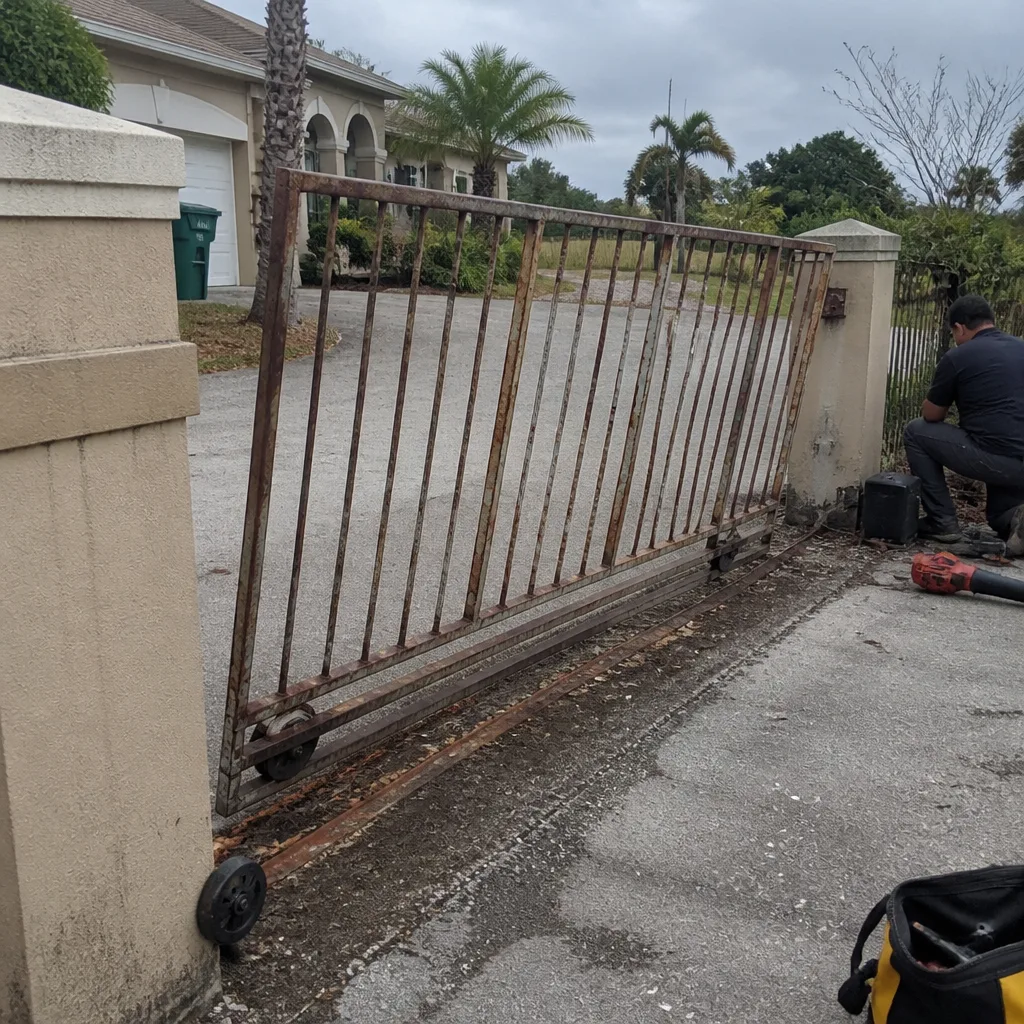 Before
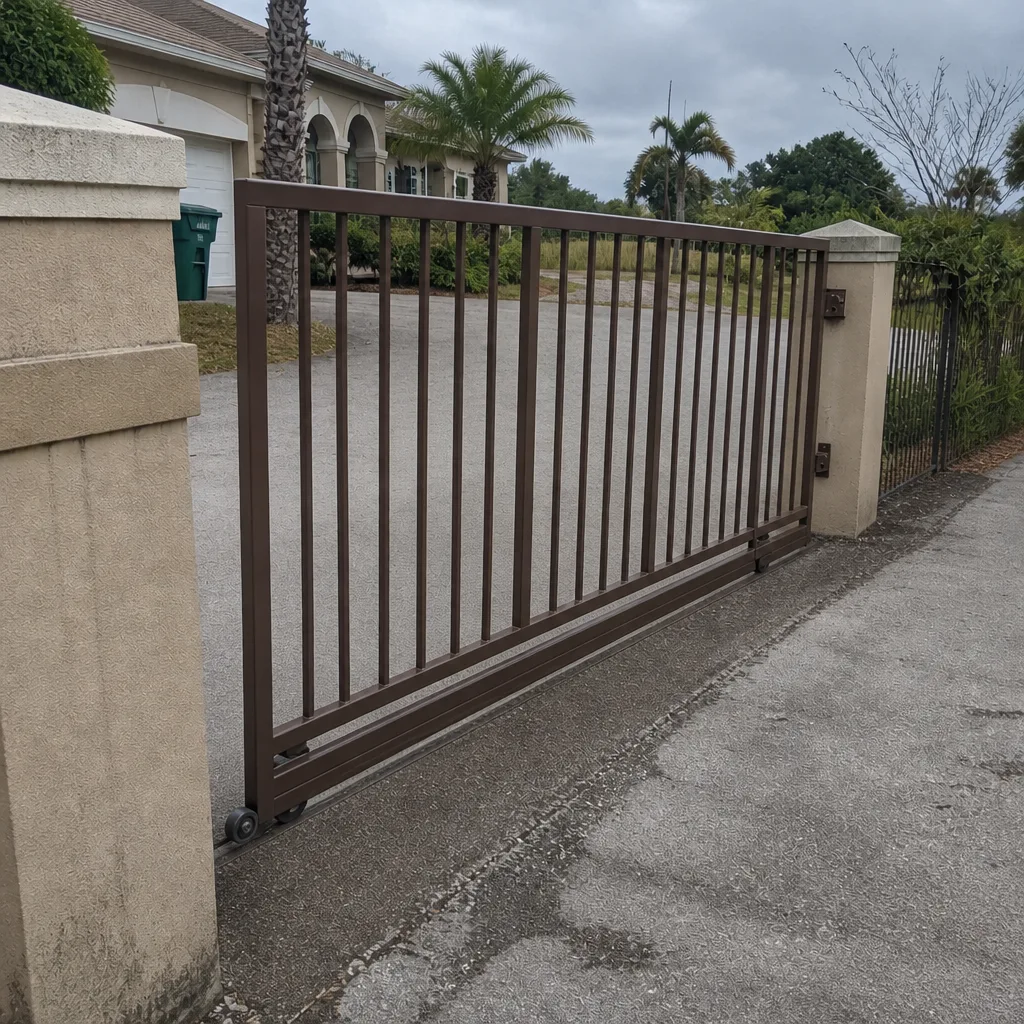 After
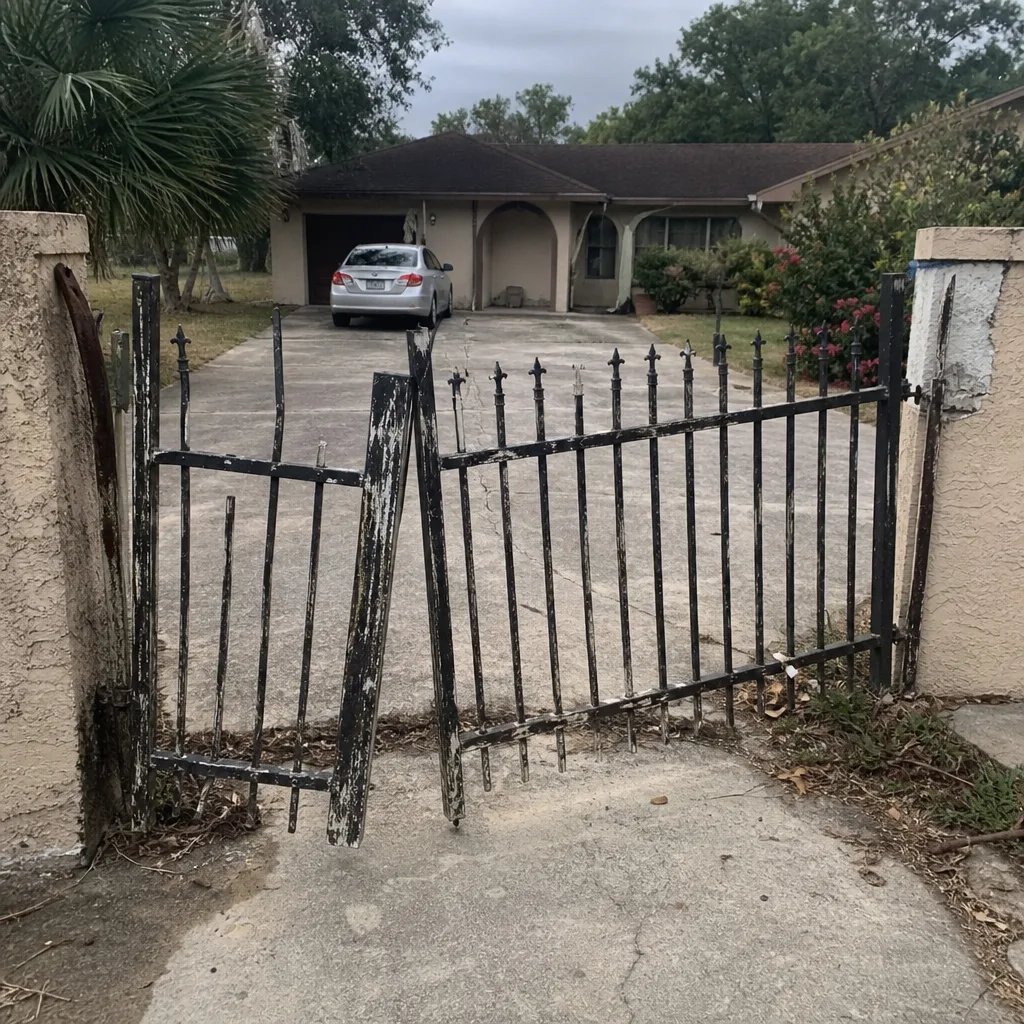 Before
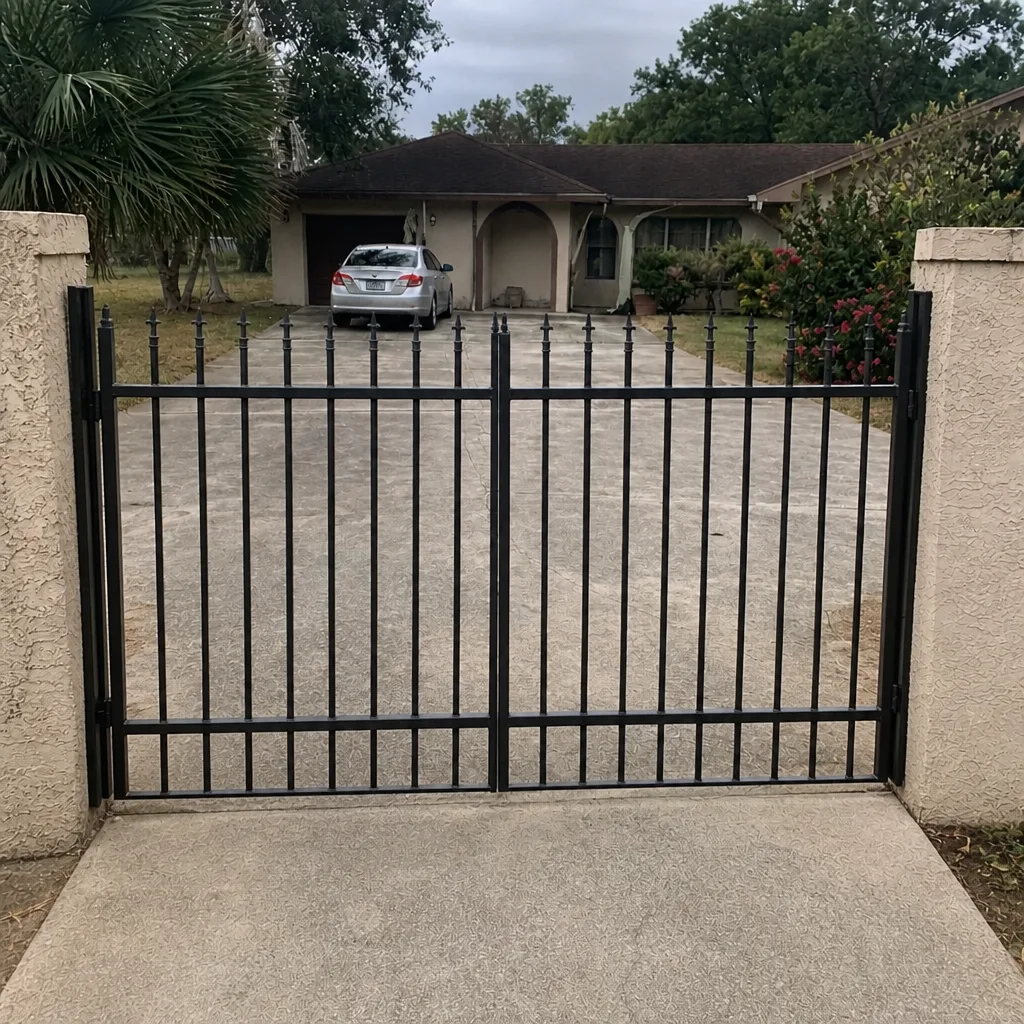 After
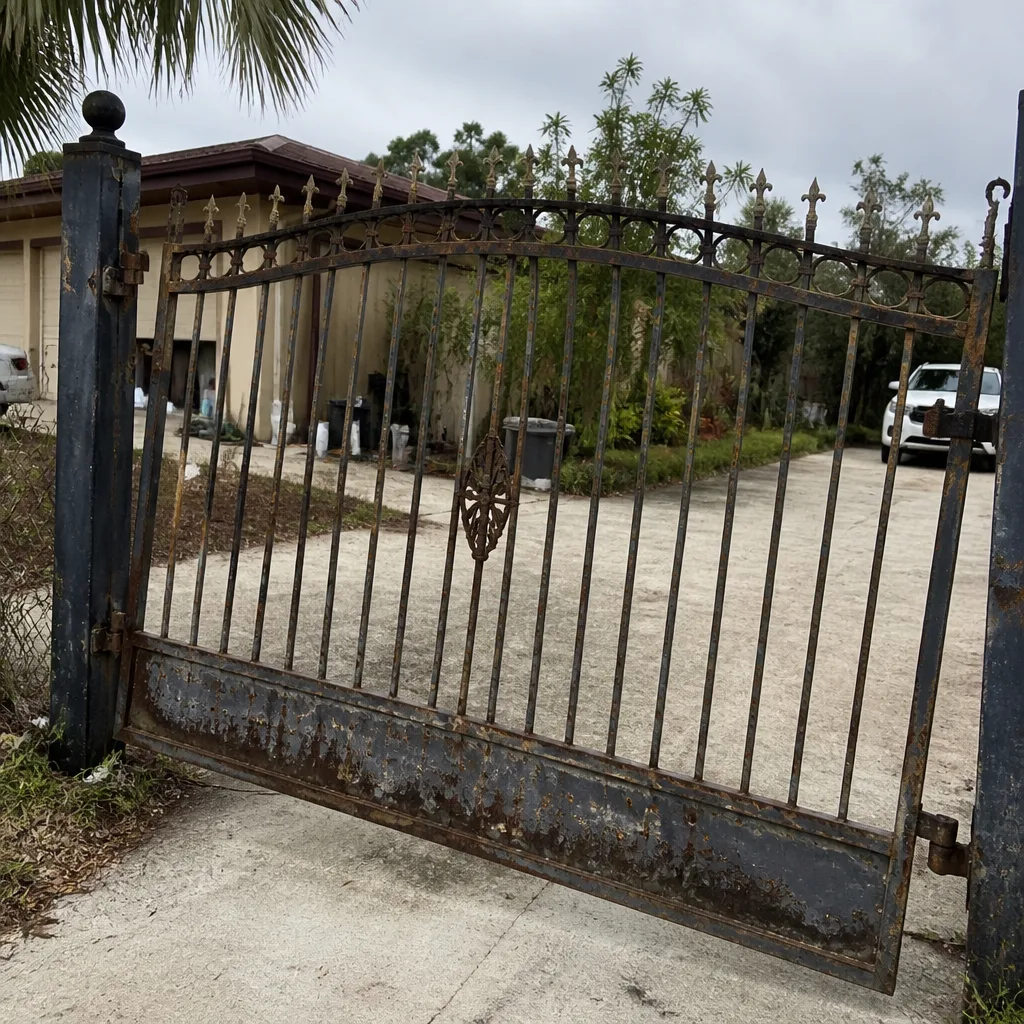 Before
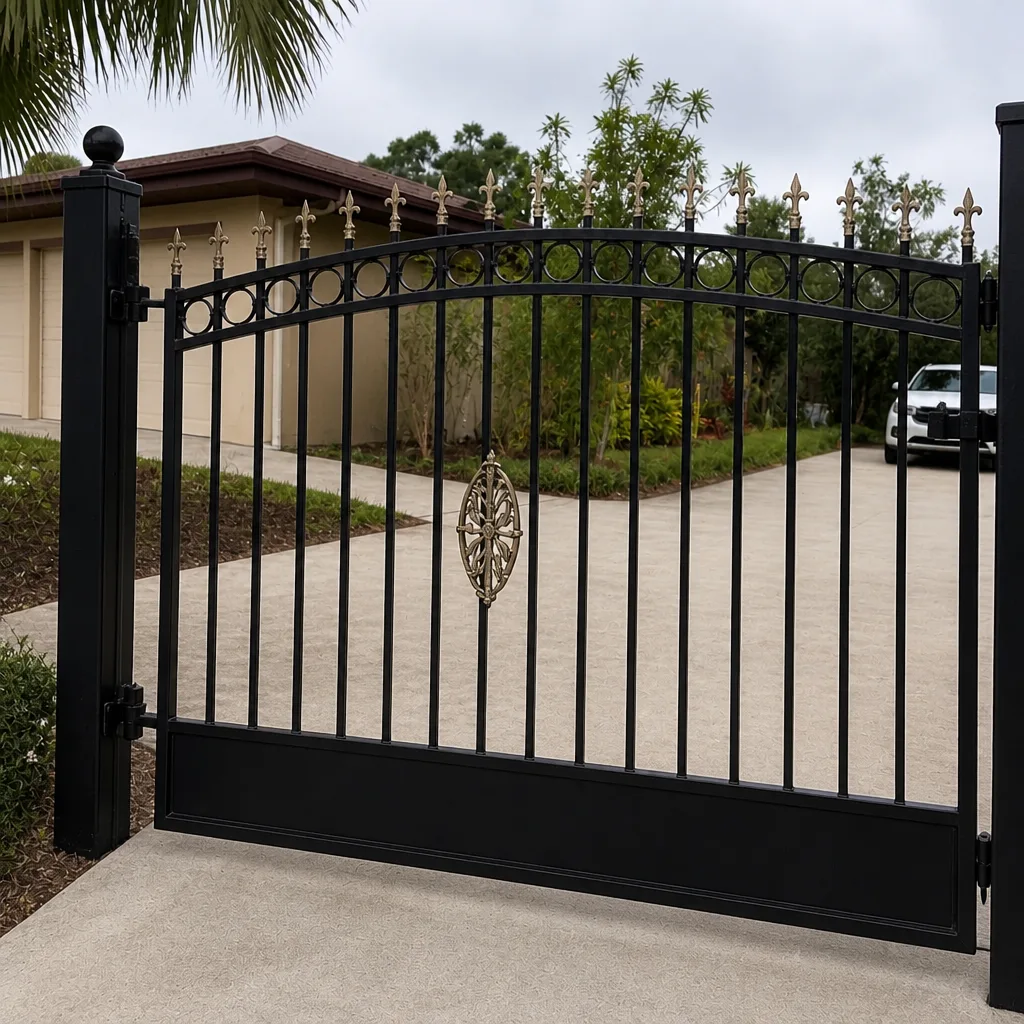 After
Common Mistakes to Avoid
- Assuming the manual release is working because it exists. A release that has not been tested in months may be seized, rusted, or missing its key. Test it in calm weather, not during an emergency.
- Forcing a jammed gate with the motor engaged. Running the operator against a jammed gate strips gears and burns control boards. Disengage first, then diagnose.
- Leaving a gate wide open before a storm with no restraint. An unrestrained open gate catches wind and swings through its arc. Secure it open against a stop, or close and latch it.
- Securing a gate at the latch side only. The latch side is the wrong attachment point for storm bracing. Work at the hinge side, where the load can be resisted without creating torque.
- Trusting the battery backup rating without testing. Ratings are quoted under light load. Test yours under real cycling and replace the battery if it slows or faults.
- Calling a repair service without the operator brand and model. Arriving without the right parts turns a same-day fix into a return visit.
- Ignoring a gate that has drifted off its hinges after minor wind. Hinge drift rarely reverses itself, and it pushes subsequent load onto the latch and post. Get it looked at before the next storm.
Frequently Asked Questions
On swing operators it’s usually a lever or keyed handle on the operator arm or housing; on slide operators it’s typically a lever on the motor housing or a keyed release on the drive. Check the operator label for the brand and consult the manual. If the label is gone, call us with a photo and we can identify it by sight.
Disconnect the operator from AC power safely at the breaker and cycle the gate with the remote, watching for slowing travel or faulting. Restore power and re-engage afterward. If the gate slows after a few cycles, the battery is weak and should be replaced before the next outage.
It depends on your gate and its anchor points. Close and latch it if the latch and receiving post are solid and the wind will hit it broadside. Secure it fully open against a stop if the latch is compromised but you have a solid restraint. Never leave it open and unrestrained.
Usually, yes, if the problem is on the operator or a common component. Call (888) 361-0704 and give us the brand and model plus what the gate is doing. We answer 24/7, with fast dispatch from 7am to 7pm, Sunday through Friday.
We’re closed Saturday. Call anyway and we’ll book you into the next opening, Sunday through Friday, 7am to 7pm. If the gate is stuck open and wind is coming, follow the securing steps above until we can reach you.
Yes. We cover both residential and commercial operators, including DoorKing and other professional-grade systems on multi-unit properties. Mention the system type and brand when you call so the technician can arrive with the right diagnostic equipment.
The Bottom Line
Gate emergency preparedness comes down to two procedures: you need to know how to get out when the gate won’t open, and how to secure it when it won’t close. Test your manual release twice a year, test your battery backup before you need it, and learn which storm-positioning applies to your specific gate now rather than during the storm. Keep the operator brand and model somewhere accessible so a repair call can be specific. In Lehigh Acres, where summer storms and power interruptions are part of the calendar, this preparation is what separates a minor inconvenience from a genuine safety event.
Written by the team at Gate Repair Lehigh Acres.