
Last updated November 15, 2026
 Wrought iron
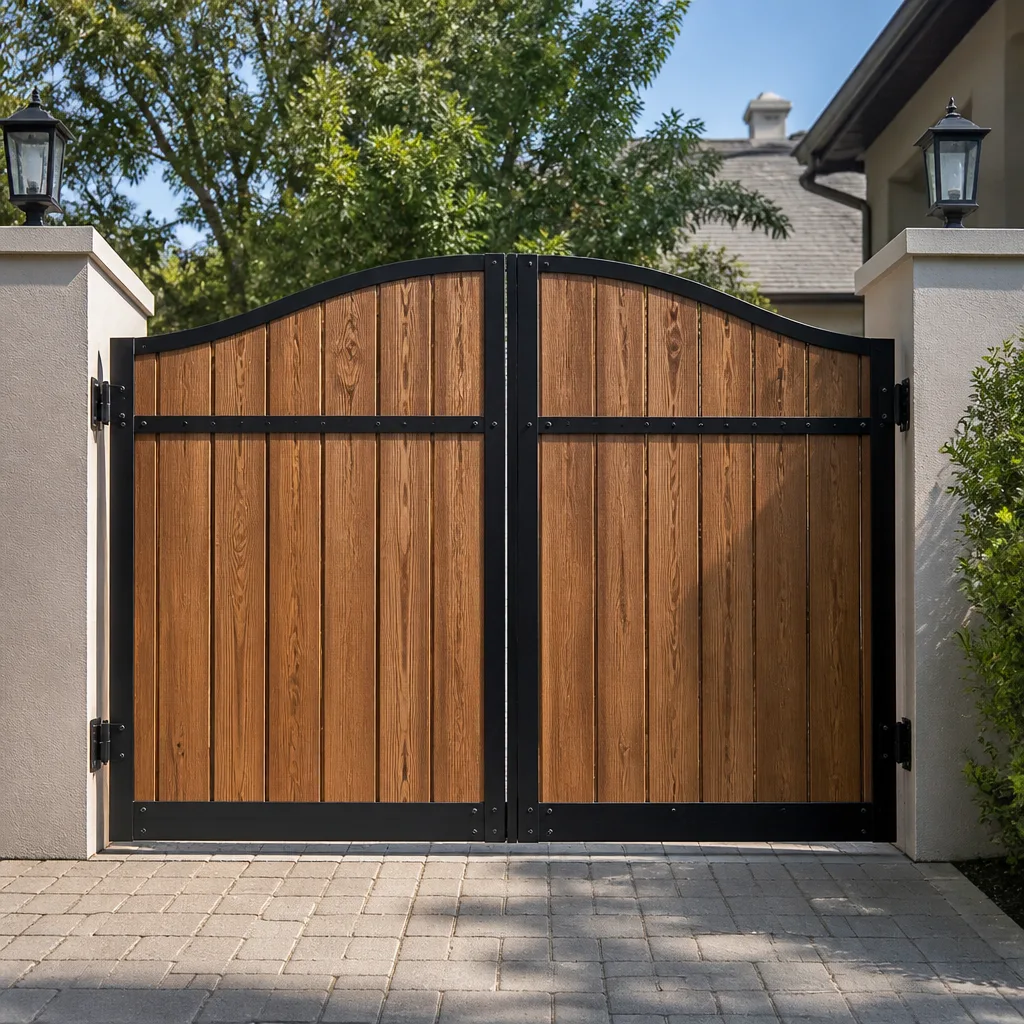 Wood & steel frame
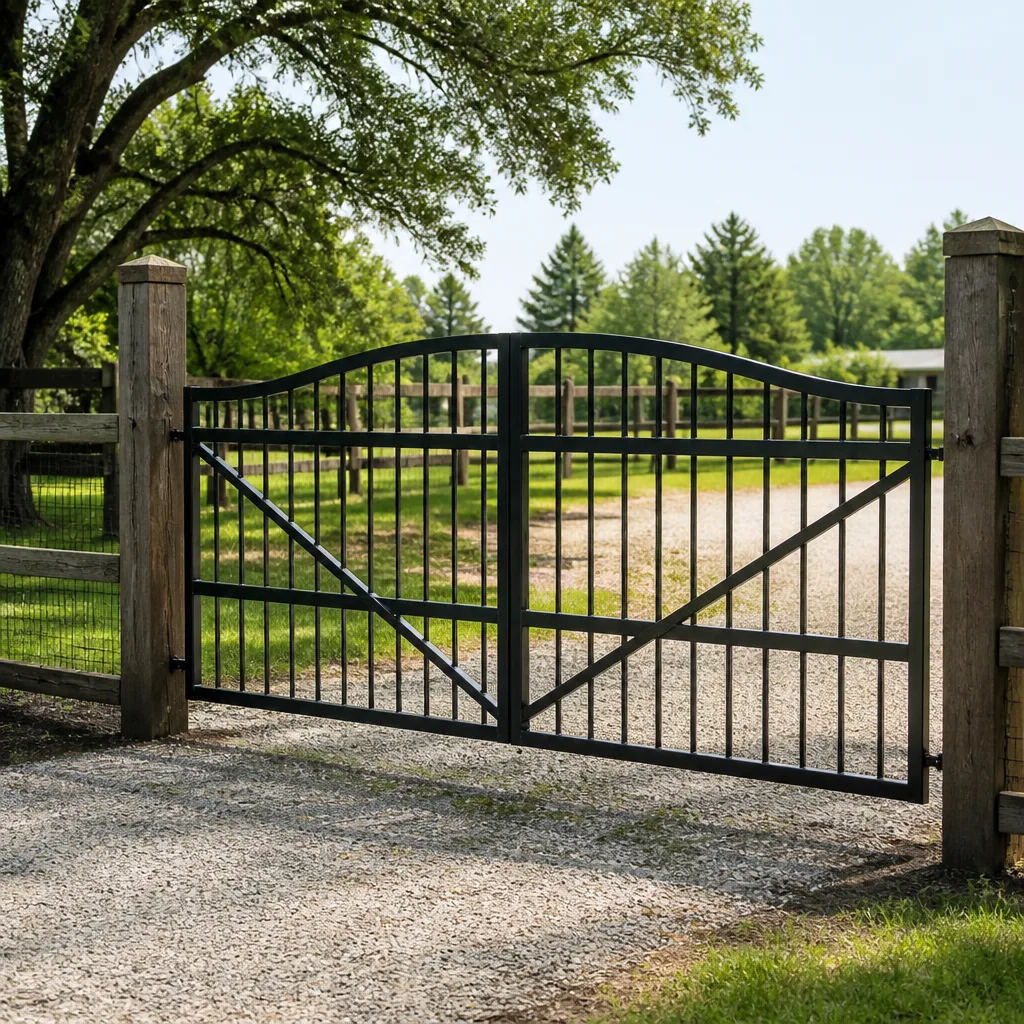 Farm & ranch
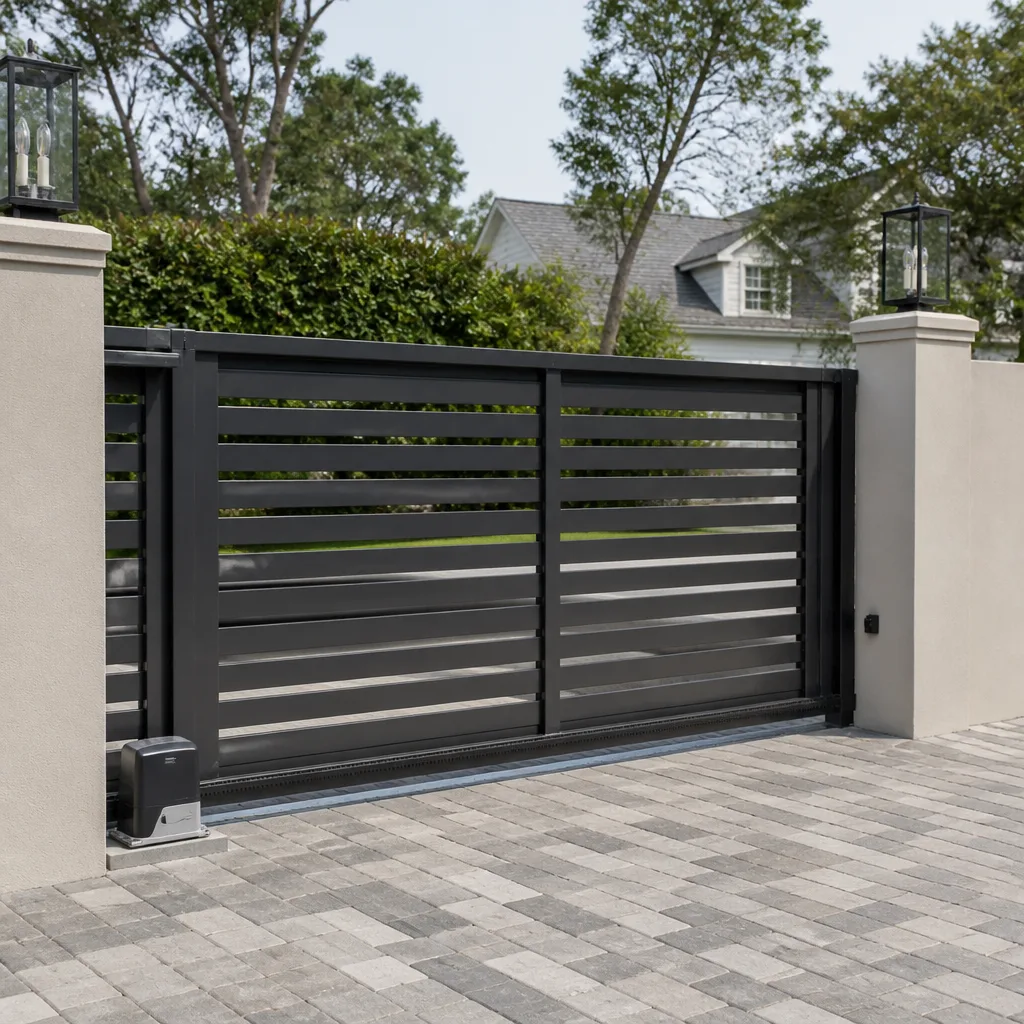 Sliding driveway gates
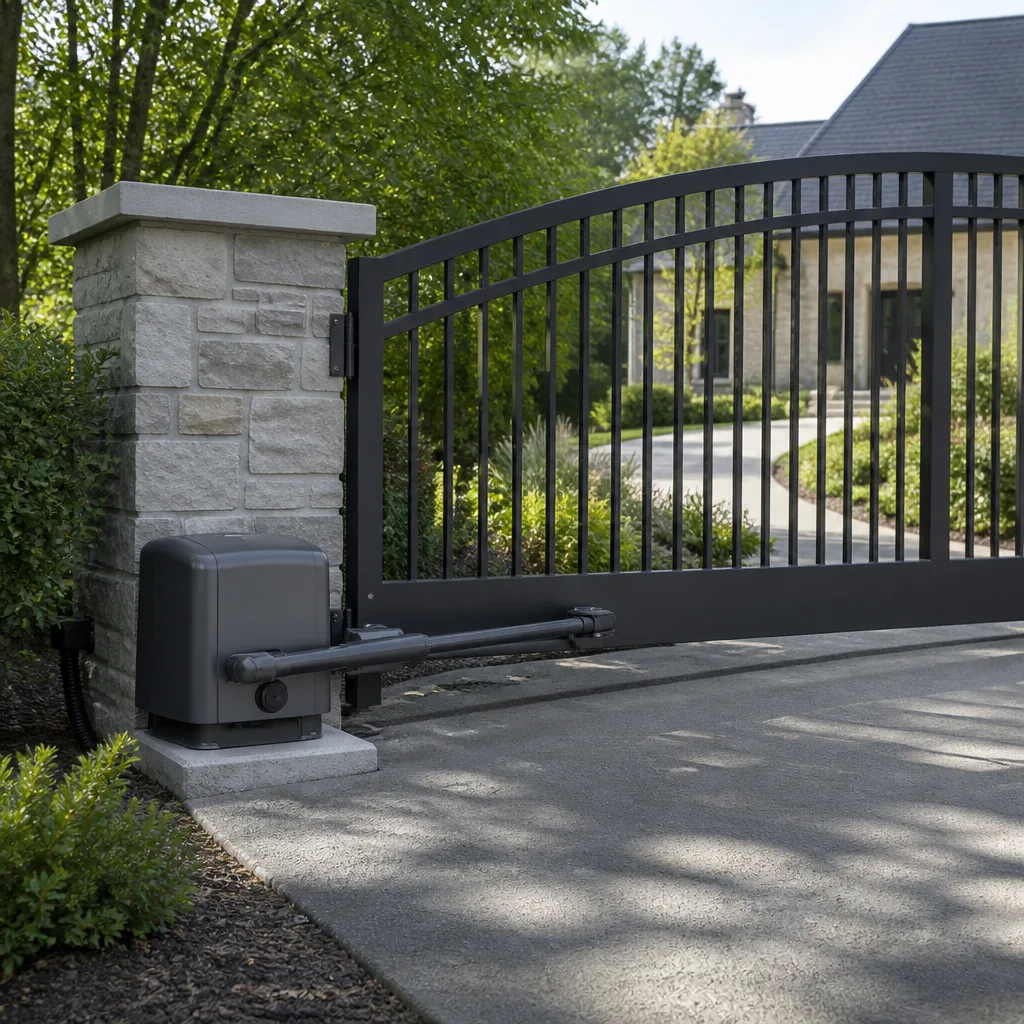 LiftMaster operators
Free on-site gate assessment - hinges, posts, and your LiftMaster or Nice gate operator checked before anything is quoted
The assessment is free and the quote is the invoice.
Get your free estimateThe Complete Guide to Gate Repair in Lehigh Acres
A gate that reverses before it closes all the way is almost never a motor problem. In most cases it’s a misaligned safety sensor or a shifted post, and either one can be recalibrated or reset far cheaper than a motor swap. Yet homeowners regularly authorize full operator replacements for faults that a qualified gate technician would find and fix in one visit. In this guide we map every common failure mode we encounter in Lehigh Acres to its actual cause, show you how to tell electrical faults from mechanical wear from environmental damage, explain the brand-specific quirks of the systems installed here, and give you a clear framework for deciding when repair genuinely pays and when replacement is the honest answer.
Quick Answer
Most gate failures in Lehigh Acres fall into three categories: electrical faults (control boards, safety sensors, wiring), mechanical wear (hinges, rollers, tracks, arms), and environmental damage (post shift from sandy soil, moisture, storm debris). Diagnosing which category your problem belongs to is the difference between a minor adjustment and an unnecessary component replacement. A specialist who handles both manual and electric gates can usually identify the cause on the first visit.
Styles & brands we work with
- Wrought iron
- Wood & steel frame
- Farm & ranch
- Sliding driveway gates
- LiftMaster operators
Table of Contents
- The Three Failure Categories Every Gate Owner Should Know
- Why Lehigh Acres Soil Causes Gate Misalignment
- Brand-Specific Quirks in the Systems Installed Here
- How to Diagnose Your Gate Problem Before You Call
- Repair or Replace: An Honest Decision Framework
- Electric Gate Repair vs. Manual Gate Repair
- How to Document a Repair Visit
- What a Full Gate Installation Involves
The Three Failure Categories Every Gate Owner Should Know
Gates fail for reasons that cluster into three distinct groups, and each group demands a different skill set to diagnose and fix. Knowing which category you’re dealing with helps you describe the problem accurately and understand why certain repairs cost what they do.
Electrical faults
These involve the operator itself: the control board, the motor windings, the safety sensors, the wiring between the operator and the accessories, and the power supply. Symptoms include a gate that won’t respond to the remote, one that opens but won’t close, erratic behavior in heat or rain, or a control board that shows error codes. Electrical faults require someone comfortable with low-voltage wiring and control logic, not just mechanical adjustment.
Mechanical wear
Hinges sag, rollers flatten, slide tracks accumulate grit, swing arms develop play, and chains stretch. These problems show up as dragging, grinding, uneven travel, or a gate that sits lower on one side than the other. Mechanical wear is usually the easiest category to repair and the most predictable, because the parts that fail are visible and accessible.
Environmental damage
This is the category that catches people off guard in Southwest Florida. Sandy, shifting soil moves posts out of plumb. Heavy rain and high humidity corrode connections. Storm debris jams tracks or bends panels. Vegetation grows into gate paths. Environmental damage often presents as a mechanical or electrical symptom, which is why a technician who understands local conditions can save you from replacing the wrong part.
If you’re unsure which category your problem falls into, that’s normal. A brief conversation over the phone will help you describe what the gate is doing, and a trained eye can sort it out on site. For a full breakdown of the electrical side specifically, see our electric gate repair page.
Why Lehigh Acres Soil Causes Gate Misalignment
Lehigh Acres sits on sandy, well-drained soil that shifts with moisture cycles. During the wet season the ground swells and softens; during the dry months it contracts. This constant movement puts lateral pressure on gate posts, and over time even a properly set post can drift out of plumb. A post that leans even a fraction of an inch throws the entire gate out of alignment, and a misaligned gate puts stress on every component downstream: hinges, operators, arms, and latches.
The symptoms of post shift aren’t always obvious. Watch for these signs:
- The gate drags or scrapes at one end of its travel
- The latch no longer lines up without lifting or pushing
- The gate swings open or closed on its own when unlatched
- The operator strains, buzzes, or reverses partway through a cycle
- A visible gap between the post and the ground, or cracks in the concrete footing
- The gate sits higher or lower than it did a season ago
Left unaddressed, post shift accelerates wear. A gate that binds against a misaligned post will eventually crack a hinge weld, strip a gear in the operator, or burn out a motor that’s been working harder than it should. Catching the shift early is the difference between resetting and re-footing a post and replacing an entire gate section.
We diagnose soil-related misalignment by checking plumb and level on the posts, testing the gate’s travel by hand with the operator disengaged, and inspecting the footings for movement. If the post has shifted but the footing is intact, resetting the post is usually straightforward. If the footing has failed, the post needs to be re-set to proper depth in fresh concrete. This is one of the most common repairs we handle across Lehigh Acres, and it’s also one of the most frequently misdiagnosed.
Brand-Specific Quirks in the Systems Installed Here
Gate operators are not interchangeable. Each brand has its own control logic, its own sensor behavior, its own failure patterns, and its own parts ecosystem. A technician who works across brands learns to recognize these patterns quickly, which shortens diagnosis time and reduces the risk of replacing a part that wasn’t the problem.
In Lee County we see a wide spread of systems, from budget-friendly residential openers to professional-grade commercial operators. Here are the patterns worth knowing:
- Ghost Controls residential openers are common on DIY-installed driveway gates. The most frequent issues involve battery and solar charging, remote pairing, and limit settings that drift after a post shift. These systems are simple and repairable, but they need to be adjusted for the actual geometry of the gate, not just the factory defaults.
- Mighty Mule units are popular for lighter residential swing gates. We see control board failures after lightning activity and sensor misalignment after storm debris. The mechanical components are robust; the electronics are the usual culprit.
- DoorKing systems show up on commercial and multi-unit access points. These are more complex, often integrated with telephone entry or keypad access control, and they need someone who understands the access-control side as well as the gate mechanics.
- Elite operators are found on both residential and light commercial gates. Their slide-gate models are sensitive to track condition, so a dirty track or worn roller presents as an operator fault when the operator is fine.
We also work on LiftMaster, FAAC, BFT, Linear, and Viking systems. The brand you already have is the brand we work on. That matters because brand familiarity means we know which error codes point to which components, which parts are commonly in stock, and which fixes hold versus which ones are temporary. If your operator is a brand not listed here, call and describe it; we’ll tell you honestly whether it’s something we can handle.
How to Diagnose Your Gate Problem Before You Call
A few minutes of observation before you pick up the phone will help any technician help you faster. You don’t need tools or technical knowledge for most of this. You just need to watch the gate and note what it does.
- Disengage the operator and move the gate by hand. Most operators have a manual release. With the operator disengaged, swing or slide the gate through its full travel. If it moves freely, the mechanical side is likely sound and the problem is electrical. If it binds, drags, or scrapes, you have a mechanical or alignment issue.
- Watch the full cycle with the operator engaged. Note exactly where the gate stops, reverses, or hesitates. A gate that reverses a few inches before closing is usually a sensor or limit issue, not a motor failure.
- Check the safety sensors. Look for obstructions, dirt, spider webs, or a sensor that’s been knocked out of alignment. On most systems, the sensor LEDs will tell you whether the beam is clear.
- Test the remote and the keypad separately. If the remote works but the keypad doesn’t, or vice versa, the problem is likely in that input device rather than the operator.
- Note the weather conditions when the problem appears. If the gate only fails after rain, in high heat, or after a storm, that’s a strong clue pointing toward wiring, moisture intrusion, or debris.
- Look at the posts and the gate itself. Check for lean, gaps at the footing, sagging hinges, or a gate that sits unevenly. These point to alignment or structural issues.
Write down what you observed. When you describe the symptoms to a technician, you’ll get a more accurate diagnosis and a more useful estimate. If the gate is stuck open and you need it secured, tell us that when you call; we’ll prioritize accordingly.
Repair or Replace: An Honest Decision Framework
Not every gate is worth repairing, and not every failing gate needs replacement. The right answer depends on the age and condition of the operator, the structural integrity of the gate and posts, the availability of parts, and whether the repair restores reliability or just postpones the next failure.
Here’s how we think about it:
- Repair is usually the right call when the fault is isolated (a sensor, a control board, a hinge, a limit switch), when the operator is otherwise in good condition, when parts are available, and when the gate and posts are structurally sound.
- Replacement deserves serious consideration when the operator is at the end of its service life, when multiple components are failing at once, when parts are no longer available for the model, or when the gate itself is compromised by rust, impact damage, or failing posts.
- The in-between cases are where a specialist’s judgment matters most. A gate with a worn operator but sound structure might be worth a new operator on the existing gate. A gate with failing posts but a healthy operator might be worth re-footing the posts and keeping the operator. The only way to know is to look at the whole system, not just the part that stopped working.
We don’t upsell replacements when repair is the honest answer. We also don’t patch a system that’s going to fail again in a month. Repair first, replace only when it makes sense, is the approach we take on every job in Lehigh Acres. If you’re weighing the two, a free estimate will tell you what you’re actually dealing with.
Electric Gate Repair vs. Manual Gate Repair
The line between “gate problem” and “operator problem” isn’t always obvious, and the two require different skills. A manual gate that binds, drags, sags, or won’t latch has a mechanical or alignment issue. An electric gate that won’t respond, reverses unpredictably, or behaves erratically has an electrical or control issue. Many gates have both.
What we see most often is a manual problem masquerading as an electrical one. The operator gets blamed for a gate that drags, when the real cause is a shifted post or a worn hinge. Conversely, a gate that moves freely by hand but won’t cycle under power has an operator or sensor fault, and no amount of mechanical adjustment will fix it.
This is why we handle both under one roof. Electric or manual, we diagnose it the same day. If the fix is mechanical, we adjust or repair the gate. If the fix is electrical, we troubleshoot the operator, the sensors, the wiring, and the control board. You don’t get handed off to a separate electrician or a separate automation company, which means fewer visits, a single point of accountability, and a diagnosis that accounts for the whole system rather than one slice of it.
For property managers and small commercial sites, the same principle applies to access control. A DoorKing entry system that won’t release the gate might have a gate problem, a reader problem, or a wiring problem between them. Handling gates only means we’ve seen enough of these systems to know where to look first. For broader neighborhood context and how we work across the area, see our Lehigh Acres page.
How to Document a Repair Visit
The single most useful habit a gate owner can build is keeping a record of every repair. Gates are systems, and systems fail in patterns. Without documentation, every future repair starts from zero, and technicians end up re-diagnosing problems that were already solved once.
Here’s what to record after every service visit:
- The date and the symptom. What the gate was doing before the repair, in plain language. “Gate reverses six inches before closing” is more useful than “gate broken.”
- The diagnosis. What the technician determined was the actual cause. Write it down even if it seems obvious at the time.
- The parts replaced or adjusted. Brand, model, and part description if available. This matters because parts availability changes over time.
- The fix performed. What was done, not just what was replaced. “Reset post plumb and re-leveled gate” tells you something different than “fixed alignment.”
- Anything flagged for future attention. Worn hinges, a post starting to shift, a sensor that’s aging. Knowing what’s coming lets you plan rather than react.
- The technician or company that did the work. If a follow-up is needed, you’ll know who to call and what they already know about your system.
Keep this record somewhere you’ll find it: a note on your phone, a folder with the gate paperwork, or a label inside the operator housing. When something fails next time, you’ll be able to tell the technician what’s been done before, which shortens diagnosis and often reduces cost. If you’ve lost the paperwork from a previous repair, don’t worry; a technician can still read the system and figure out what’s been done.
What a Full Gate Installation Involves
Sometimes the right answer is a new gate, either because the old one has reached the end of its life or because the property’s needs have changed. A full installation is a measured, scheduled job, not a same-day repair. It involves assessment, ordering, and a site visit to set posts and mount the operator.
A typical installation covers:
- Site assessment: gate opening width, post placement, ground conditions, slope, and the power source for an electric operator.
- Gate and operator selection: matching the gate style and weight to an operator rated for it. A residential swing gate and a commercial slide gate need very different operators.
- Post setting: posts set to proper footing depth in concrete, plumb and level. In sandy Lehigh Acres soil, footing depth and concrete mix matter for long-term stability.
- Operator mounting and wiring: mounting the operator, running power, connecting safety sensors, safety edges, and any access control (keypad, remote, telephone entry).
- Travel and limit adjustment: setting the open and close limits, testing the force settings, and verifying that the safety reverse works correctly.
- Walkthrough: showing you how to use the manual release, how to test the safety sensors, and what routine checks to do.
If your existing gate is sound but the operator has failed, we may be able to install a new operator on the existing gate, which is faster and less expensive than a full replacement. A free on-site estimate will tell you which path makes sense. Installation is scheduled, not same-day, because the right parts have to be matched to your gate before any work begins.
Common Mistakes to Avoid
- Replacing the motor when the sensor is the problem. A gate that reverses before closing is usually a sensor or alignment issue. Replacing the operator without checking the sensors first is the most expensive mistake we see.
- Ignoring a leaning post. A post that’s drifted out of plumb puts stress on every component. Fixing it early is cheap; fixing the damage it causes is not.
- Letting a gate drag “because it still works.” A gate that scrapes or binds is wearing out its hinges, its operator, or both. The drag is a symptom; the damage is cumulative.
- Skipping the manual release test. If the manual release doesn’t work, you can’t move the gate by hand in a power outage or an emergency. Test it periodically.
- Using the wrong operator for the gate. An operator rated for a lighter gate will fail early on a heavy one. This is common on gates that were installed without matching the operator to the gate’s actual weight and width.
- Not documenting past repairs. Without a record, every technician starts from scratch. Keep the paperwork and the notes.
- Assuming a general handyman can fix a gate operator. Gate systems combine mechanical, electrical, and control logic. A specialist who works on gates only will diagnose faster and avoid unnecessary part swaps.
See the difference
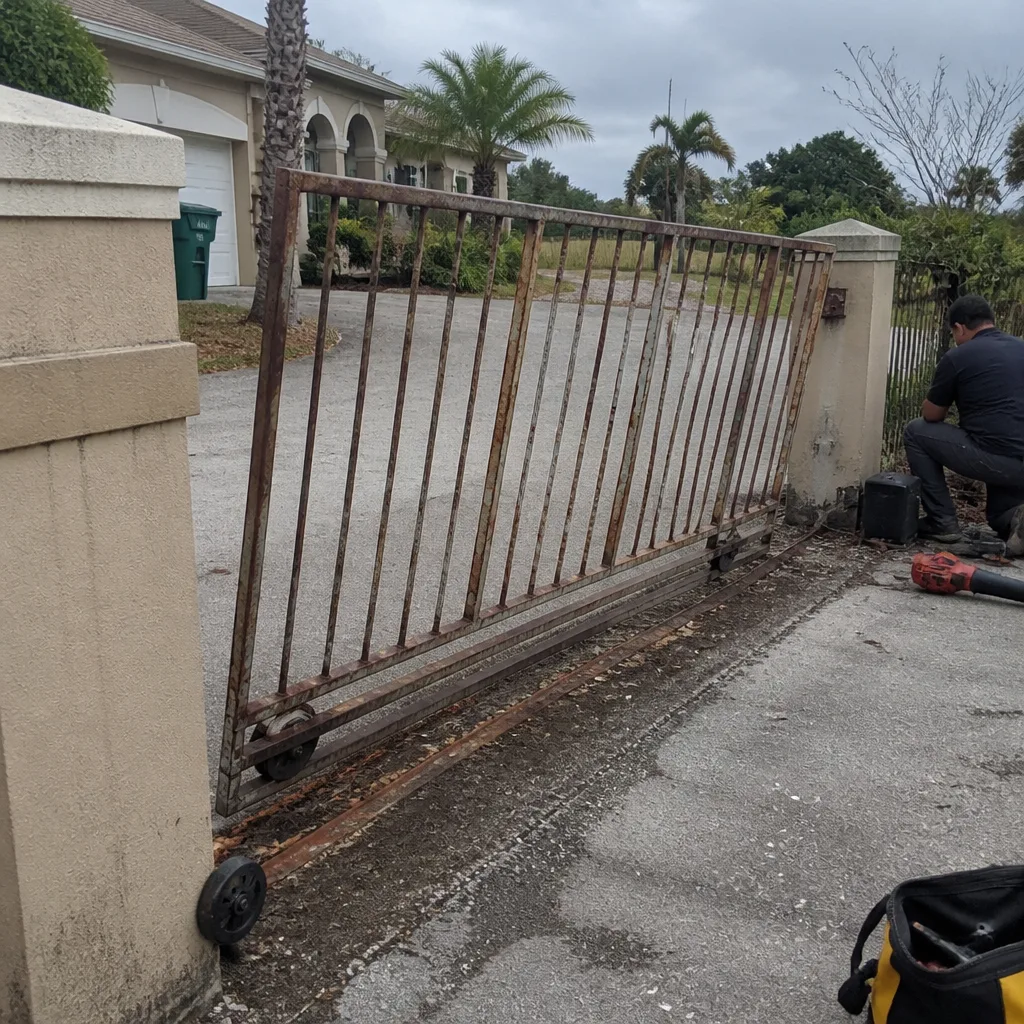 Before
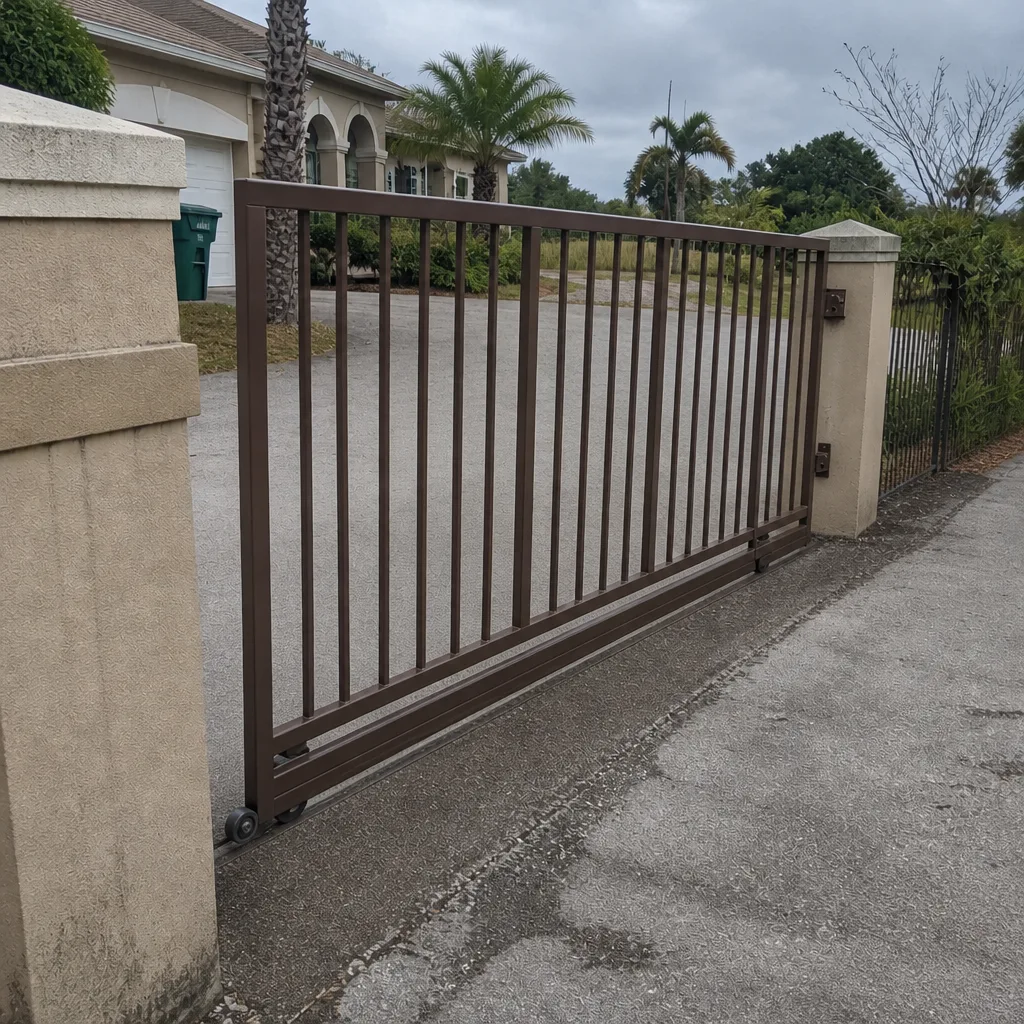 After
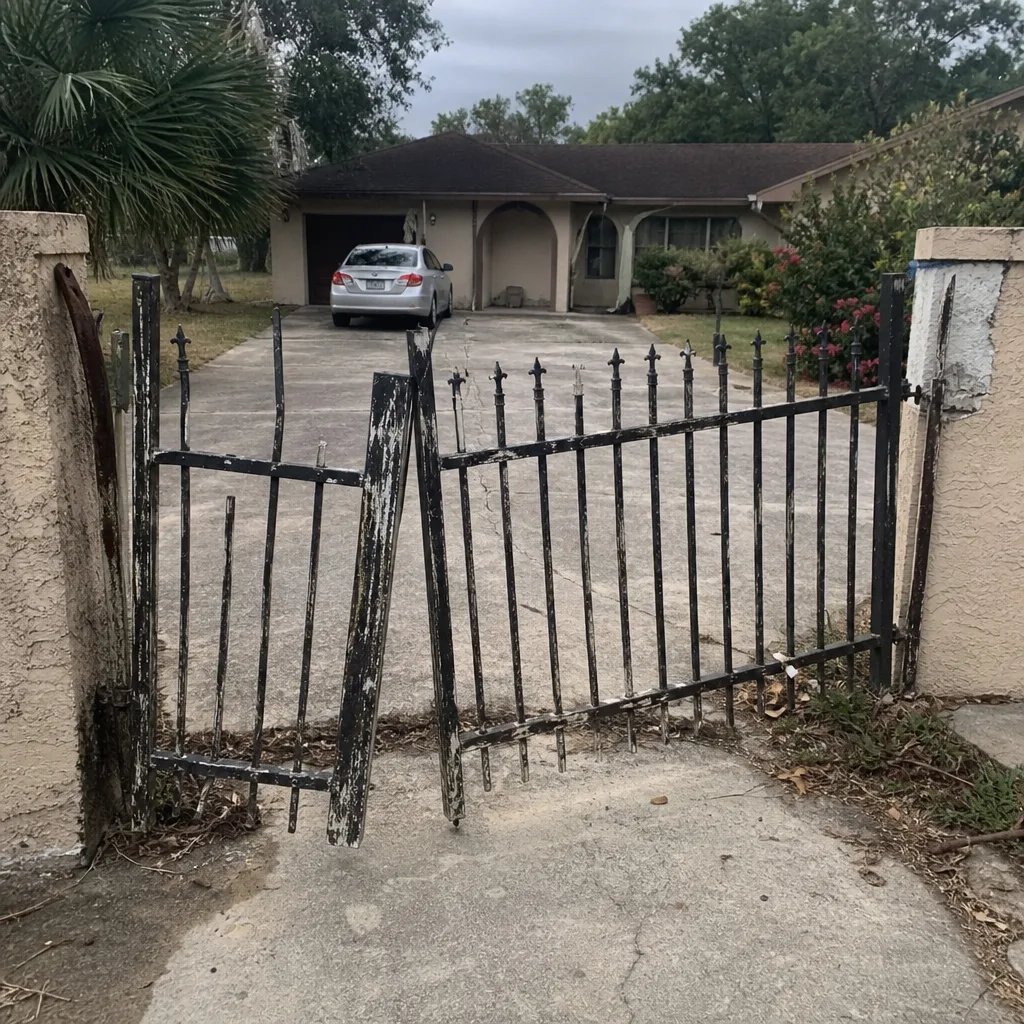 Before
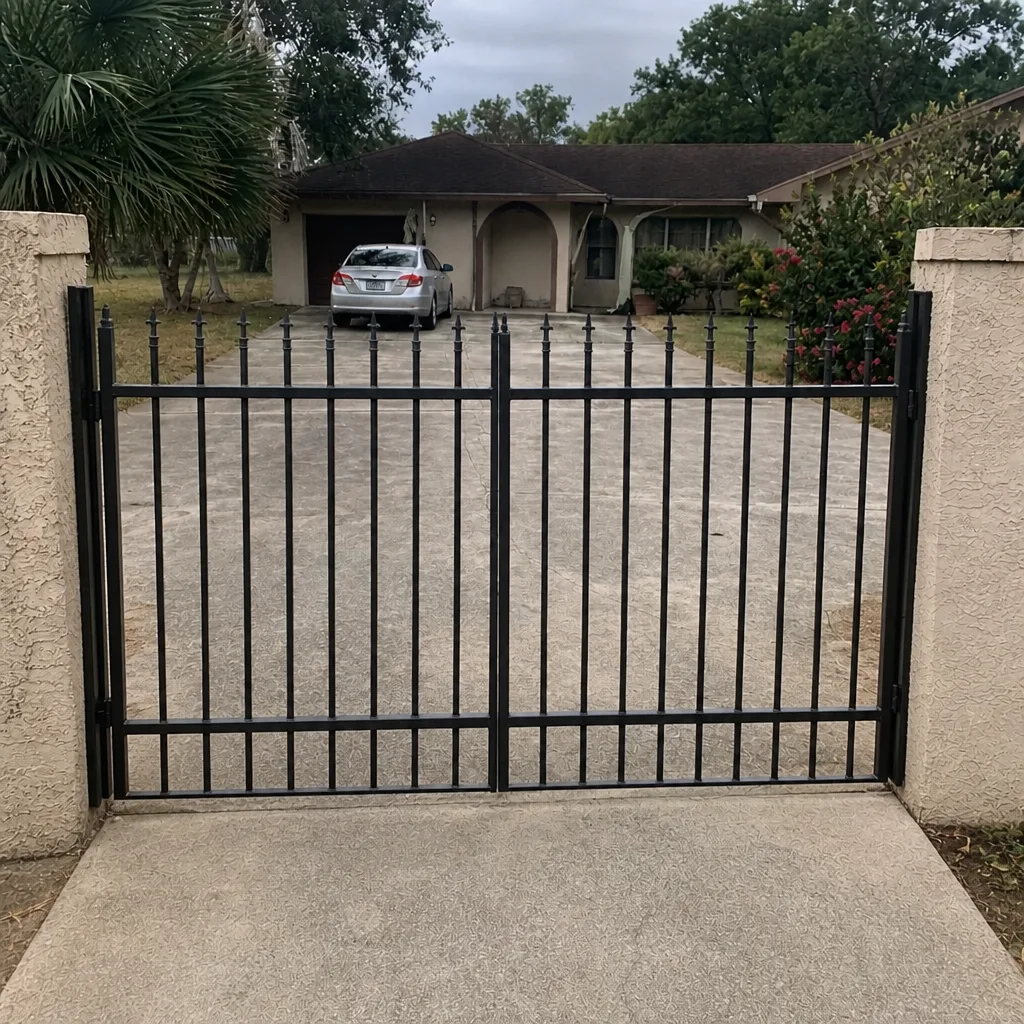 After
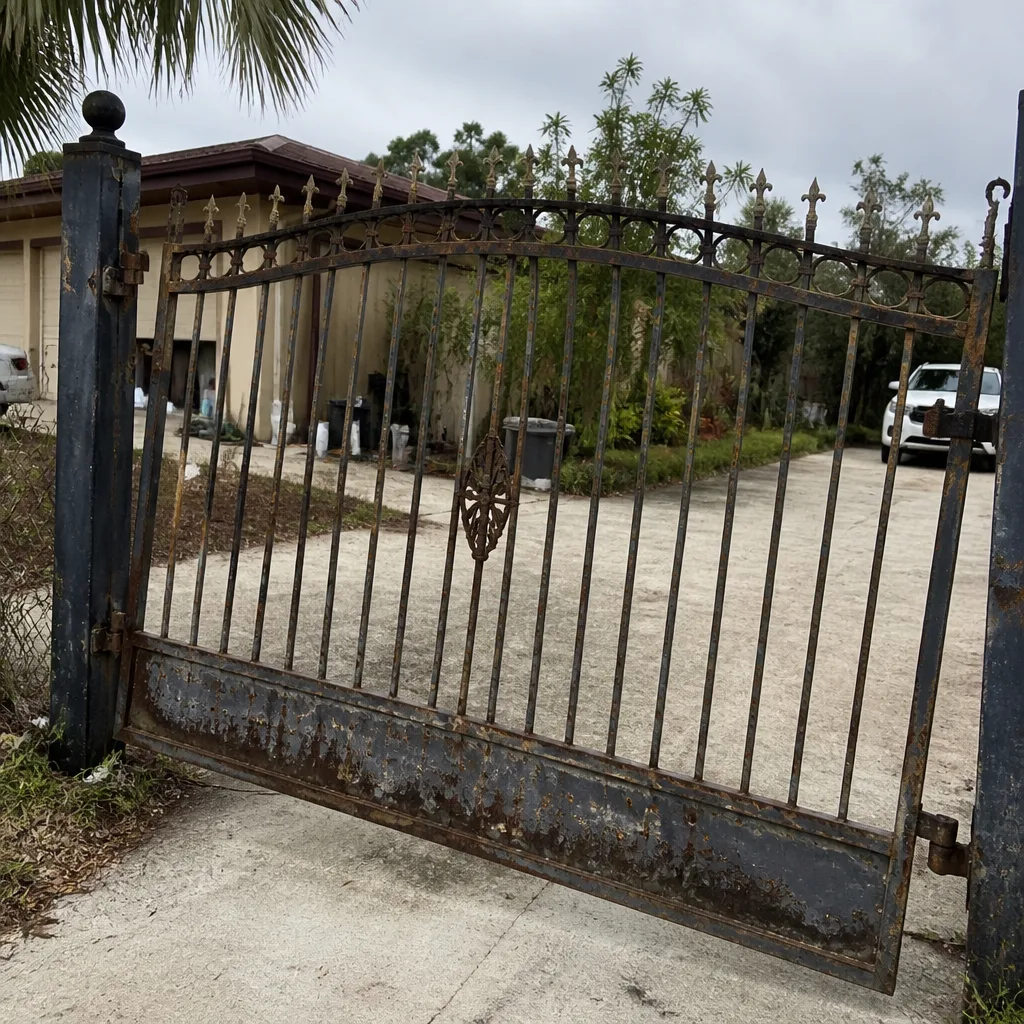 Before
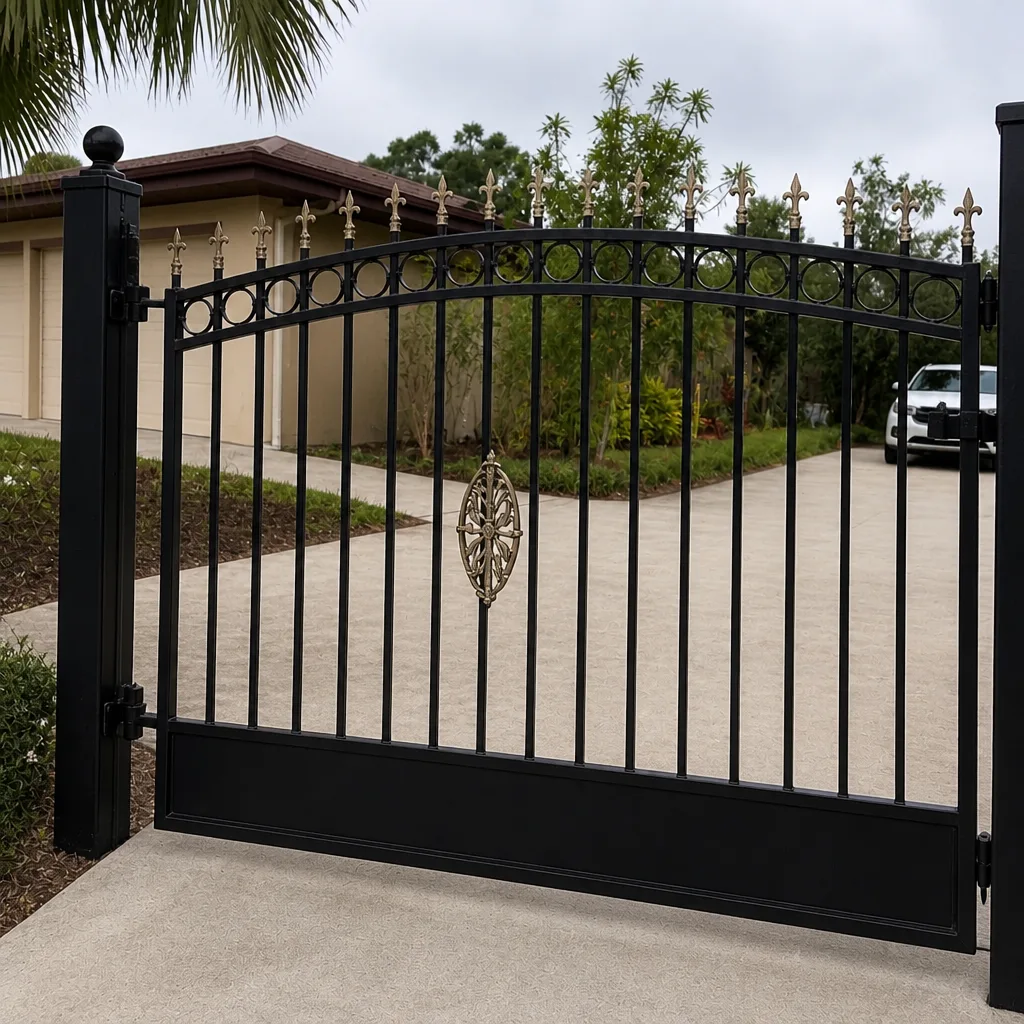 After
When to Call a Professional
Some gate problems are safe to observe and describe; others need a trained technician on site. Call a professional if the gate reverses unpredictably, if the operator shows error codes or smells of burning, if a post has shifted or a footing has cracked, if the gate drags or binds, if the safety sensors won’t stay aligned, or if the manual release doesn’t work. Electrical faults in particular shouldn’t be chased by anyone without experience with low-voltage control wiring and gate operators. If the gate is stuck open and you need it secured, say so when you call and we’ll prioritize the visit.
Gate Repair Lehigh Acres offers free estimates in Lehigh Acres. Call (888) 361-0704. We answer 24/7. Fast dispatch from 7am to 7pm, Sunday through Friday, closed Saturday. If you call outside those dispatch hours, we’ll book you into the next opening. For the full range of services, see our Gate Repair Lehigh Acres page.
Frequently Asked Questions
Gate repair pricing depends on the fault: a sensor recalibration or mechanical adjustment is at the low end, while a control board or operator replacement is at the higher end. We set the price per job with a free written estimate before any work begins, so you know the cost before we start. Call (888) 361-0704 for an exact quote; estimates are free.
In many cases, yes. We answer 24/7 and run fast dispatch from 7am to 7pm, Sunday through Friday, so same-day visits are often available for repair calls. A call outside dispatch hours gets booked into the next opening. Installation work is scheduled in advance because parts have to be matched to your gate. Call (888) 361-0704 to check availability for your repair.
Usually not. A gate that reverses before closing is typically reacting to a safety sensor that’s misaligned, dirty, or obstructed, or to a limit setting that’s drifted after a post shift. A technician can test the sensor circuit and the limits in a few minutes and tell you whether the operator itself is involved. Call (888) 361-0704 to get it diagnosed.
We work on the brand you already have. We’re experienced with LiftMaster, FAAC, BFT, Linear, Viking, Ghost Controls, DoorKing, Elite, and Mighty Mule systems across residential and commercial tiers. If your operator is a different brand, call and describe it; we’ll tell you honestly whether it’s something we can handle. Call (888) 361-0704.
Sandy, shifting soil is the usual cause. Lehigh Acres soil moves with moisture cycles, and that movement puts lateral pressure on gate posts. Over time a post drifts out of plumb, and the gate follows. Resetting the post and re-leveling the gate usually solves it, provided the footing is still sound. Call (888) 361-0704 for an on-site assessment.
Repair is usually the right call when the fault is isolated and the operator is otherwise healthy; replacement makes more sense when the operator is at the end of its service life or parts are no longer available. We look at the whole system, gate, posts, and operator, before recommending either. A free estimate will tell you which path is honest for your gate. Call (888) 361-0704.
The Bottom Line
Most gate failures in Lehigh Acres trace to one of three root causes: an electrical fault, mechanical wear, or environmental damage from shifting soil and storm conditions. Diagnosing the category correctly is what separates a minor adjustment from an unnecessary replacement. Watch the gate, test the manual release, check the sensors, and document what you find. Work with a specialist who handles both manual and electric systems and knows the brand you already have, and you’ll get a diagnosis that accounts for the whole gate, not just the part that stopped working. Call (888) 361-0704 for a free estimate. We answer 24/7, with fast dispatch from 7am to 7pm, Sunday through Friday.
Written by the team at Gate Repair Lehigh Acres.