
Last updated November 15, 2026
 Wrought iron
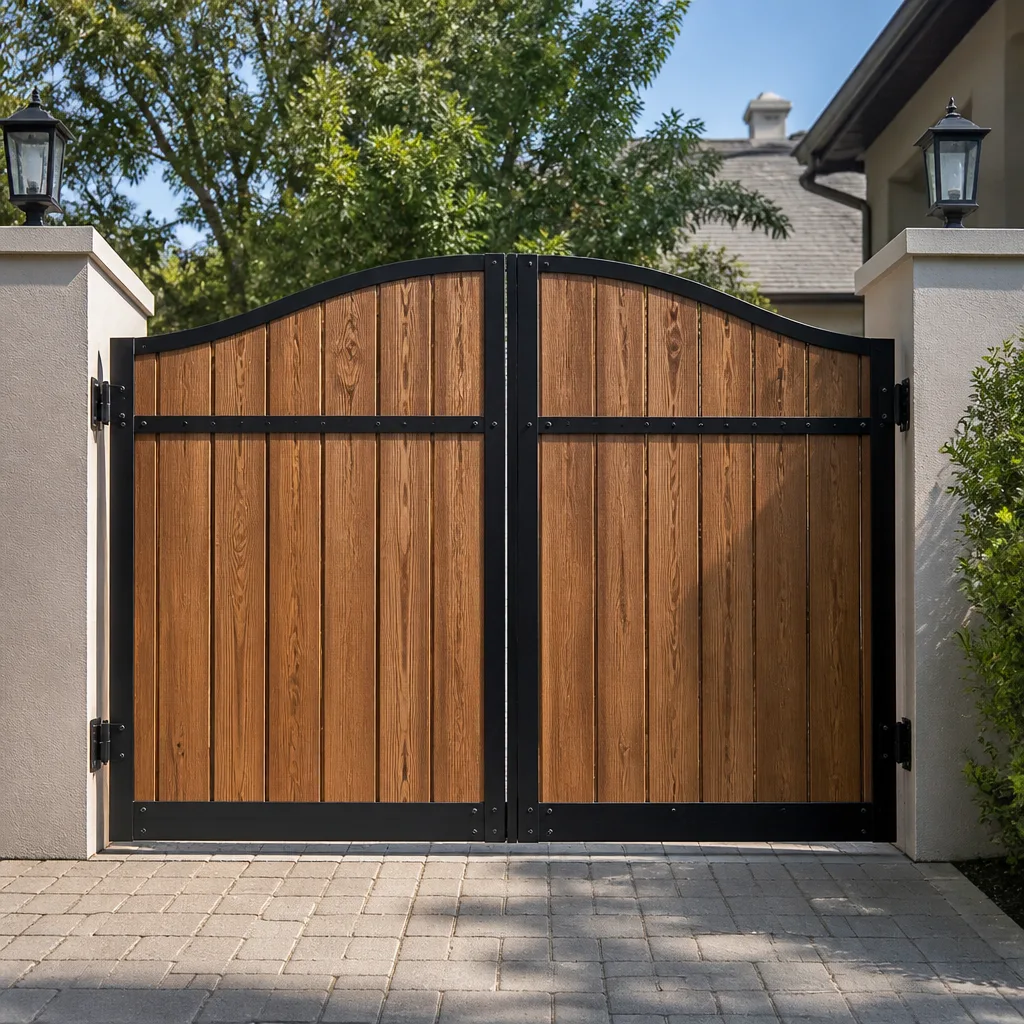 Wood & steel frame
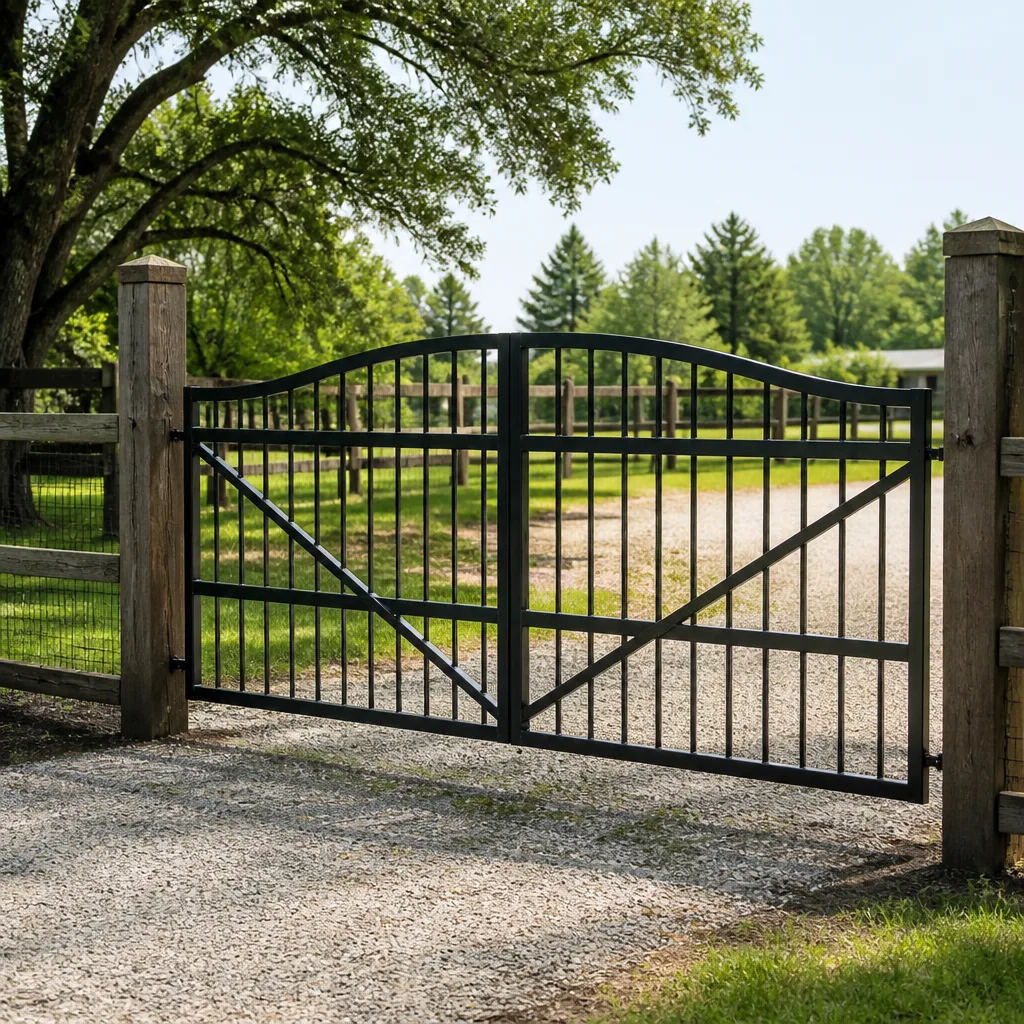 Farm & ranch
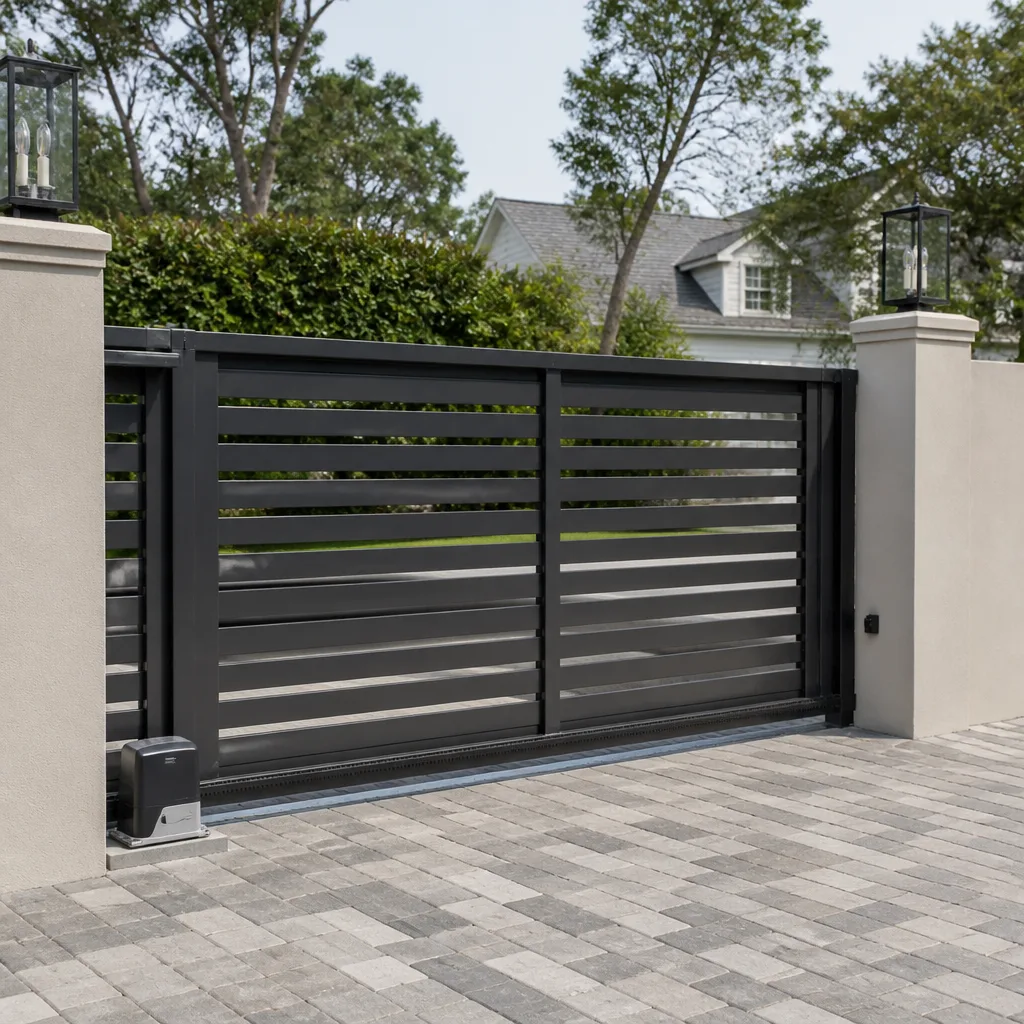 Sliding driveway gates
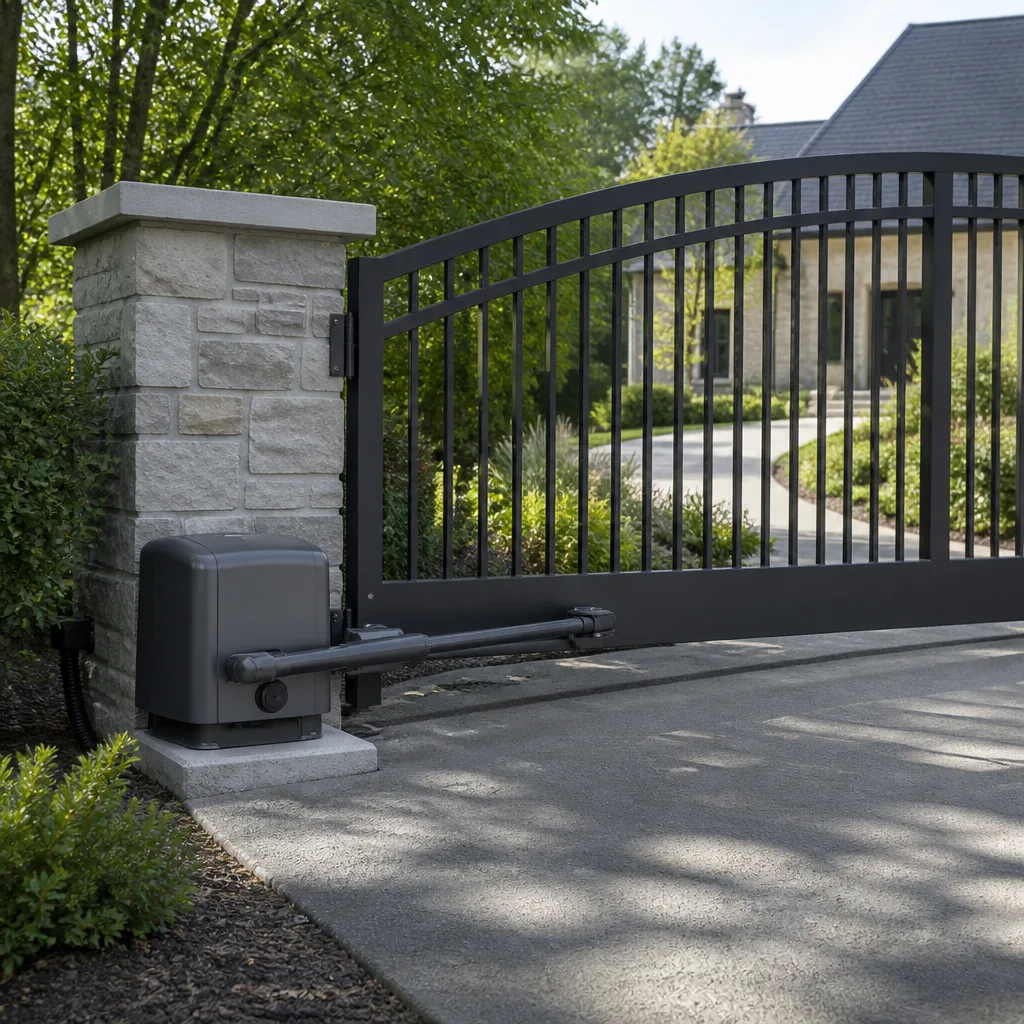 LiftMaster operators
Free on-site gate assessment - hinges, posts, and your LiftMaster or Nice gate operator checked before anything is quoted
The assessment is free and the quote is the invoice.
Get your free estimateGate Repair Maintenance Checklist for Lehigh Acres Homeowners
Most gate maintenance advice you’ll find online was written somewhere with four seasons and a hard freeze. It tells you to winterize, watch for frost heave, and brace for ice. In Lehigh Acres, none of that applies. What does apply is the opposite set of pressures: months of intense sun, a wet season that turns every low spot into standing water, and humid air that works on metal and wiring in slow, steady ways. A checklist built for a northern climate will miss the failures that actually happen here. This guide is built around the conditions that shorten gate life in Southwest Florida, with a month-by-month schedule, the right lubricants for this humidity, and the small inspections that catch a failing hinge before it becomes an emergency call.
Quick Answer
The core gate maintenance checklist for Lehigh Acres is: clear the drain path and inspect the operator box after every heavy rain, check the wiring conduit for insect intrusion, lubricate moving parts with a dry or synthetic product suited to high humidity, test the safety sensors and reverse function monthly, and log photos and notes after each pass so you build a service history. Time the heavier tasks around the wet season (June through September) rather than a generic quarterly calendar. Done consistently, this schedule prevents most of the failures we see on Gate Repair Lehigh Acres calls.
Styles & brands we work with
- Wrought iron
- Wood & steel frame
- Farm & ranch
- Sliding driveway gates
- LiftMaster operators
Table of Contents
- Why Generic Gate Maintenance Advice Fails in Lehigh Acres
- Month-by-Month Schedule: Wet Season vs. Dry Season
- The Right Lubricants for Florida Humidity (and the Ones That Backfire)
- Inspecting Wiring and Conduit for Fire Ant Infiltration
- Visual Signs a Hinge, Roller, or Arm Is 60-90 Days From Failure
- Monthly Safety and Operator Testing
- What to Photograph and Log After Every Maintenance Pass
- Brand-Specific Notes: What to Watch on Common Operators
Why Generic Gate Maintenance Advice Fails in Lehigh Acres
A gate in Lehigh Acres lives in a climate that punishes certain components and leaves others alone. Understanding that split is the foundation of a maintenance routine that actually works, because it tells you where to spend your time. A northern checklist will have you greasing everything and worrying about ice; here, the priorities are water management, sun degradation, and insect intrusion into electrical enclosures.
The wet season runs roughly June through September. During those months, afternoon storms dump enough rain fast enough that water pools in low spots and drains slowly through sandy soil. That standing water finds every gap in an operator housing, every low point in a conduit run, and every hinge that sits close to the ground. The dry season that follows brings the opposite problem: relentless sun and low humidity that dry out seals, bake plastic sensor housings, and fade the coatings that protect metal from rust.
So a gate here fails in a different sequence than a gate in Ohio. Instead of freeze damage to concrete footings, you get corrosion at the base of posts and at hinge plates. Instead of ice jamming a track, you get grit and grit-bound lubricant packed into rollers. Instead of a spring snapping after a cold snap, an operator board corrodes or shorts after a season of humid air and ant activity. If you’re seeing early warnings of this kind of wear, the honest assessment a specialist gives on gate repair is more useful than a generic tune-up.
One point matters more than any other in this climate. The single maintenance step that prevents more Lehigh Acres gate failures than lubrication or tightening bolts is clearing the drain path around the operator box after heavy rain. Water that stands against an operator housing works its way inside over weeks and months. Clearing that path is unglamorous, it takes a few minutes, and most checklists don’t mention it at all.
Month-by-Month Schedule: Wet Season vs. Dry Season
The right maintenance cadence in Lehigh Acres follows the weather, not the calendar quarter. Here is how we schedule the year for a residential automated gate in this climate.
Wet Season (June through September)
- After every heavy rain: Clear the drain path at the base of the operator housing and the post. Check that water isn’t pooling against the arm or the control box. Five minutes here saves an operator board later.
- Weekly: Walk the gate track and swing path for debris, sand, and washed-in grit. Clear it before it packs into rollers and hinges.
- Monthly: Test the safety sensors and the reverse function. Inspect the conduit entry points for insect activity. Check hinge and roller bolts for looseness.
- Mid-season (August): Do a full inspection of the operator housing for water intrusion, look at wire connections for corrosion, and check that the gate opens and closes to the exact same limit positions. Slight drift in limit positions is an early sign the operator is working harder than it should.
Dry Season (October through May)
- Monthly: Check the coating or paint on metal posts and hinge plates for sun fading or rust bloom. Sun exposure is highest in these months even as temperatures ease.
- Quarterly: Inspect plastic sensor housings, control box seals, and any exposed wire insulation for UV cracking. Lubricate per the product guidance below.
- Late dry season (April-May): Buff the gate hardware before wet season, tightening every bolt that has loosened over the dry months, so the wet season starts from a clean baseline. Clear any leaf litter and debris from the drain path so the first storm drains freely.
If you run a manual gate, the schedule is lighter. Test the swing or slide path monthly, check the hinges, and inspect the base of the posts for corrosion and water pooling. Manual gates in Lehigh Acres mostly fail at the hardware, not the operator. When they do need electric work or a conversion, that’s the point to bring in electric gate repair rather than retrofit it yourself.
The Right Lubricants for Florida Humidity (and the Ones That Backfire)
Here is a mistake we see often: a homeowner greases every moving part with a heavy general-purpose grease, and within a month that grease has collected sand, grit, and plant material into a grinding paste. In a humid climate with sandy soil, the wrong lubricant accelerates wear instead of preventing it. The goal isn’t to coat everything in grease. It’s to use products that stay in place, resist washing out in rain, and don’t hold grit.
Products that tend to work well in this climate:
- Dry film (PTFE-based) lubricants for hinges, rollers, and the track. These dry to a film that doesn’t attract grit and stand up to humidity. They’re the best default for exposed moving parts.
- Synthetic lithium or silicone grease for pivot points and arm-to-gate connections that need a lasting film and don’t see direct sand exposure.
- Silicone spray for plastic and rubber parts, sensor housings, and weather seals, to slow UV cracking and keep moving parts free.
Products to avoid:
- Thick general-purpose grease on exposed tracks and rollers. It collects grit and turns into an abrasive paste in weeks.
- Thin household oils. They wash out in the first heavy rain and leave the part unprotected in the wet season.
- Anything applied over existing grit without cleaning first. Clean the surface, dry it, then lubricate.
Wipe everything down before you apply anything. A lubricant over dirt just traps the dirt. In our experience, the parts that need attention most are the ones closest to ground level, where water, sand, and splashing concentrate. If your operator is a brand like FAAC or BFT, check the operator manufacturer’s guidance on lubrication points so you’re not greasing a component that’s meant to run dry.
Inspecting Wiring and Conduit for Fire Ant Infiltration
This is one of the Southwest Florida problems generic checklists never mention, and it causes some of the most confusing electrical faults we diagnose. Fire ants are attracted to the warmth and dryness inside electrical enclosures, and the conduit that runs to an operator or remote keypad is a perfect tunnel for them. When they build a nest inside a conduit or a control box, they can bridge connections, damage insulation, and cause intermittent faults that come and go with no obvious pattern.
The symptoms look electrical but behave strangely. The gate might fail to open in the morning and work fine in the afternoon. The remote might work from a distance but not up close. A limit switch might stick for a day and then behave. If you see this kind of intermittent behavior after a stretch of dry weather, insect intrusion belongs on the list of suspects alongside a failing board or a loose wire.
Safe inspection steps a homeowner can do:
- With the operator powered down at the breaker, check the outside of the conduit and control box for ant trails, small mounds of soil, or debris around the entry points.
- Look at the seal or fitting where the conduit enters the box. If it’s open or loose, that’s an entry point.
- Look for corrosion or discoloration at wire connections inside the box, with power off.
What you should not do is open a live control box or dig into wiring to chase a fault. The operator’s wiring carries line voltage, and the inside of a control board holds energy even after power-down in some designs. If you suspect insect intrusion has reached the wiring, this is a job for a technician who knows the system. Diagnosing electric gate repair is where a specialist’s wiring familiarity matters most.
Visual Signs a Hinge, Roller, or Arm Is 60-90 Days From Failure
The best time to schedule a gate repair is while the gate still works. Catching a worn part before it fails means you book a scheduled visit instead of an emergency call. These are the visual indicators we look for that suggest a component has roughly two to three months of reliable life left.
- A hinge that has started to tilt or show a widening gap at the pin. As the pin wears, the gate sags, and the sag accelerates the wear. A slight, even sag is early wear. A visible tilt with the gate hanging lower on one side is further along.
- Rollers that have flat spots or no longer spin freely by hand. A roller that skips or drags has worn past its surface. Once it stops spinning freely, it’s grinding against the track instead of rolling.
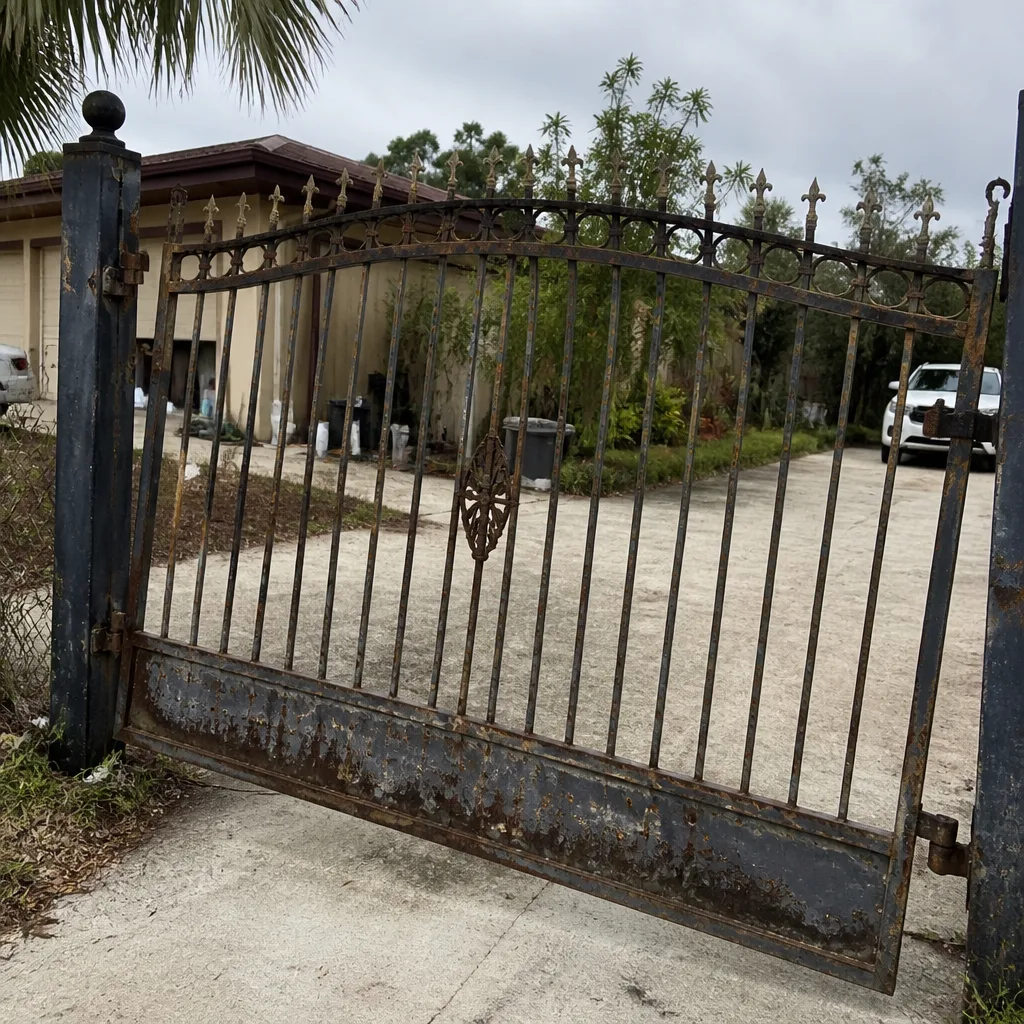
- Rust bloom at the base of a post or hinge plate, with bubbling paint. Small surface rust is manageable. Rust that has lifted the coating and shows pitting is deeper into the metal.
- An arm or linkage that has developed play at the joint. A slight wobble in the arm-to-gate connection means a bushing is wearing out. Left alone, the wobble grows and puts stress on the operator.
- Limit positions that have drifted. If the gate used to stop flush and now stops slightly short or overshoots, the linkage has worn or the operator is laboring. This is an early sign that the mechanical side needs attention.
- New noises under load. A squeal, grind, or clunk that wasn’t there before is the gate telling you something is binding or wearing.
None of these require panic. They require scheduling. Pick up your phone, describe what you’re seeing, and book a visit while the gate is still functional. A brand like Linear or Viking has a predictable wear pattern on its mechanical parts, and a technician who works with those operators regularly can often tell from a couple of photos roughly how much life is left.
Monthly Safety and Operator Testing
An automated gate is a moving piece of machinery on your property, and the safety systems matter more than the convenience. Test these monthly, and do it the same way each time so you can compare results.
- Test the obstruction reversal. Place a piece of wood or a heavy object in the gate’s path and run it toward the object. A properly working gate should stop and reverse. Do this for both the open and close directions if the safety system covers both.
- Test the photo-eye safety sensors. Pass an object through the sensor beam while the gate is closing. The gate should halt or reverse. If it doesn’t, the sensor is misaligned or failed, and the gate isn’t safe for automatic operation.
- Test the manual release. With the operator disengaged (power off), the gate should move freely by hand. If it binds or sticks, the mechanical side needs attention regardless of how the operator behaves.
- Check the stop limits. The gate should open fully without straining and close fully without slamming. Overshooting or under-running limits put stress on the operator and the hardware.
Never stand in the path of the gate or reach into the moving mechanism to “check” it while it’s cycling. A heavy gate panel or a sliding gate that comes off its track can cause serious injury, and the operator won’t always stop in time. If any safety test fails, stop using the automatic function and call for service. Don’t run the gate with a failed sensor just because it’s convenient.
What to Photograph and Log After Every Maintenance Pass
A service history you can actually read is a maintenance tool. When a part finally needs replacing, a documented history tells a technician exactly when the wear started and what’s been tried. It also saves you money and time, because it removes guesswork. Here’s a simple routine.
- Photograph the operator housing and its base after every pass, from the same angle, so you can compare water intrusion or rust over time.
- Photograph each hinge, roller, and the arm connection up close. Zoom on the wear points. A dated photo is your baseline.
- Note the date and the task performed. Clearing the drain, lubricating, tightening, testing. Keep it to a line or two per entry.
- Report safety test results. Did the gate reverse on the obstacle test? Did the sensor work? A simple yes or no per test.
- Note any new noises or behavior changes. “Slow to start in cold mornings,” “remote works from the driveway but not from the house.” These notes help a technician diagnose months later.
Keep the log in a folder or a notes app, and back up the photos. When you call for service, you can describe what’s changed since the last visit, and the technician can match that against what they see. If you’re considering whether repair or replacement makes more sense, this history is the clearest input.
Brand-Specific Notes: What to Watch on Common Operators
Different operators fail in different ways, and knowing the pattern saves diagnostic time. These are general observations, not a promise about any specific unit, but they’re the kind of pattern recognition that separates a gate specialist from a generalist.
Residential-tier operators
Brands like Ghost Controls and Mighty Mule are common on residential driveways, and their failure patterns tend to center on the control board and the battery backup. In Lehigh Acres humidity, the board is where water intrusion and ant activity do the most damage. Check the housing seal and the drain path around the operator box. Their mechanical arms are usually robust; the electronics are what need attention.
Professional and commercial-tier operators
FAAC, BFT, Linear, Viking, LiftMaster, DoorKing, and Elite span both residential and commercial use. On commercial systems especially, the safety sensors, the loop detectors, and the wiring terminations carry more traffic and more wear. The conduit runs are longer, which means more opportunities for water and insects. On these systems, the safety testing routine above matters even more because more people rely on the gate every day.
We work on the brand you already have, and part of the value of a dedicated gate specialist is knowing whether a symptom points to the board, the motor, the wiring, or a mechanical bind. Nine brands, one specialist, is the short version of why it pays to call a gate-focused company rather than a general handyman. If you’re not sure what you have, the brand name and a photo of the operator are usually enough to start the conversation.
Common Mistakes to Avoid
- Greasing exposed tracks and rollers with heavy grease. It collects sand and grit in a humid climate and grinds against the parts. Use a dry film or a product the manufacturer specifies.
- Ignoring the drain path after rain. Standing water against the operator housing is the cause of more Lehigh Acres gate failures than almost any other single issue. Clear it after every heavy rain.
- Skipping the safety sensor test. A gate that closes without the sensors working is a hazard. Test the reverse and the beam monthly.
- Overlooking the conduit entry points. Loose seals let in both water and fire ants. Check them during the wet season and look for ant activity during dry spells.
- Using the gate after a warning sign. A new grinding noise, a drifting limit position, or a jerky start is the gate’s way of telling you to schedule service, not wait for a breakdown.
- Running the operator without a service history. When something fails and there’s no record, diagnosis takes longer and costs more. Log your passes.
- Trying to diagnose live wiring yourself. The control box carries line voltage. Visual inspection with power off is fine; anything inside the wiring is a job for a technician.
See the difference
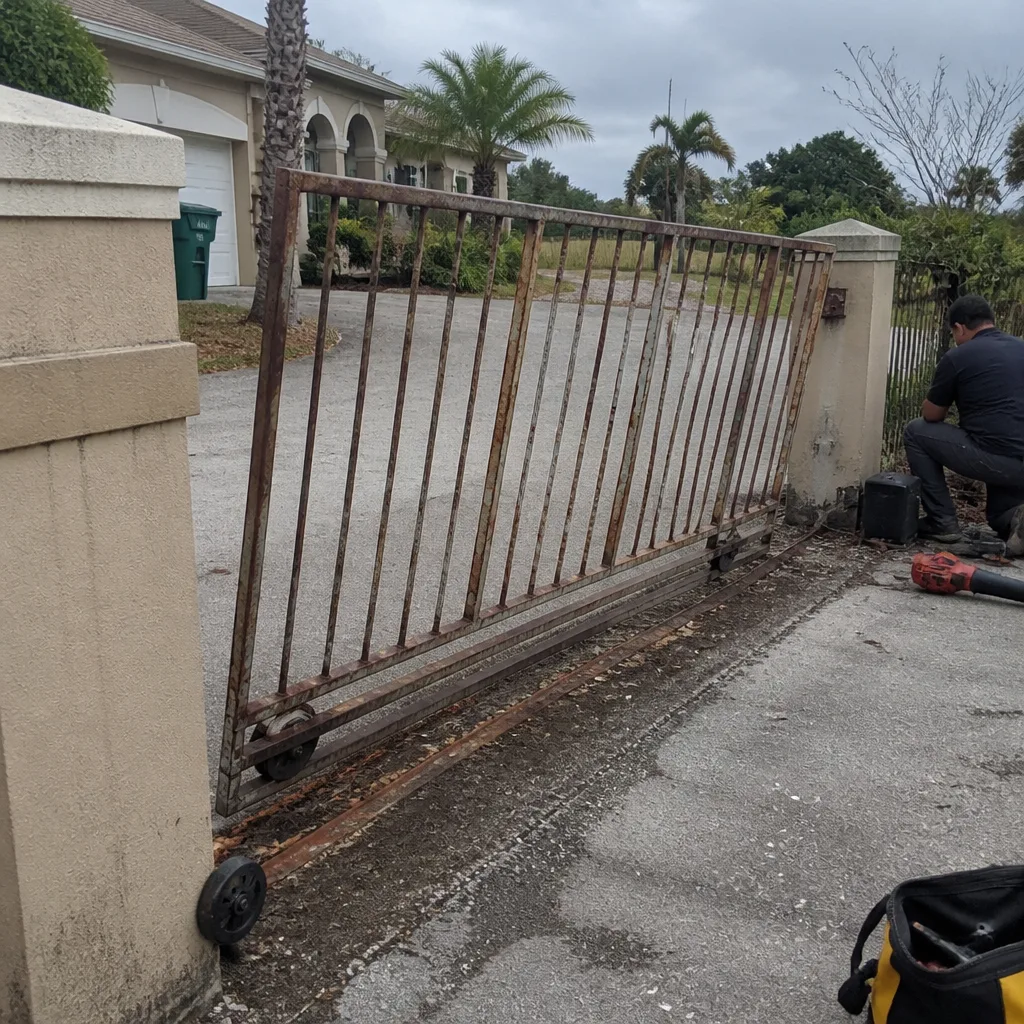 Before
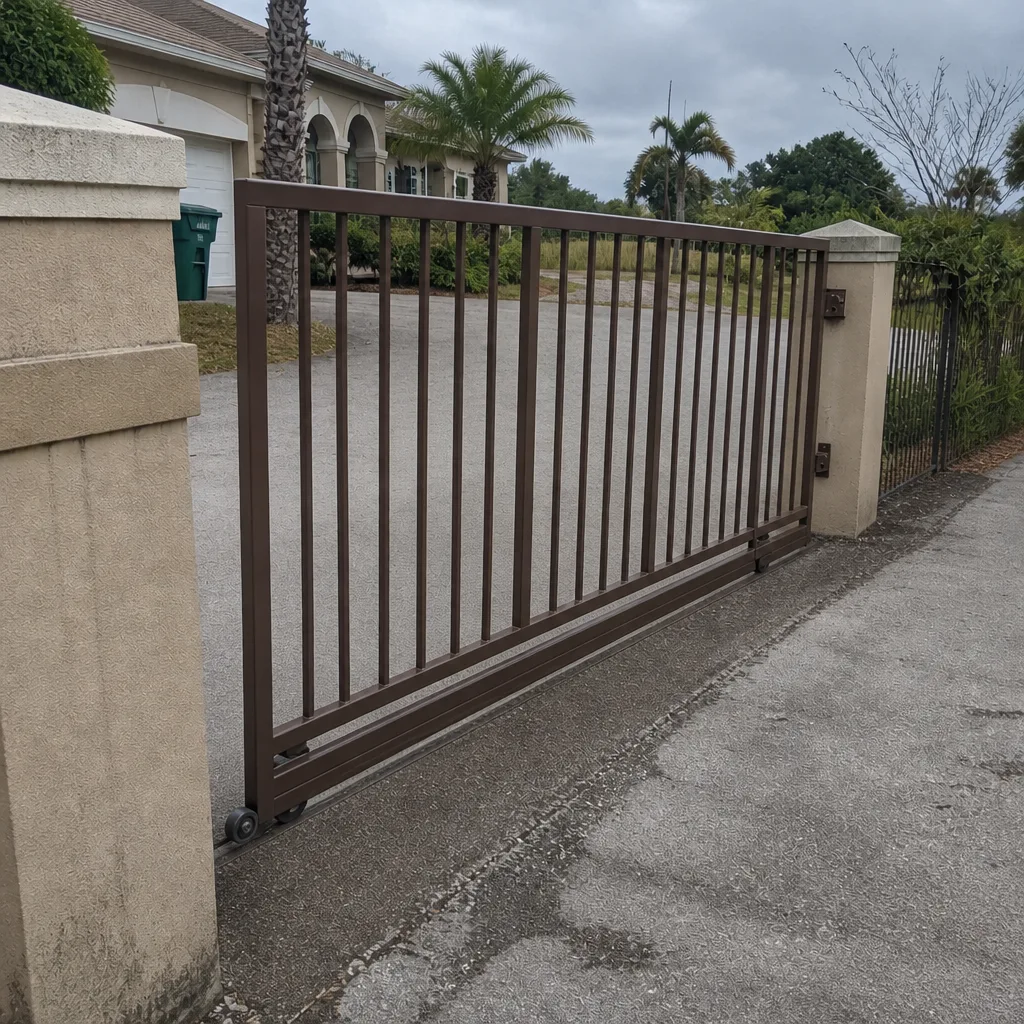 After
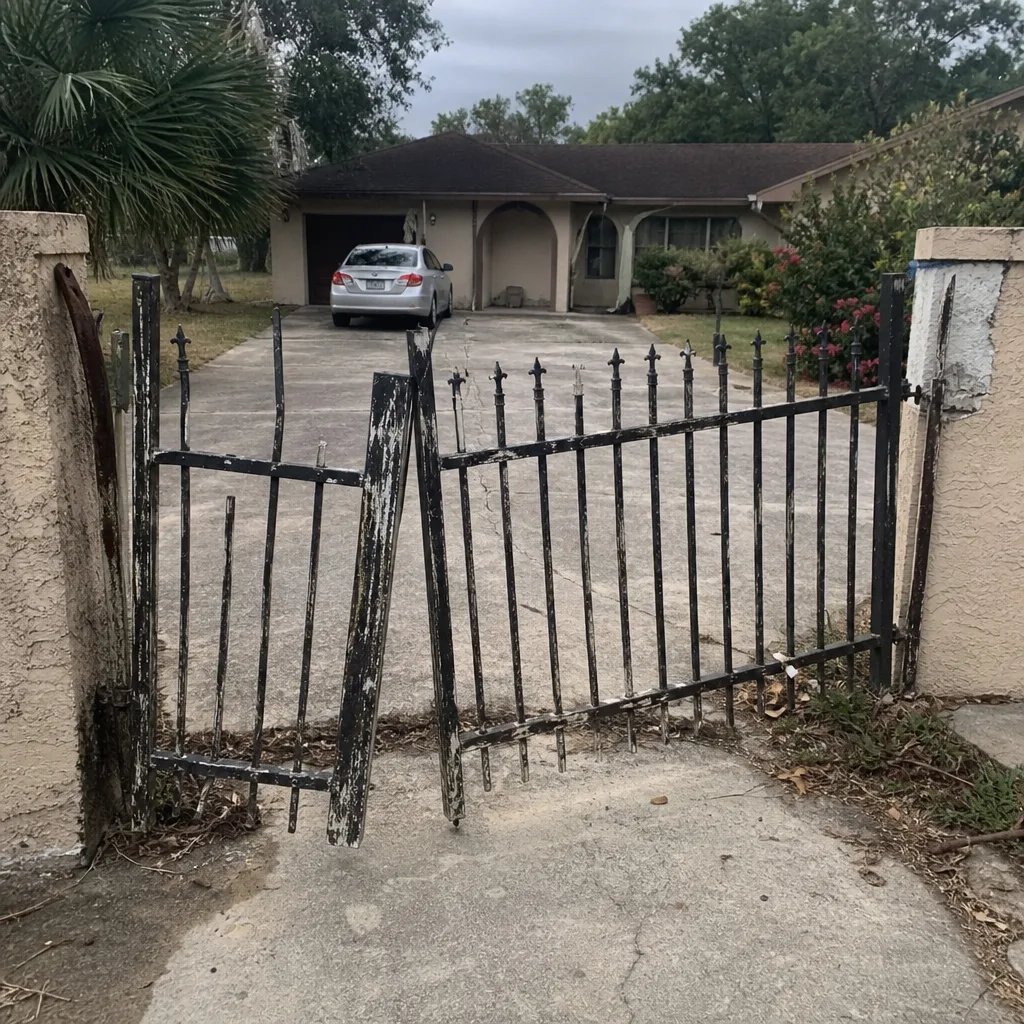 Before
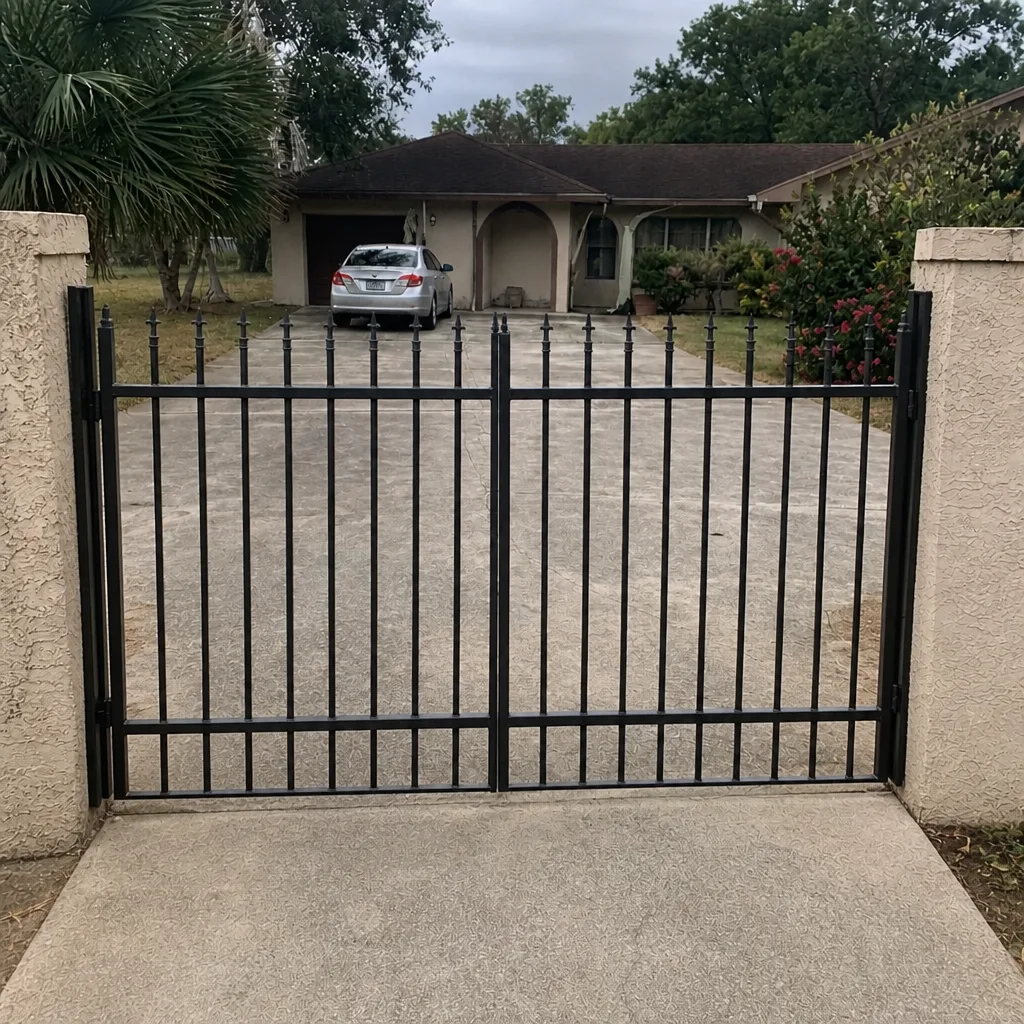 After
 Before
 After
When to Call a Professional
Some tasks belong in the homeowner’s routine, and some belong on a technician’s bench. Call a professional when the gate won’t fully open or close, when the operator stops mid-cycle or behaves unpredictably, when a safety sensor fails its test, when you hear a new grinding or clunking sound, when the gate has visible tilt or sag at a hinge, or when water or insects have reached the wiring inside the control box. Also call if you’re weighing whether to repair or replace. A specialist can tell you which is more cost-effective before you spend money on a repair that won’t last. Gate Repair Lehigh Acres offers free estimates in Lehigh Acres, and our technicians have up to 14 years of experience. Call (888) 361-0704. We answer 24/7. Fast dispatch, 7am-7pm, Sunday through Friday. We’re closed on Saturday, so a call that day is booked into the next opening.
Frequently Asked Questions
Test the safety sensors and reverse function monthly, and do a full inspection at least twice a year, once right before the wet season and once at its end. In Lehigh Acres, the wet season is the hardest test on the operator, so the June and post-September passes matter most. Clear the drain path after every heavy rain regardless of the calendar.
Water pooling against the operator housing and the base of the gate post is the biggest cause we see, followed by grit-pack on rollers and insect activity in the conduit. All three get worse in the wet season. For an exact quote on a repair, call (888) 361-0704. We answer 24/7. Fast dispatch from 7am to 7pm, Sunday through Friday.
You can safely check the outside of the box for ant trails, soil, or loose seals with the operator powered down. Anything inside the box, including the wire terminations and the board, should be handled by a technician, because line voltage and stored energy in some designs make it dangerous. If the gate behaves intermittently, that’s a sign the wiring needs a professional look.
A dry film (PTFE) lubricant is the best default for exposed hinges, rollers, and tracks, because it doesn’t attract grit. Synthetic lithium or silicone grease works for pivot points that need a lasting film. Avoid heavy general-purpose grease on exposed moving parts; it collects sand and accelerates wear here.
Repair usually makes sense when the failure is isolated to a component like a hinge, a sensor, or a control board, and the surrounding hardware has life left. Replacement is worth considering when the gate structure has widespread corrosion, the operator is beyond reliable service, or the repair cost would be close to a new installation. We assess honestly and recommend repair first, replace only when it makes sense.
We work on both. Manual gate repair covers hardware, hinges, posts, and corrosion, while electric gate repair covers motors, control boards, safety sensors, and wiring. If a manual gate is showing mechanical wear, or you’re considering converting to an automatic system, we handle the full arc from the motor to the hinge. For Lehigh Acres homeowners, that means one call covers both sides of the gate.
The Bottom Line
A maintenance checklist built for a northern climate misses the failures that actually happen in Lehigh Acres. What works here is a schedule built around the wet season, the right lubricants for high humidity, a habit of checking conduit entry points for insect intrusion, and a service log that turns vague “it feels off” symptoms into a real history. Catch hinge, roller, and arm wear at the 60-90 day mark and you’ll schedule repairs instead of making emergency calls. When something is beyond the checklist, or you just want a specialist to look, we’re a call away. Call (888) 361-0704 for a free estimate. We answer 24/7. Fast dispatch from 7am to 7pm, Sunday through Friday. Our technicians have up to 14 years of experience and know the brand you already have.
Written by the team at Gate Repair Lehigh Acres.