
Last updated November 15, 2026
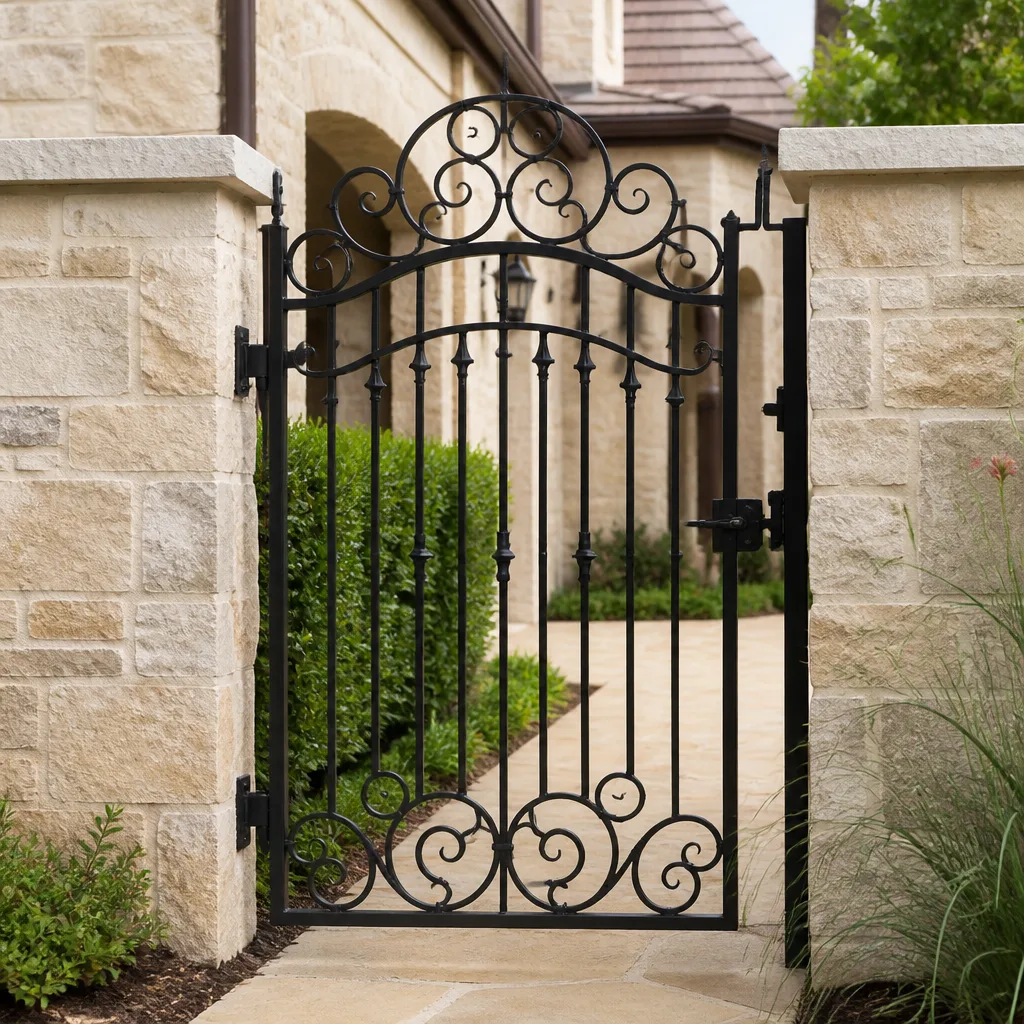 Wrought iron
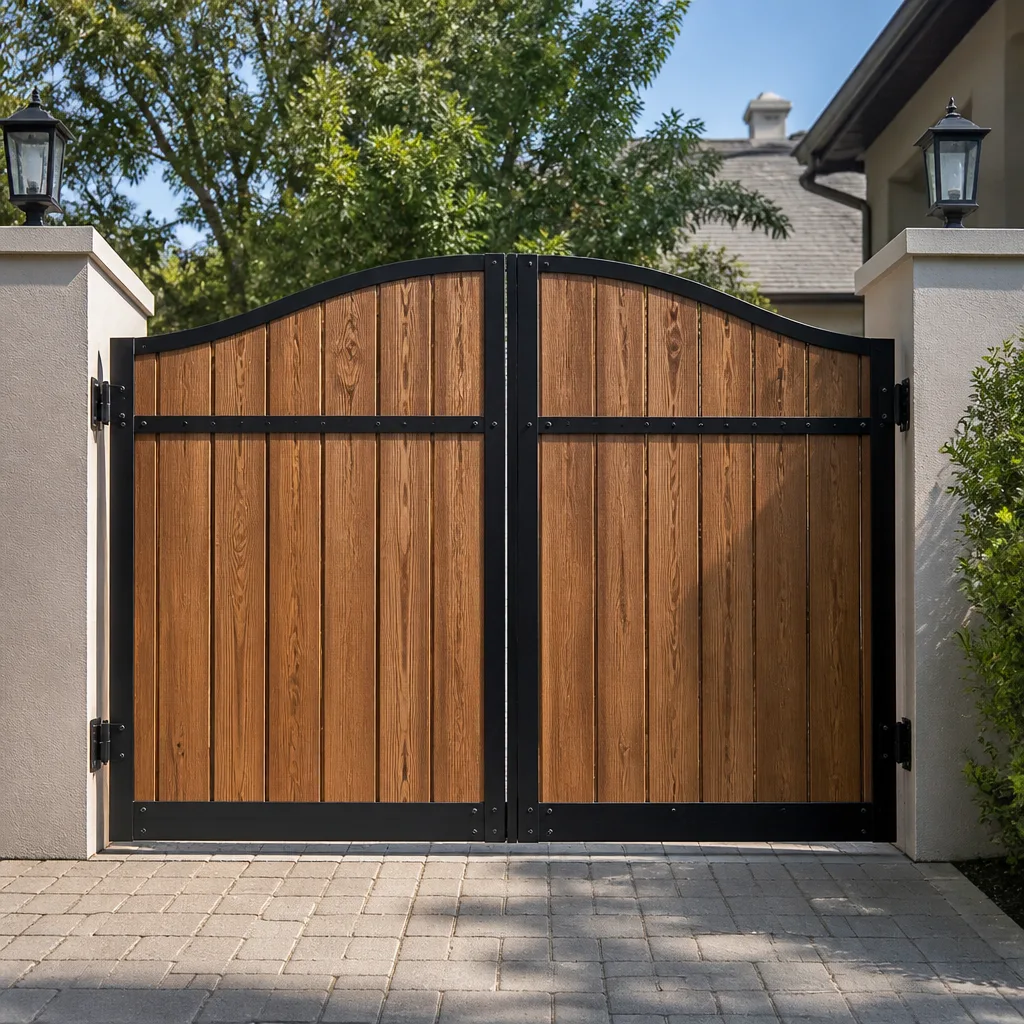 Wood & steel frame
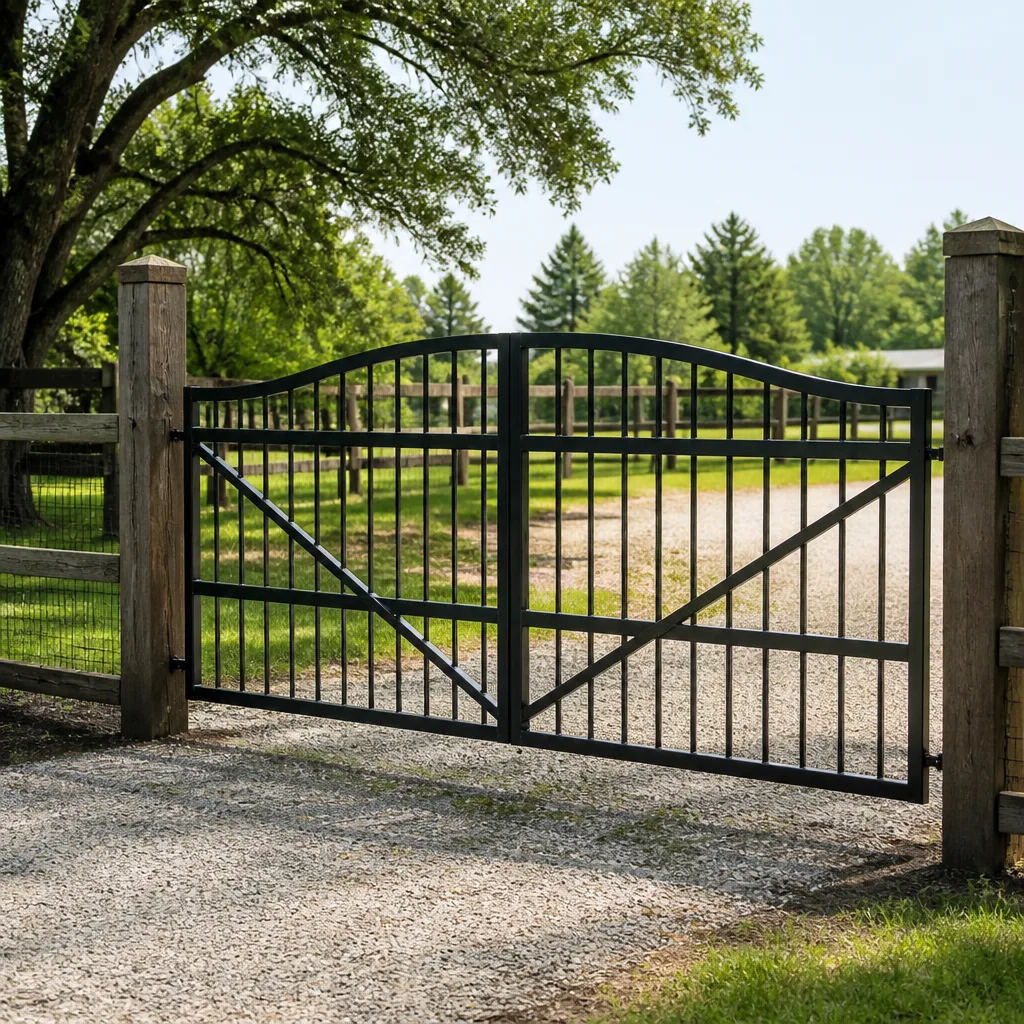 Farm & ranch
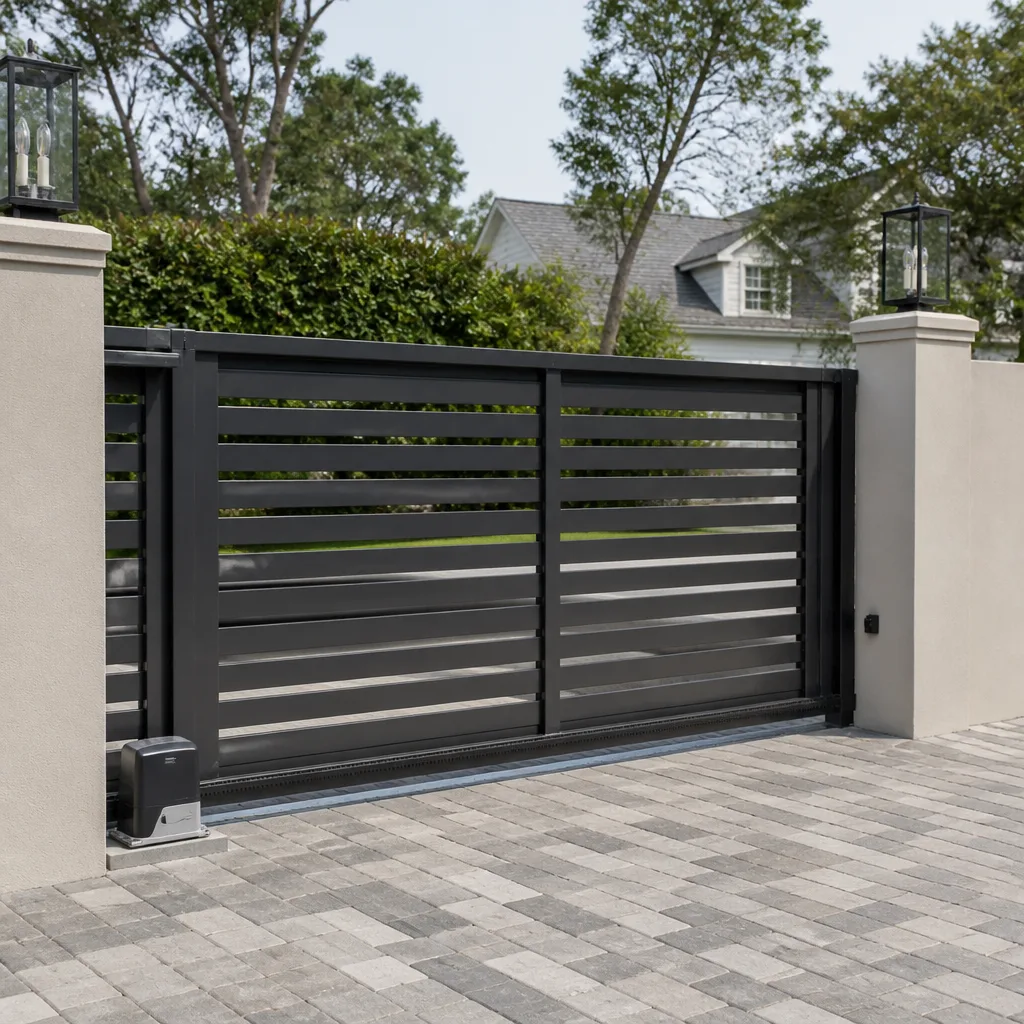 Sliding driveway gates
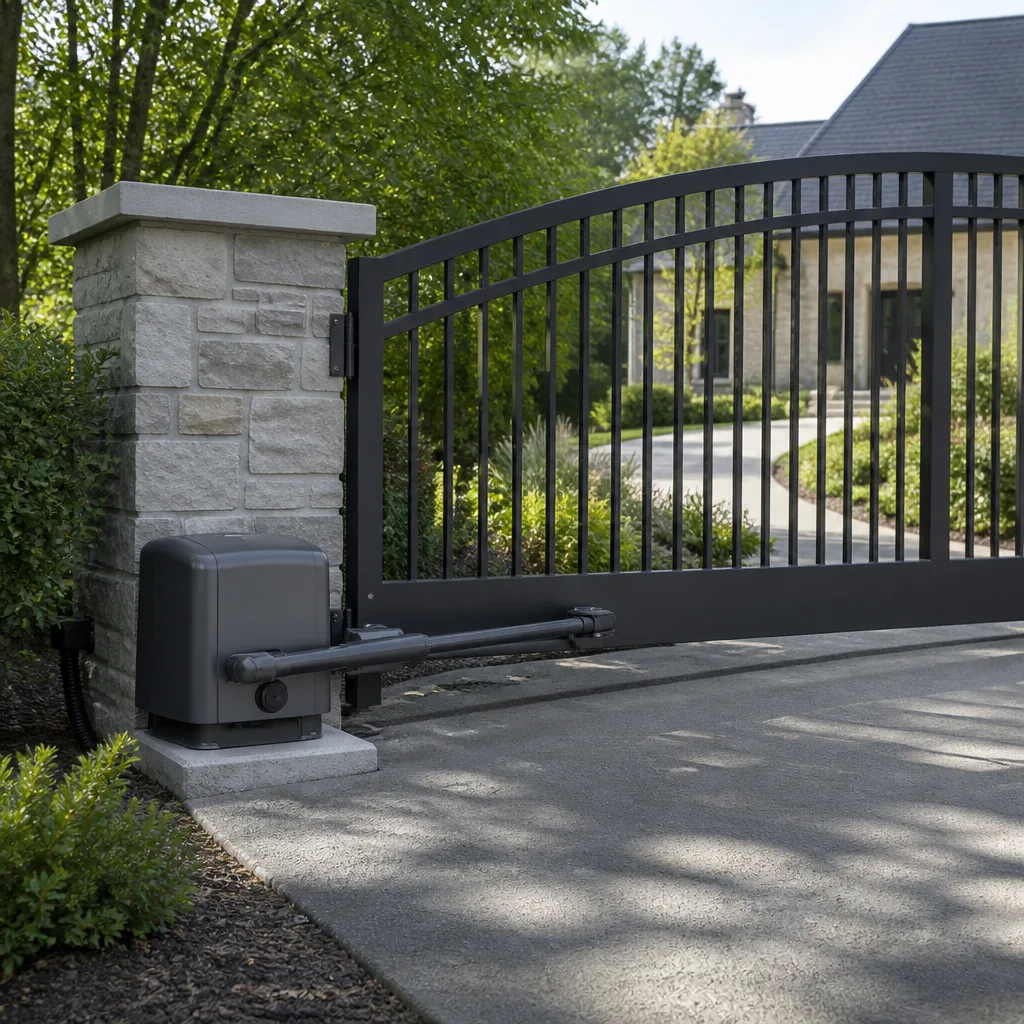 LiftMaster operators
Free on-site gate assessment - hinges, posts, and your LiftMaster or Nice gate operator checked before anything is quoted
The assessment is free and the quote is the invoice.
Get your free estimateGate Repair Permits, Codes & Inspections in Lehigh Acres, FL: What You Need to Know
Most gate work needs no permit at all. A hinge that needs tightening, a photo-eye knocked out of alignment by a garbage truck, a remote that stopped talking to a LiftMaster receiver – none of that goes near Lee County’s permitting desk. What surprises homeowners is where the line actually sits. Replace a gate operator’s wiring circuit or swap out a structural post holding a heavy swing panel, and you have stepped into work that may require an electrical or building permit and a county inspection before the job is legally closed. The gap between “repair” and “permitted modification” is narrower than most contractors admit, and this guide walks through exactly where that boundary falls in Lehigh Acres, how the HOA layer complicates it, and what happens at resale when a gate was modified without sign-off.
Quick Answer
Gate repairs themselves don’t require a permit in Lehigh Acres, but work that modifies electrical wiring, replaces a structural gate post, or changes a gate system’s footprint generally does trigger a Lee County permit and inspection. Automated gates must also meet the safety entrapment requirements inspectors reference under UL 325, and HOA-governed communities add a separate design-approval step on top of county code. Unpermitted gate modifications tend to surface during a home sale, and correcting them after the fact is more expensive than pulling the permit upfront.
Styles & brands we work with
- Wrought iron
- Wood & steel frame
- Farm & ranch
- Sliding driveway gates
- LiftMaster operators
Table of Contents
- Where the Permit Threshold Actually Sits in Lee County
- Electrical Work Above a Defined Amperage: What Triggers an Electrical Permit
- Structural Post Replacement and Footing Requirements
- The HOA Approval Layer in Lehigh Acres
- What a Code-Compliant Entrapment Zone Looks Like Under UL 325
- The Inspection Process From Application to Final Sign-Off
- How Unpermitted Gate Work Surfaces at Resale
- When You Need a Permit and When You Don’t
Where the Permit Threshold Actually Sits in Lee County
Lee County’s permitting standards apply to gate work the same way they apply to any other property improvement: the trigger isn’t the repair itself, it’s whether the work touches a structure or an electrical system. Tightening a sagging hinge on a manual wrought-iron gate is maintenance. Meeting the county’s requirements means understanding three separate lines, and most gate work falls on the safe side of all three.
The three categories that can trigger a Lee County permit are:
- Electrical modifications. New circuits, panel connections, or wiring changes serving an automated operator.
- Structural post replacement. Removing and resetting a load-bearing gate post, particularly on heavy swing or slide gates.
- System additions or footprint changes. A new gate where none existed, a widened opening, or a shift in where the gate travels.
Compare that to the calls we field most often from Lehigh Acres homeowners. A Mighty Mule opener that stopped responding after a thunderstorm, a FAAC swing arm that reverses halfway through its cycle, a slide gate that jumps its track – all mechanical and electronic diagnosis, all finished without a permit. Those jobs are gate repair in the purest sense, and they’re the work that represents the overwhelming majority of what we do. The interesting cases are the ones that cross into structural or electrical territory.
The trickiest boundary is when a homeowner decides a repair isn’t worth it and wants a full replacement instead. A replacement inherits the permitting profile of new construction, which means county review. We flag that distinction before the estimate is written, not after the technician is already on site and the original post is out of the ground. If you’re not sure which side of the line your gate falls on, ask before the work starts.
Electrical Work Above a Defined Amperage: What Triggers an Electrical Permit
Repairing an existing low-voltage control circuit on a LiftMaster or Elite operator typically doesn’t require an electrical permit. Running a new dedicated 120-volt circuit from the house panel to a gate operator location does. The dividing line, in practice, is whether the work creates a new electrical connection rather than servicing an existing one.
Here’s how the electrical trigger breaks down for a typical automated gate in Lehigh Acres:
- Existing low-voltage control wiring. Photo-eyes, safety edges, loop detectors, keypads, and remote receivers. Servicing or replacing this wiring is repair, no permit.
- Replacing an operator with an identical or near-identical unit on the existing circuit. Usually no permit, but confirm with the county if the breaker size or disconnect changes.
- New dedicated circuit from the panel. Electrical permit and inspection required. This is the most common trigger on a fresh gate installation.
- Panel upgrade to support the gate load. Electrical permit required. Often surfaces on older Lehigh Acres properties where the service panel is already near capacity.
- Solar-powered operator installation. No new circuit, so the electrical permitting layer usually doesn’t apply, though the gate itself may still need review if the footprint changes.
This is one of those places where homeowners get caught out by a low bid. An installer quoting a “quick swap” on a new operator without mentioning the electrical permit isn’t necessarily dishonest – some operators genuinely do run off an existing circuit. But if the job requires a new 120-volt run and the contractor skips the permit, the electrical work is unpermitted from day one. Our electric gate repair technicians check the existing electrical service before quoting a replacement, so the permit question gets answered before you sign anything.
If you’re unsure which side of the line your gate work sits on, that’s the right moment to ask. It’s a five-minute question that saves a five-figure headache later.
Structural Post Replacement and Footing Requirements
A gate post isn’t decorative. On a heavy swing or slide gate, the post carries the load of the panel, the torque of the operator, and the ongoing stress of every open-and-close cycle. Replace a structural post and you’ve done structural work, which is the second common permit trigger in Lee County.
What counts as a structural post replacement:
- Pulling a load-bearing gate post out of the ground and resetting a new one.
- Changing post depth, diameter, or footing design.
- Moving a post to widen or narrow the gate opening.
- Replacing a post on a gate that supports a heavy slide or cantilever panel.
What usually doesn’t require a permit:
- Repairing a post cap, decorative finial, or non-structural trim.
- Adjusting hinges, brackets, or hardware mounted to the post.
- Cosmetic repainting or rust treatment on the post surface.
- Replacing a hinge plate bolted to an existing post.
Post depth matters here, and it matters more than the depth some installers use. Posts need to go to proper footing depth for the gate’s weight, wind exposure, and soil conditions – not to a generic number picked off a chart. Lehigh Acres sits on sandy inland soil that drains quickly but can shift under a heavy gate, so a post that was set shallow to begin with is often the reason a heavy slide gate starts dragging at one end. When we replace a structural post, the footing design is part of the job, not an afterthought. That’s the case where the county permit comes into the conversation.
For a manual walk-gate on a residential property, post replacement is often simpler. But if the gate will carry an automated operator, the post is structural whether or not it looks it.
The HOA Approval Layer in Lehigh Acres
Lehigh Acres has a dense pattern of HOA-governed communities, and that creates a parallel approval layer that runs alongside Lee County code without replacing it. County permits address safety and structural compliance. HOA rules address appearance, color, height, material, and sometimes the exact model of operator allowed on a driveway. Both apply.
What HOA approval usually covers on gate work:
- Color and finish. Black, bronze, or matched to the fence line – each HOA sets its own standard.
- Height and setback. Whether the gate can be taller than a set limit and how far back from the property line it sits.
- Material and style. Wrought iron versus aluminum versus decorative composite, and whether the panel design matches the community’s look.
- Operator type. Some communities name approved operator brands or restrict visible motor housings.
- Noise. Rare but real – a few HOAs have limits on how much noise the operator can produce at the property line.
The trap here is that HOA approval can affect which repair makes sense. Replace a swing gate operator with a louder commercial-grade unit and you may satisfy the county but fail the HOA. Repaint a repaired section to the wrong shade and you’ve created a compliance issue that has nothing to do with whether the gate works. Before we quote on a gate in an HOA community around Lehigh Acres, we ask what the community’s design standards say. That one question has saved property owners from redoing work they’d just paid for.
Approval timelines vary by community and by HOA board schedule, so plan for the HOA step to run in parallel with – or ahead of – any county permit application. The county will not process a permit around an HOA restriction, and the HOA will not approve a design that conflicts with county code.
What a Code-Compliant Entrapment Zone Looks Like Under UL 325
UL 325 is the safety standard Florida inspectors reference when they review an automated gate, and the entrapment zone is where most compliance questions land. The standard exists for one reason: a gate operator powerful enough to move a heavy steel panel is powerful enough to injure a person or animal caught in the gate’s path.
What a compliant automated gate includes:
- Primary entrapment protection. A means of detecting an obstruction in the gate’s path – typically photo-eyes, a safety edge, or an inherent reversing feature built into the operator.
- Secondary entrapment protection. A backup layer the operator can use if the primary sensor fails. On most residential systems this is a second photo-eye pair or a safety edge on the closing side.
- Audible and visual warnings. An operator that moves automatically usually needs a warning device that activates before and during travel.
- Correct sensor placement. Photo-eyes mounted at the right height, aligned on both sides, and aimed to catch a small child or pet – not just a vehicle.
- Manual release. A way to disengage the operator by hand in a power failure.
The failure point we see most often is a gate that has legitimate photo-eyes installed but mounted too high or misaligned after a minor impact. The operator still runs. The sensor still “works” in the sense that it’s powered. But a pet or a small child walking through the gate’s path during closing may not break the beam. That’s an entrapment zone violation under UL 325, and it’s the sort of thing a county inspector will catch on a permitted installation. FAAC and LiftMaster operators both support correct sensor alignment; it’s the installation and adjustment that determines whether the gate is compliant.
If you’re ever unsure whether a gate meets the safety standard, don’t test it by hand. A trained technician can verify alignment with the tools the standard actually references. We treat entrapment-zone checks as non-negotiable on every automated system we touch.
The Inspection Process From Application to Final Sign-Off
For gate work that requires a Lee County permit, the inspection timeline runs in three phases. Knowing what to expect between application and final sign-off keeps a one-day job from stretching across a month because a step was missed.
- Permit application. The contractor submits the permit request to Lee County with the scope of work, the operator model, the electrical details if applicable, and site drawings. Approval timelines vary with county workload, so budget for the queue.
- Rough-in inspection. Before anything is buried or covered, the county inspects footings, conduit runs, and the wiring path. This is the inspection most often missed by contractors who don’t pull permits at all, because it requires the inspector to see the job at an intermediate stage.
- Final inspection. Once the gate is installed, wired, and functioning, the county inspects the completed work – including the safety entrapment zone – before signing off. This is the point at which an adjustment to a photo-eye or a repositioned safety edge gets caught if it wasn’t done right.
Most of the gate work we do in Lehigh Acres skips this entire sequence because it’s repair, not modification. When the work does need a permit, the county inspector’s final sign-off is a genuine protection – it’s the point at which a professional has confirmed the gate meets code before anyone uses it. The signed-off permit also becomes a piece of documentation that buyers and insurers like to see at resale.
For anything that requires a permit, the conversation about timelines happens before the estimate is written. We don’t promise same-day sign-off on permitted work – that isn’t how the process runs anywhere in Lee County.
How Unpermitted Gate Work Surfaces at Resale
Unpermitted gate modifications tend to surface during the real estate transaction, and they surface in a few predictable ways. A buyer’s home inspector walks the property and notices an operator that’s been replaced without documentation. A title search reveals no permit for a gate the current owner says was installed recently. An insurance underwriter asks for proof of permitted electrical work before issuing coverage on an automated gate.
What happens next:
- Buyer requests documentation. The seller has to produce a permit or explain the gap. Missing paperwork alone can stall a closing.
- County inquiry. Some Lee County buyers ask the county directly whether a permit exists for the address. A missing permit on a gate installed to code still shows up as “no permit pulled.”
- Corrective permit process. The seller has to pull the permit after the fact, which may require the county inspector to open up work that was already finished – conduit, footings, or control wiring – to verify what’s underneath.
- Remediation cost. Correcting unpermitted work is generally more expensive than pulling a permit before the work starts, because the corrective process often reopens completed elements of the job.
Insurance adds a second layer. If an automated gate was installed or modified without a permit and someone is injured in its path, an insurer may deny a liability claim arising from that gate. That risk rarely gets mentioned when a contractor offers a quick operator swap without a permit. It’s the single strongest reason to know the permit threshold on the front end rather than discovering it under pressure.
If you’re buying a home in Lehigh Acres with an automated gate, ask the seller for the permit documentation on the gate and the electrical work serving it. If neither exists, factor a corrective-inspection visit into your due diligence.
When You Need a Permit and When You Don’t
Here’s the practical answer most homeowners want: a repair doesn’t need a permit, a modification usually does. The distinction is whether the work changes the gate’s structure or its electrical supply, or merely keeps an existing system running.
No permit typically required:
- Hinge, bracket, or hardware adjustment.
- Photo-eye alignment, replacement, or repositioning on an existing circuit.
- Safety edge replacement on the same wiring path.
- Remote or keypad reprogramming.
- Operator motor replacement on the existing circuit, no panel change.
- Track adjustment or repair on a slide gate.
- Cosmetic repair, repainting, or rust treatment.
Permit generally required:
- New dedicated electrical circuit to a gate operator.
- Electrical panel modification to serve the gate.
- Structural post replacement on a load-bearing gate.
- New gate installation where none existed.
- Footprint or opening-size changes.
HOA approval runs separately. A repaint or a matched-material repair may need HOA sign-off even though it needs no county permit. The two processes don’t substitute for each other.
When a gate fails and the diagnosis isn’t obvious, the fastest way to know which side of the line you’re on is to have it looked at. Call (888) 361-0704. We answer 24/7. Fast dispatch from 7am to 7pm, Sunday through Friday. The diagnosis tells you whether the fix is a repair, a permitted modification, or a replacement – and which side of the county permitting process you’re on before any work begins.
Common Mistakes to Avoid
- Assuming a repair never needs a permit. Most gate work doesn’t require one, but a post replacement or a new electrical circuit to the operator does. Assume nothing; ask about the specific scope.
- Accepting a “quick swap” quote with no mention of permits. If a new operator requires a new 120-volt circuit, the permit is part of the work. Contractors who skip the subject entirely leave you holding the paperwork problem at resale.
- Ignoring the HOA until after the gate is installed. In Lehigh Acres, HOA design standards can dictate color, material, and even operator type. Check the community standard before the panel is ordered, not after.
- Missing the rough-in inspection on permitted work. The county inspects footings and conduit runs before they’re covered. Contractors who don’t pull permits often don’t schedule this step, so an inspector arriving at final has nothing to verify.
- Treating photo-eyes as decoration. A gate that runs but doesn’t reverse on obstruction fails the UL 325 entrapment standard, even if it “worked fine for years.”
- Not asking for permit documentation when buying. If you’re purchasing a home in Lehigh Acres with an automated gate, ask for the permit paperwork on the gate and the operator circuit. A missing permit is far easier to resolve before closing than after.
- Calling a general handyman for gate-specific diagnosis. On a branded LiftMaster, FAAC, or Elite operator with an intermittent fault, generalists guess. A technician who works on the brand daily follows the diagnostic tree the operator was designed for.
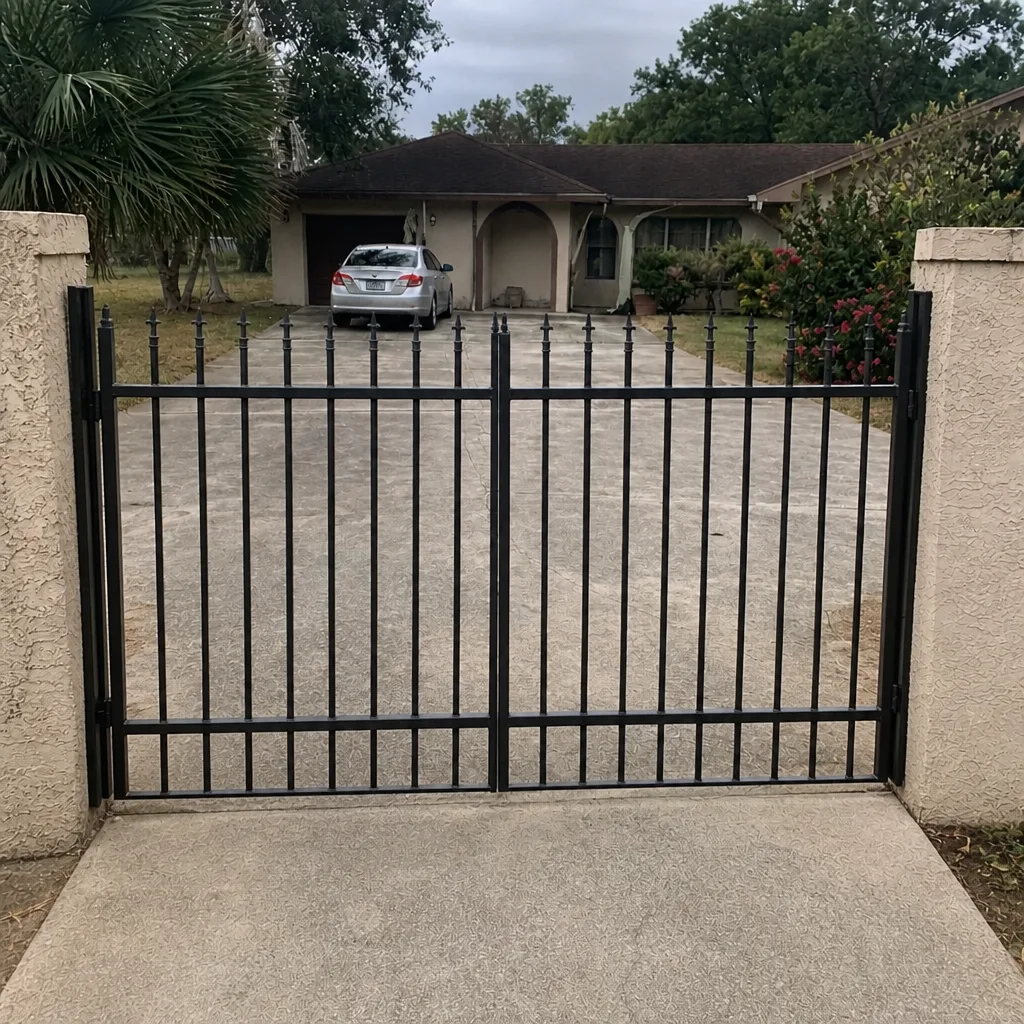
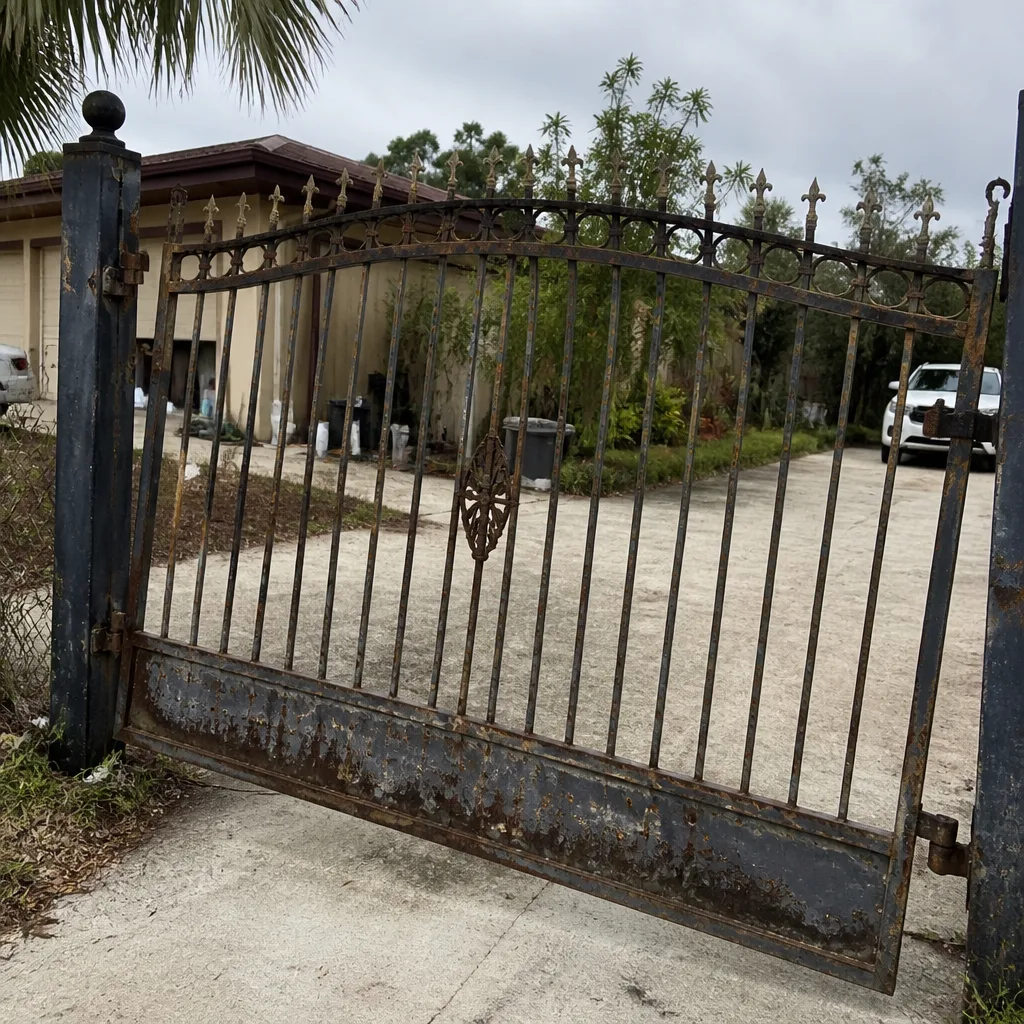
See the difference
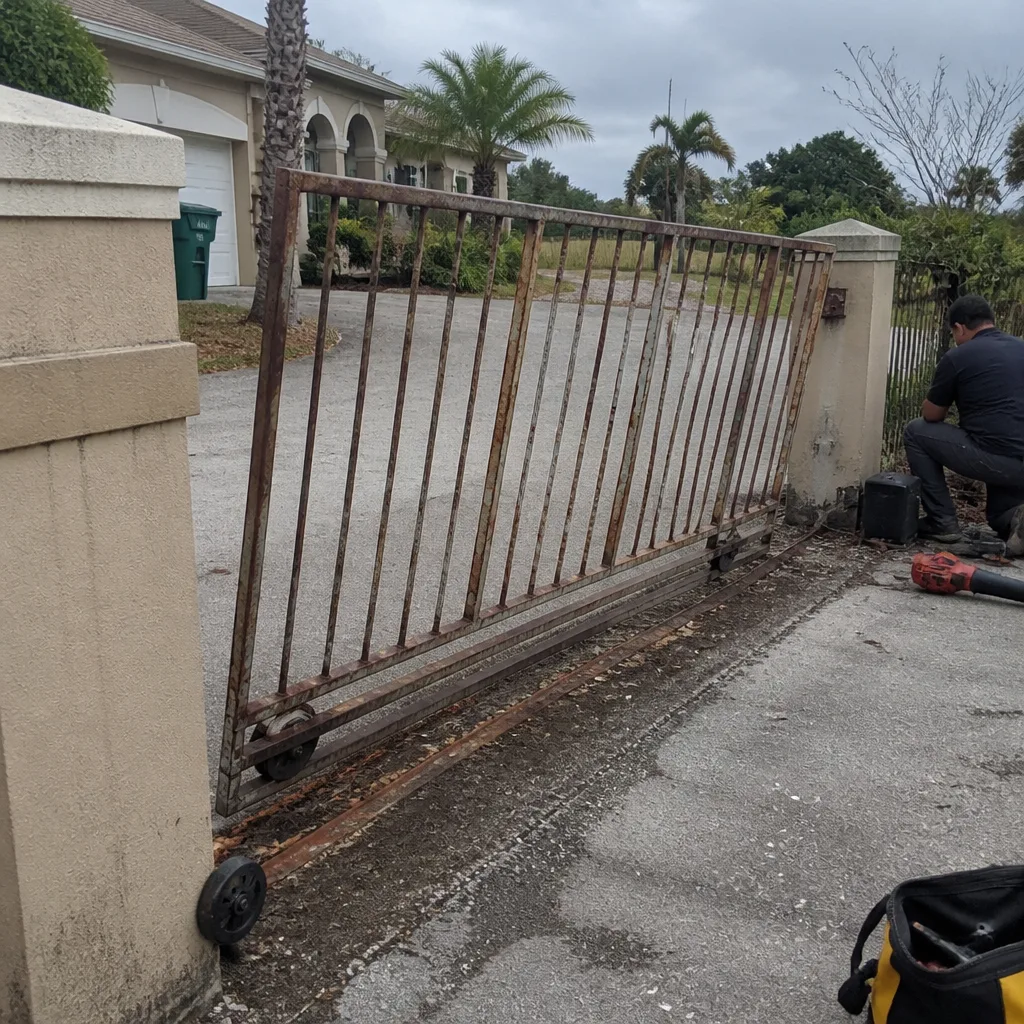 Before
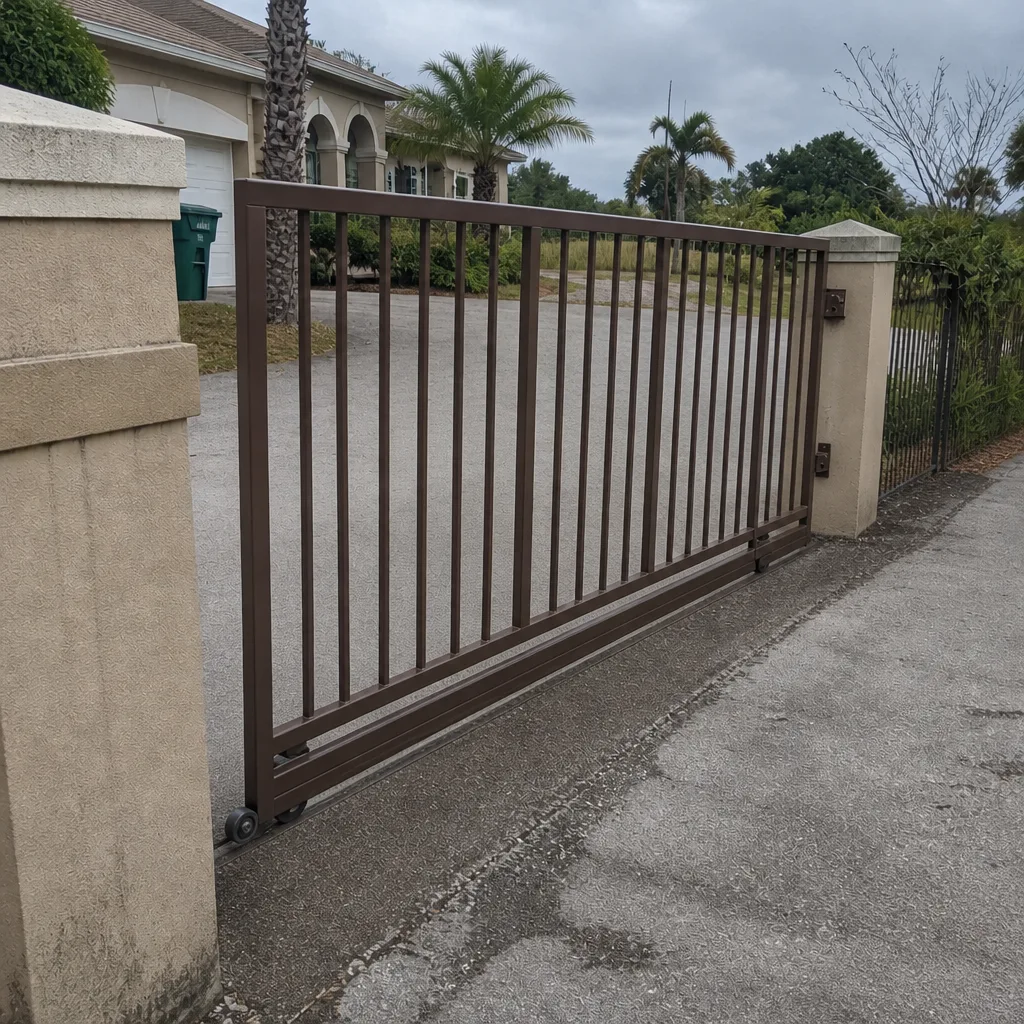 After
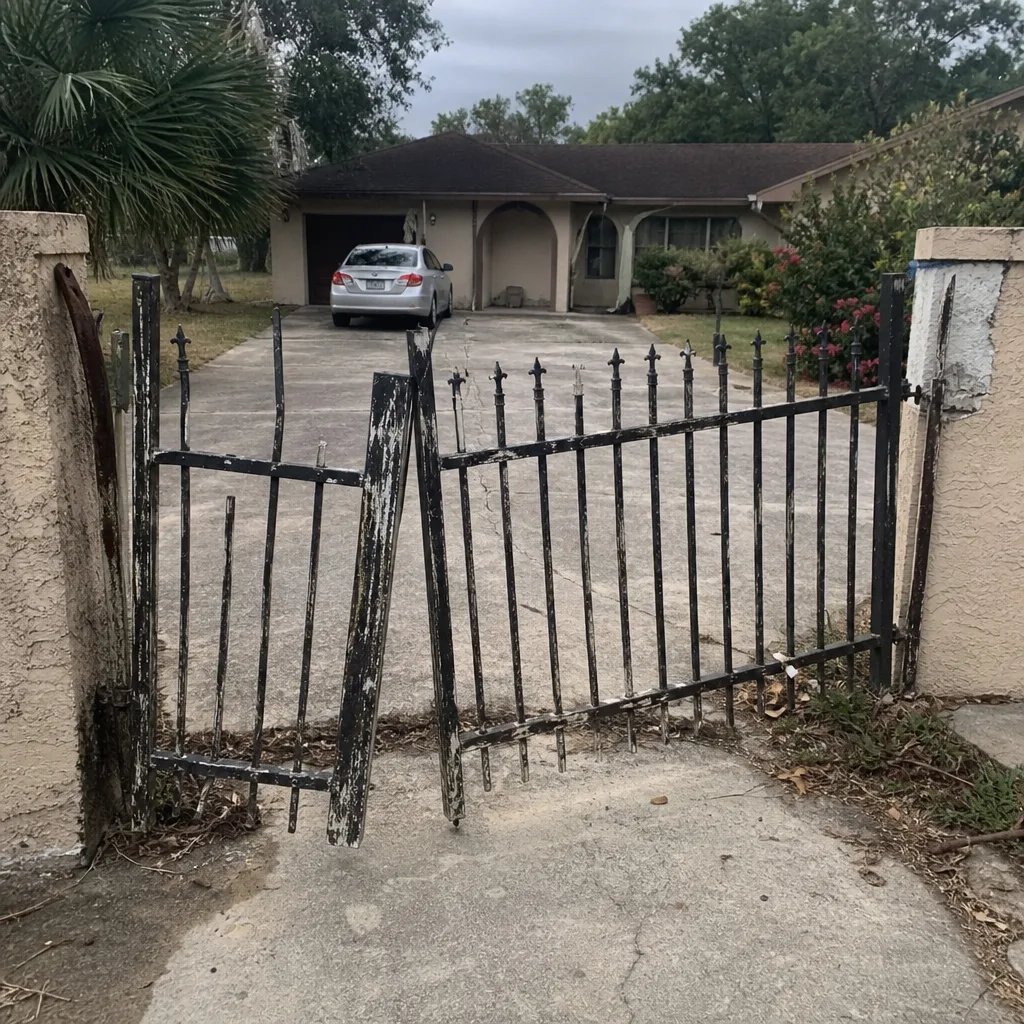 Before
 After
 Before
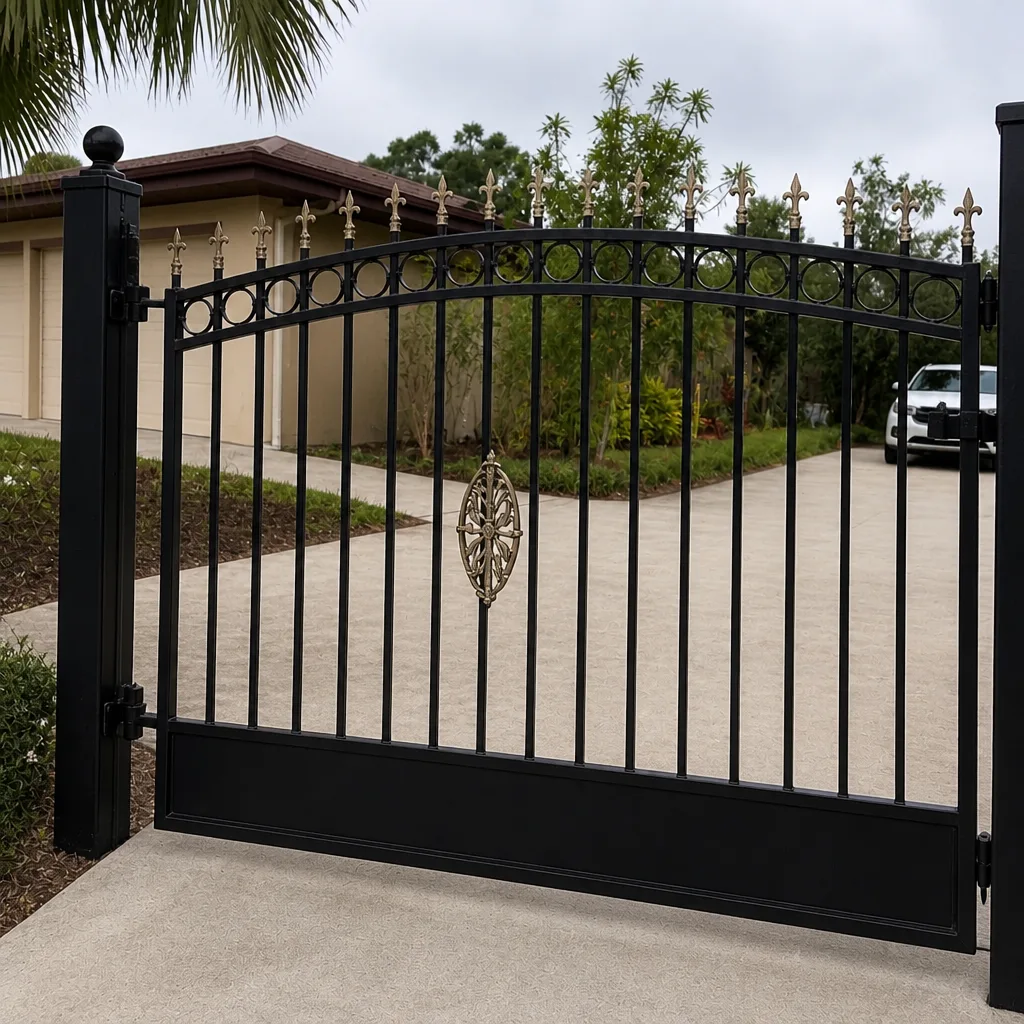 After
When to Call a Professional
Call a professional when a gate’s failure mode is unclear, when the diagnosis suggests structural post work or a new electrical circuit, or when the job requires a permit and you need someone who knows how to pull it. Call us when the gate operates but doesn’t reverse on obstruction, when an HOA-approved replacement is the next step, or when a commercial operator on a DoorKing or BFT system is offline and access control matters. Gates are the only work we do – which means every diagnostic path leads back to the same specialist, not to a generalist looking up a manual. We cover both manual and automated systems, from the motor to the hinge, on the brand you already have. Gate Repair Lehigh Acres offers free estimates in Lehigh Acres – call (888) 361-0704. We answer 24/7. Fast dispatch from 7am to 7pm, Sunday through Friday.
Frequently Asked Questions
Usually no. Repairs that keep an existing gate working – hinge adjustment, photo-eye alignment, operator motor replacement on the same circuit, hardware swaps – don’t require a Lee County permit. Permits typically come into play when the work modifies electrical wiring above a defined amperage, replaces a structural gate post, or changes the gate’s footprint. Call (888) 361-0704 for an exact answer on your specific gate – estimates are free.
Gate repair pricing in Lehigh Acres is set per job by a written estimate, so it depends on the specific failure. A photo-eye alignment or a remote reprogramming is a short job; a motor replacement or control board fault on a LiftMaster or Elite operator runs longer. The estimate is free and the price is quoted and agreed before any work starts – the written estimate sets the final price. Call (888) 361-0704 for a free estimate.
UL 325 is the safety standard Florida inspectors reference for automated gate systems, and it sets the requirements a gate must meet to protect against entrapment. A compliant gate has primary and secondary entrapment protection – typically photo-eyes and a safety edge – plus audible and visual warnings and a manual release. If your gate runs but doesn’t reverse on obstruction, it may be non-compliant. Call (888) 361-0704 for a safety check – estimates are free.
Yes. We diagnose and repair both manual and automated gate systems on the same visit, so a mechanical sag or hinge issue doesn’t require handing your gate off to a separate contractor. Electric or manual, we diagnose it the same day. We cover nine gate brands spanning residential and commercial tiers. Call (888) 361-0704 – estimates are free.
It depends on the repair. Color, material, height, and operator type may fall under HOA design standards, even when the county requires no permit. Hinge adjustment, photo-eye alignment, or track repair typically doesn’t need approval. Replacing a panel, repainting a repaired section to a different shade, or swapping to a louder operator may. Call (888) 361-0704 and we can talk through what your community’s standards likely cover – estimates are free.
Unpermitted gate modifications typically surface during the real estate transaction – through a buyer’s home inspector, a county permit search, or an insurance underwriter asking for documentation. Correcting it after the work is complete often costs more than pulling the permit upfront, because the county may require opening up finished work to verify it. If you’re selling or buying a home in Lehigh Acres with an automated gate, document the permit history before closing. Call (888) 361-0704 for an inspection – estimates are free.
The Bottom Line
Most gate work in Lehigh Acres needs no permit, but a short list of modifications does – new electrical circuits above a defined amperage, structural post replacement, and footprint or opening changes. UL 325 compliance is a separate but overlapping requirement on every automated gate, and HOA design standards sit on top of both. The safe approach is to answer the permit question before the estimate is written. A repair that never needed a permit is easy to close out. A modification that skipped one can complicate a sale, a claim, or an inspection years later.
Repair first, replace only when it makes sense. Nine brands, one specialist. When a gate in Lehigh Acres stops working – or when you need to know whether a fix crosses the permit threshold – the fastest answer comes from a technician who works on gates only. Call (888) 361-0704. We answer 24/7. Fast dispatch from 7am to 7pm, Sunday through Friday. Estimates are free, the price is quoted before any work starts, and the team at Gate Repair Lehigh Acres is ready to help.
Written by the team at Gate Repair Lehigh Acres.