
Last updated November 15, 2026
 Wrought iron
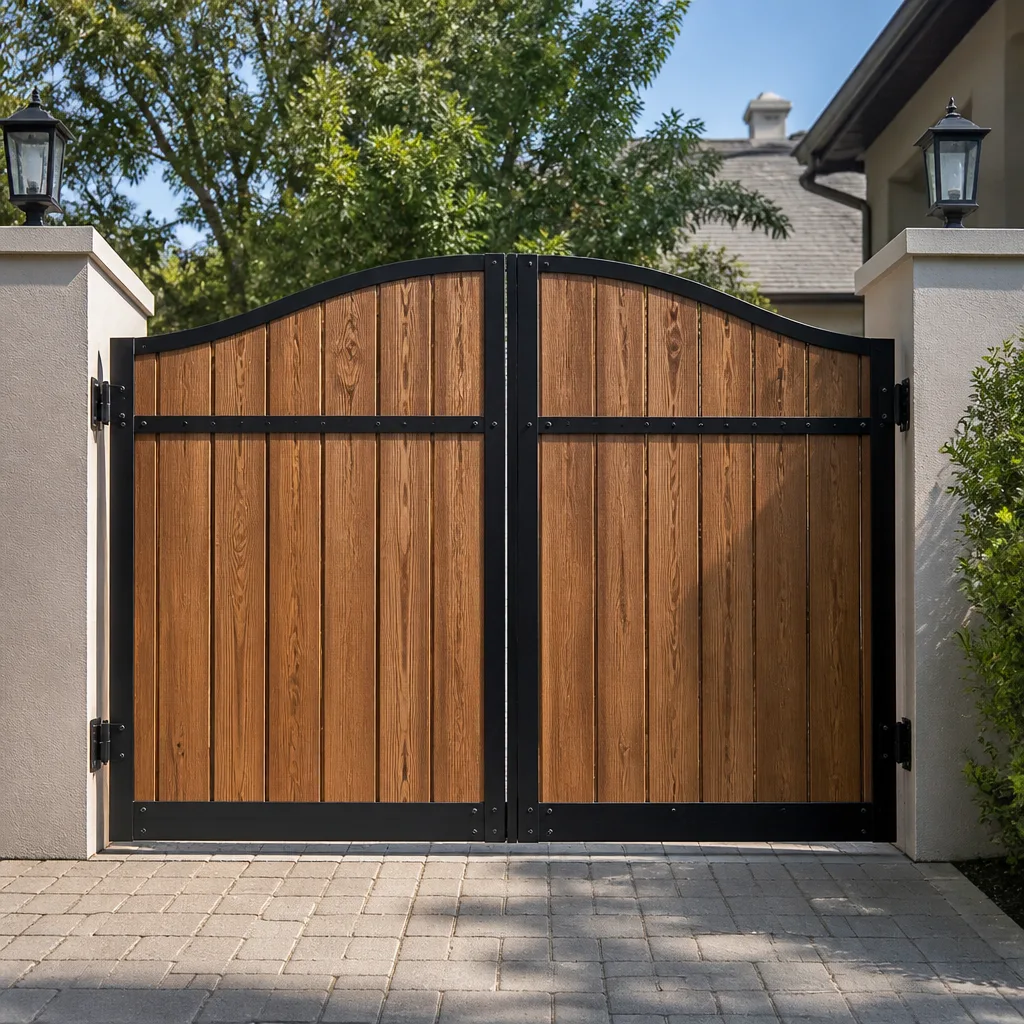 Wood & steel frame
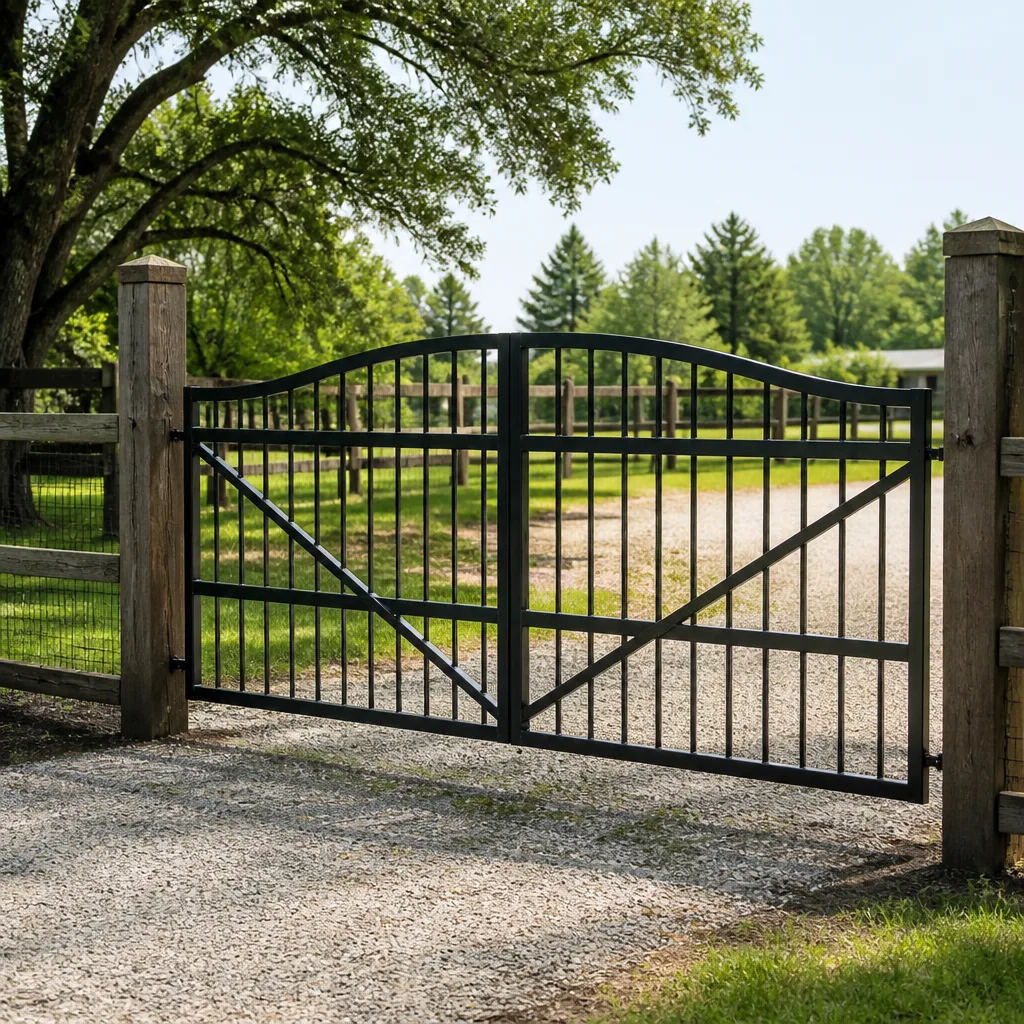 Farm & ranch
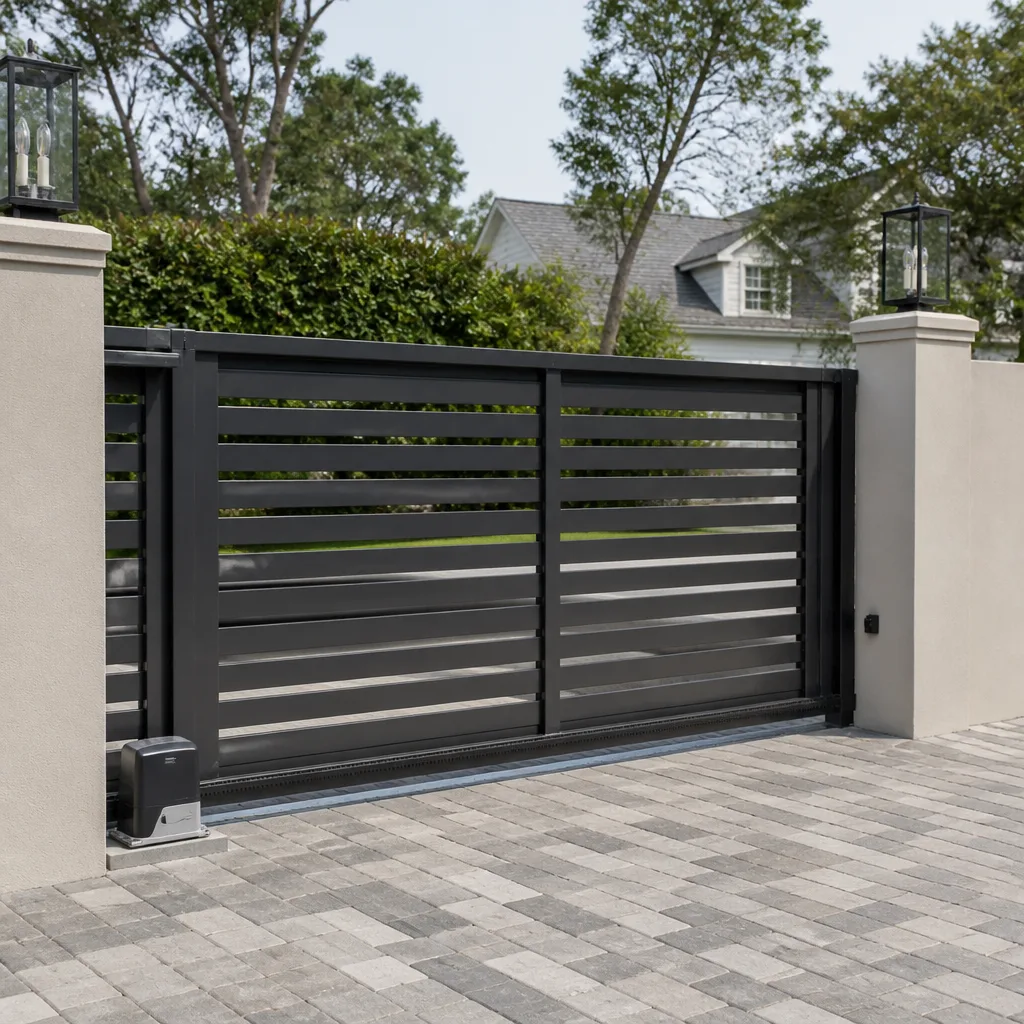 Sliding driveway gates
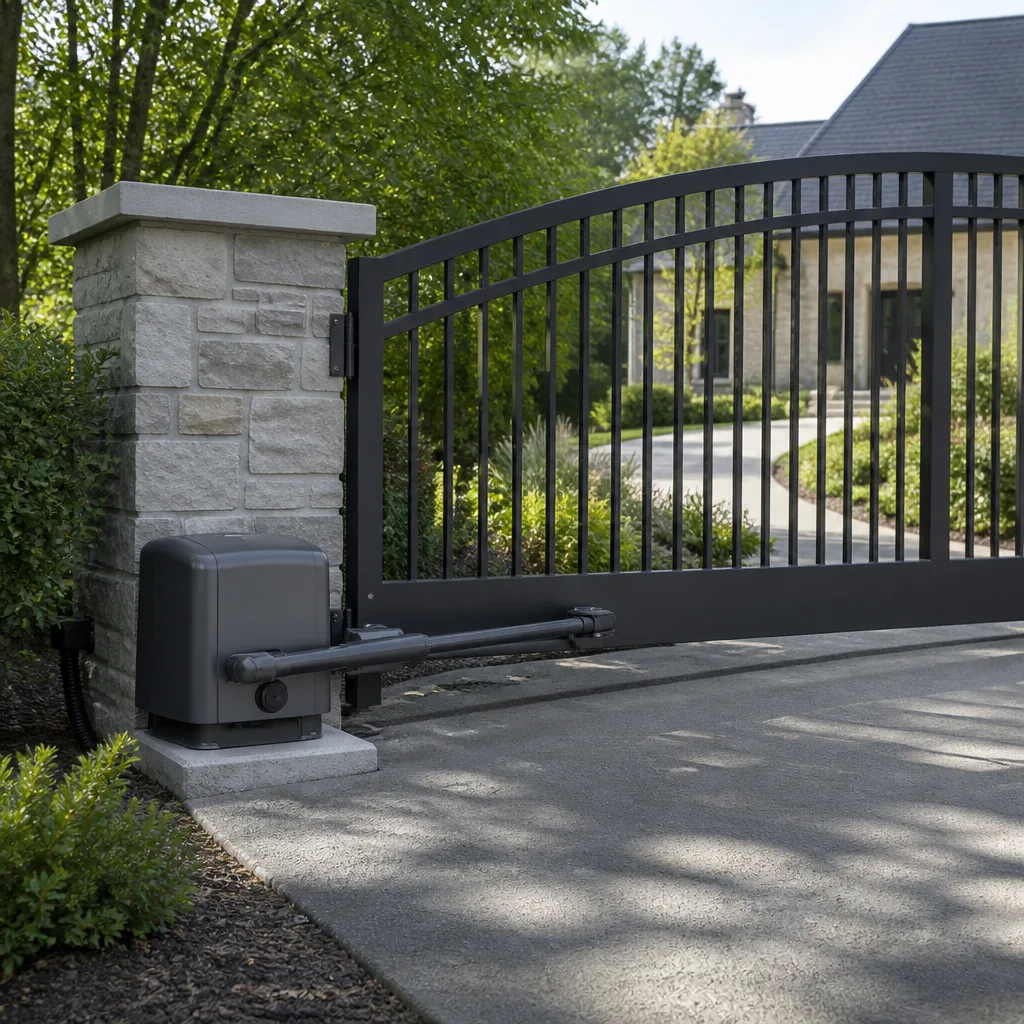 LiftMaster operators
Free on-site gate assessment - hinges, posts, and your LiftMaster or Nice gate operator checked before anything is quoted
The assessment is free and the quote is the invoice.
Get your free estimateSeasonal Gate Repair Care for Lehigh Acres: Year-Round Homeowner’s Guide
Most gate care calendars are built for places with four real seasons, and that advice falls apart in Lehigh Acres. Here the year splits in two: a wet season that works on your gate’s electrical components for months, and a dry season that quietly dries out rubber seals and lubricants until things crack and stick. The maintenance that matters in October isn’t about fixing what broke that month. It’s about catching wet-season wear before the dry months lock it in. This guide lays out the cycle gate owners here actually live through, season by season, plus the hurricane prep steps and inspection sequences that keep a driveway gate working.
Quick Answer
Seasonal gate care in Lehigh Acres runs on a two-season cycle, not four. Prep and waterproof before the wet season (April and May), monitor sensors and buried wiring through the summer storms (June through September), then audit corrosion and electrical connections in October and November so dry-season sun and low humidity don’t turn small wear into a full repair. Hurricane prep, including a manual release test, belongs on the same list.
Styles & brands we work with
- Wrought iron
- Wood & steel frame
- Farm & ranch
- Sliding driveway gates
- LiftMaster operators
Table of Contents
- Why Lehigh Acres Gates Follow a Two-Season Cycle
- Pre-Wet Season Prep: April and May
- In-Season Monitoring: June Through September
- Post-Wet Season Audit: October and November
- Dry Season Risks: December Through March
- Hurricane Preparedness for Gates
- Manual Gates Need Seasonal Care Too
- Common Mistakes to Avoid
Why Lehigh Acres Gates Follow a Two-Season Cycle
If you moved here from a state with hard winters, you probably learned to think about your gate in terms of frost and thaw. That framework doesn’t apply in Lehigh Acres. What we have instead is months of near-daily thunderstorms followed by months of bright, dry, sunny weather, and each half of the year stresses a gate in a completely different way.
The wet season is the electrical season. Rain, humidity and standing water work on control boards, sensor lenses, wiring connections and operator housings. The dry season is the mechanical and material season. Rubber seals shrink, lubricant films thin out, plastic covers get baked by constant sun, and small cracks open into bigger ones.
The reason this matters so much is that the two halves interact. A seal that sat in damp conditions for four months and then dries out hard in December is far more likely to split than one that was cleaned and treated in October. A wiring connection that took on water in August doesn’t always fail right away; it corrodes quietly and shows up as an intermittent fault in January, when you’re least expecting it.
That’s why our Gate Repair Lehigh Acres approach treats the year as two maintenance postures rather than four general seasons. Protect against water first, then protect against sun and dryness. Everything else on this page follows from that split.
What each season actually stresses
- Wet season (June to September): control boards, safety sensors, buried low-voltage wire, operator enclosures, hinges and latch points that hold moisture.
- Dry season (December to March): rubber seals, limit switch covers, lubricants, plastic and poly components, battery backup performance.
- The transition (April, May, October, November): inspection and correction windows, when wear is cheapest to fix.
Pre-Wet Season Prep: April and May
April and May are your window to get ahead of the daily storm cycle. Once the afternoon thunderstorms settle into a routine in Lehigh Acres, water finds every gap you didn’t close, and it finds them over and over. Two months of prep in spring saves a season of problems.
Start with the operator housing and the control box. Check that covers sit flush, that gaskets and weather stripping are intact rather than dried and cracked from the previous dry season, and that cable entry points into the box are sealed. Water follows wire. A loose conduit fitting or an unsealed knockout is a direct path to a corroded control board.
Then check clearances. A swing gate needs room to complete its arc without the bottom edge dragging or the frame clipping a post when the ground softens. A slide gate needs its track clear of debris and its rollers sitting properly, because a gate that runs slightly heavy in dry weather will bind once the ground is saturated. We’ve seen gates that worked fine all winter start stalling in June purely because the soil under a post shifted with the rain.
Lubrication timing matters here. Grease applied in April holds up better through a wet summer than grease applied in June, because a fresh film pushes water off hinge pins and pivot points instead of letting it sit.
Pre-wet season checklist
- Inspect operator and control box gaskets; replace anything brittle or split.
- Seal cable entry points and check conduit fittings for looseness.
- Clear the slide track and check roller height; confirm the swing arc clears the ground.
- Lubricate hinges, pivots, latches and the operator’s mechanical linkage.
- Clean safety sensor lenses and confirm alignment before storm season.
- Test the manual release while the gate is working normally, so you know it moves freely if you need it.
- Look at drainage around the operator and any buried wire run; water should move away, not pool.
Doing this in April means the first real storm of the season tests a gate that’s ready for it, not one that’s still wearing last summer’s damage.
In-Season Monitoring: June Through September
Through the wet season, the question isn’t whether your gate will act up. It’s whether the symptom you’re seeing is a temporary water fault or a real failure, and telling those apart saves you from both panic repairs and ignored damage.
A sensor that trips once during a downpour and works fine the next morning is usually a temporary fault. Water on the lens, condensation inside the housing, or a splash across the photo-eye path can all interrupt the beam briefly. Wipe the lenses, check that nothing has shifted, and see if it repeats. If it only misbehaves during or right after heavy rain, water is the likely cause.
A gate that stops in the same spot every time, or a sensor that stays tripped in dry weather too, points somewhere else. Buried low-voltage wire is the usual suspect. When the water table rises and soil stays saturated for weeks, a nick in the wire jacket or a compromised splice can pass current to ground and give you a fault that looks like a sensor problem but isn’t. That kind of fault doesn’t clear up when the sun comes out. It gets worse.
The practical distinction:
- Temporary water fault: intermittent, weather-linked, clears after drying, often one sensor or one direction.
- Compromised buried wire: repeatable, often worse after rain, sometimes affects the whole operator rather than one sensor, doesn’t resolve with drying.
If you’re not sure which you have, that’s the moment to have it diagnosed rather than to keep resetting the breaker. Our electric gate repair work starts with exactly that separation, because the fix for a wet sensor and the fix for a damaged underground run are completely different jobs.
Operator brands and how they behave in the wet season
Brand logic matters during monitoring season. Residential operators like Linear and Viking tend to show water intrusion through sensor and limit faults first. Heavier commercial-grade units such as FAAC and BFT often hold up better in the housing but are more sensitive to wiring and grounding problems. Knowing which family you’re dealing with narrows the diagnosis fast instead of guessing at parts.
Post-Wet Season Audit: October and November
October is the most important month on this calendar, and it has nothing to do with anything failing in October. It’s the month when four months of moisture is still recent enough to correct and the dry season hasn’t yet baked that damage into permanent wear. Miss it, and a small corrosion issue becomes a component replacement.
Run the audit in a fixed sequence, because the order matters. Electrical first, mechanical second, materials last. Here’s the sequence we use:
- Open the control box and look for moisture evidence: water lines, mineral deposits, discolored terminals, any green or white corrosion on connections.
- Check every exposed connection and terminal screw for tightness and corrosion; a damp summer loosens and oxidizes more than homeowners expect.
- Inspect the operator housing and gaskets for what the wet season did to them, and note anything that needs replacing before next spring.
- Test the safety sensors and the manual release while everything is dry, so you’re testing the equipment and not the weather.
- Inspect hinges, pivots, latches and the gate frame for rust starting at welds, scratches and the bottom edge where water sat.
- Check the battery backup under load; a battery that limped through the wet season is more likely to fail in the dry months.
- Clean and re-lubricate every moving point, which also displaces any moisture still sitting in the joints.
This is the single highest-value hour of gate care in the Lehigh Acres year. Catching corrosion in October is a cleaning and re-sealing job. Catching it in February, after the dry months have pulled moisture out and left the corrosion sitting tight against the metal, is often a parts job.
Dry Season Risks: December Through March
Once the storms stop, the risks change character. Humidity drops, the sun stays strong, and materials that spent the summer damp now dry out hard. Two things fail most often in this stretch.
The first is rubber and plastic. Limit switch covers, gasket seals, sensor housings and wire insulation all take constant UV through the dry months. Rubber that stayed pliable in humid air can dry, shrink and crack. A cracked limit switch cover lets water straight into a switch the following June, which is how a dry-season material failure becomes a wet-season electrical fault six months later. When you’re inspecting in December and January, look specifically at covers and seals on the operator and on any outdoor sensor, not just at whether the gate is moving.
The second is battery backup. Lower humidity and cooler nights affect battery performance, and a battery that was already weak after a summer of outages tends to show it clearly in the dry season. If your gate loses its position, forgets limits, or won’t run when power blips, test the battery before assuming the operator is failing. Many “dead operator” calls in the dry season are battery calls.
Lubrication frequency drops in dry weather, but it doesn’t stop. A light film on hinges and pivots keeps dust from binding them and keeps seals from drying out entirely.
Hurricane Preparedness for Gates
A gate is one of the few exterior systems on a Lehigh Acres property that you can physically prepare for a named storm, and most homeowners skip it. Three things deserve attention before a storm arrives.
Test the manual release. This is the one that matters most. Every automated gate has a manual release so it can be moved when there’s no power. Test it in calm weather, confirm the gate swings or slides freely by hand, and then put it back into normal operation. A release that’s seized from corrosion is useless in a storm when you need to open the gate without power, and a gate stuck shut can block access for you or for anyone who needs to reach the property afterward. If the release won’t move, that’s a repair to schedule now, not during a storm warning.
Identify tie-down or securing points. For swing gates, know which position you’ll leave the gate in and how you’ll secure it so wind can’t catch a panel and swing it against its stops. For slide gates, understand how the gate sits on its track and whether it needs to be secured in the open or closed position. Loose gates become projectiles.
Disconnect and secure before the storm. If a storm is coming, putting the operator into manual mode and securing the gate physically protects both the gate and the motor. Confirm the control box is properly sealed beforehand, since hurricane rain finds any gap.
Hurricane prep overlaps almost entirely with your wet-season and dry-season checklists. If you’ve done the April waterproofing and the October audit, you’re already most of the way there.
Manual Gates Need Seasonal Care Too
Manual gates skip the electrical problems but not the climate. Without an operator, the wear concentrates on the mechanical side: hinges, pivot points, latches, the frame and the ground contact points.
In the wet season, a manual gate’s main enemy is moisture sitting in hinges and latch hardware, which corrodes quietly. In the dry season, dried-out pivot points and a frame that has shifted slightly with soil movement under a post show up as a gate that drags, sticks or won’t latch cleanly. The fix is usually adjustment and lubrication, done before the drag becomes a bent hinge or a broken latch.
The same October window applies. Clean the hinges, treat the rust, re-lubricate, and check that the gate still swings true against its posts. It’s a short job that keeps a manual gate out of the repair shop.
Common Mistakes to Avoid
- Treating the year as four seasons. Spring, summer, fall and winter advice written for northern climates doesn’t match how Lehigh Acres weather actually stresses a gate. Build your calendar around wet and dry, not around frost and thaw.
- Skipping the October audit. The wet season leaves its damage in place and the dry season sets it. Waiting until something stops working turns a cleaning job into a parts job, and October is the cheapest month to catch it.
- Assuming every sensor fault is a sensor. In Lehigh Acres, a repeatable sensor-style fault after heavy rain is often a compromised buried wire or a water entry into the control box. Replacing the sensor without testing the wire solves nothing and costs money.
- Ignoring gaskets and covers until they fail. Seals and covers are cheap and easy to replace in April. The control board they protect is not. Inspect both in spring and again in the dry months when UV has had its way with them.
- Never testing the manual release. A release that has never been moved can seize quietly over a season. Testing it in calm weather is the only way to know it will work during a storm or a power outage.
- Blaming the operator for a battery problem. Dry-season failures in particular often trace to a battery that didn’t recover from the wet season. Test the battery before replacing hardware.
- Over-lubricating in dry weather. More grease isn’t better. A heavy layer in the dry season collects dust and grit, which wears hinges and pivots faster than a thin film would.
See the difference
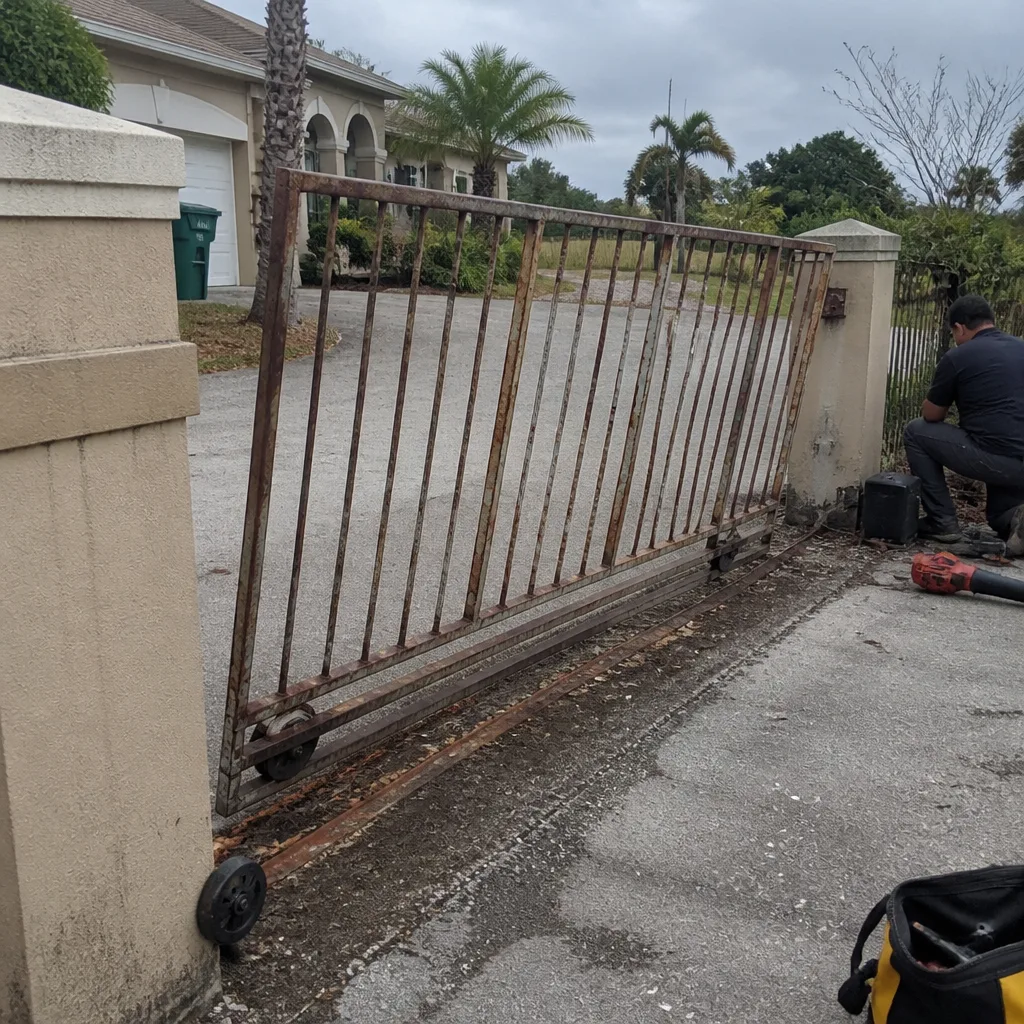 Before
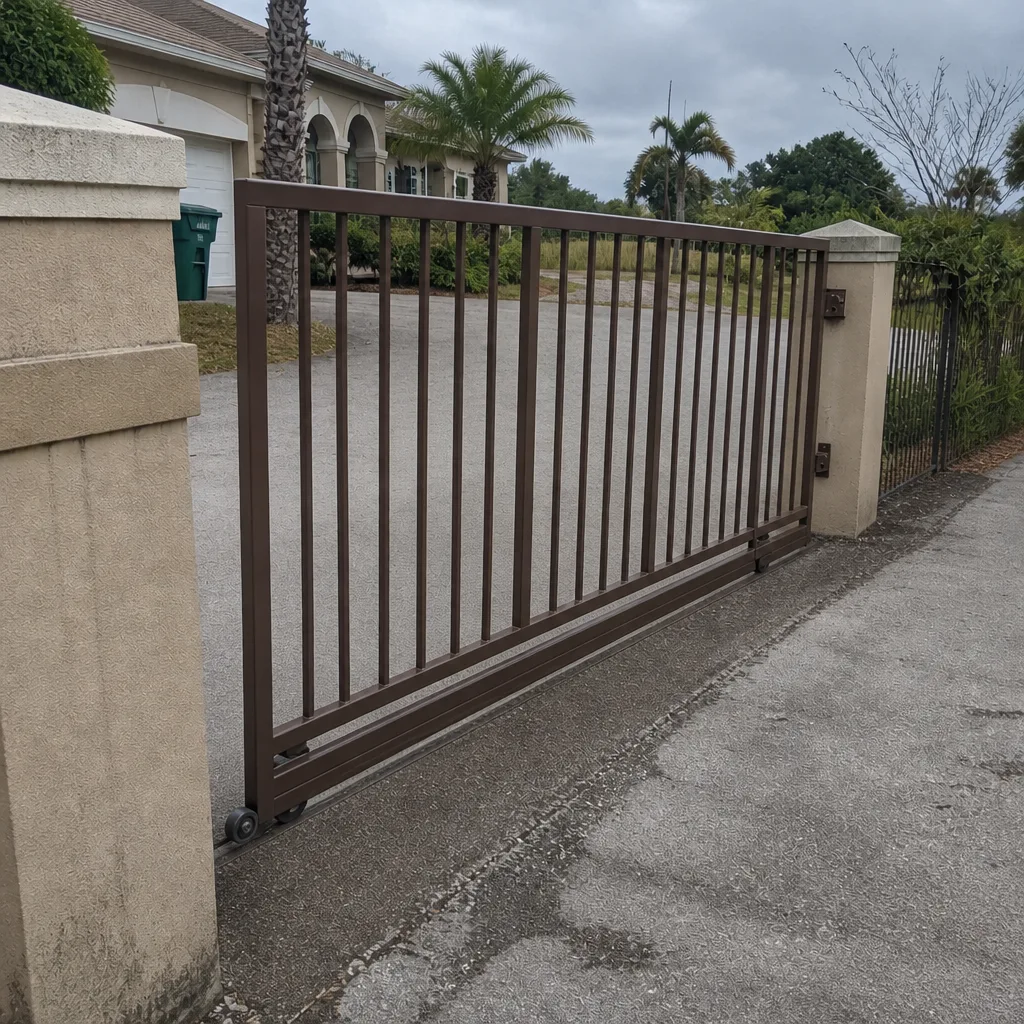 After
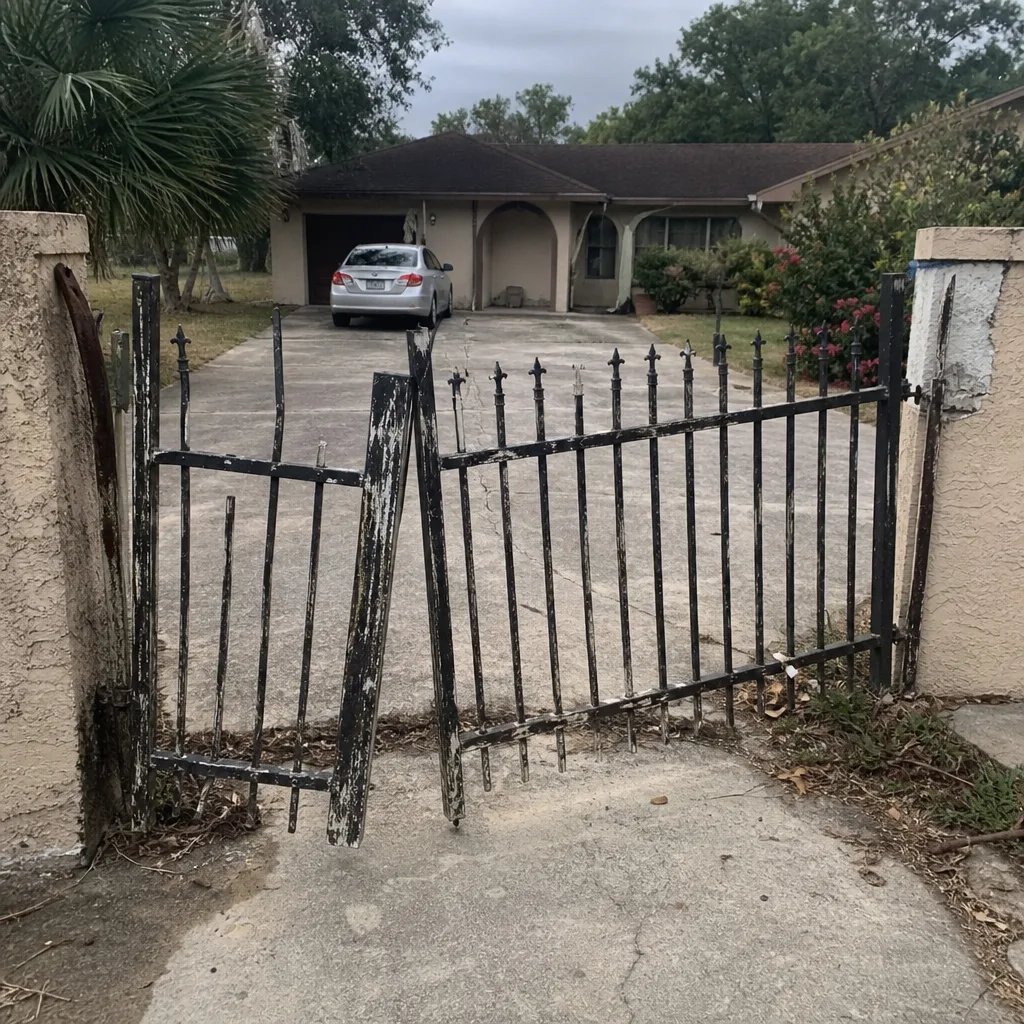 Before
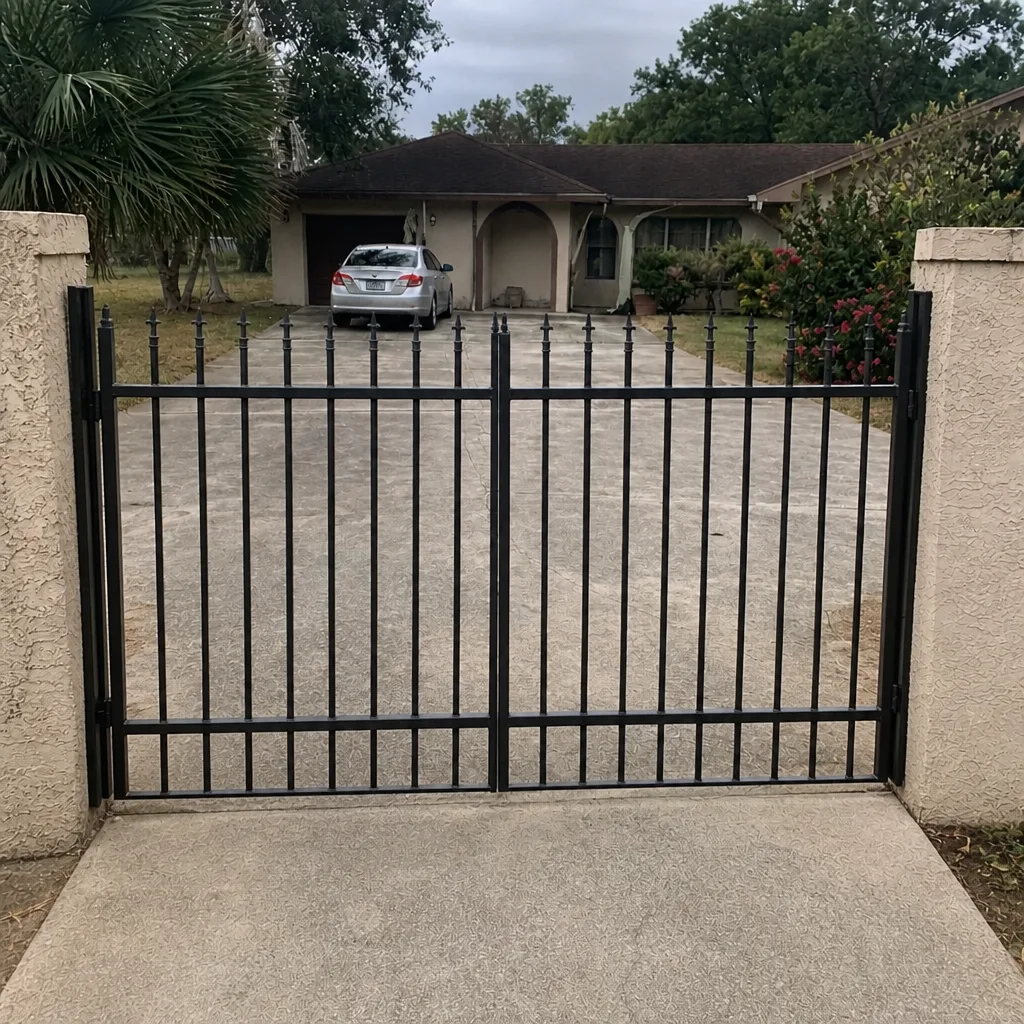 After
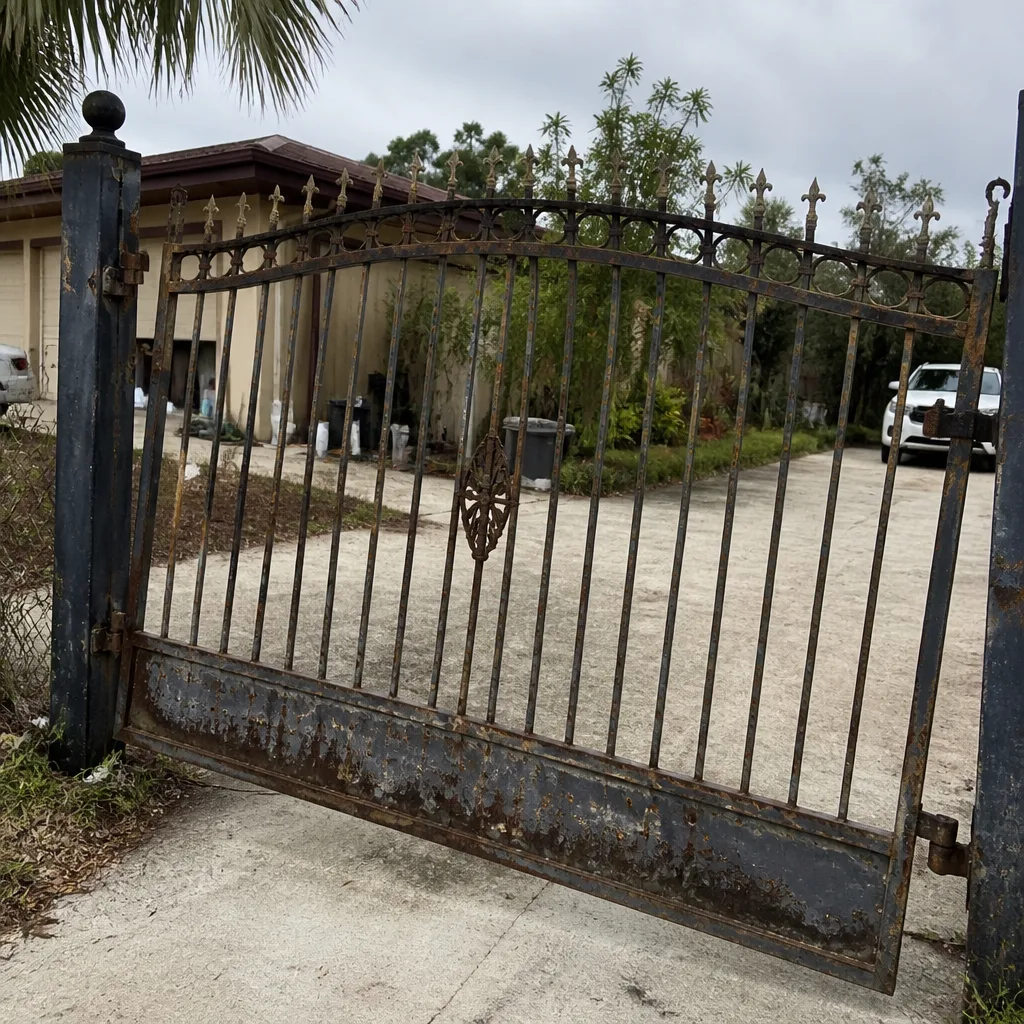 Before
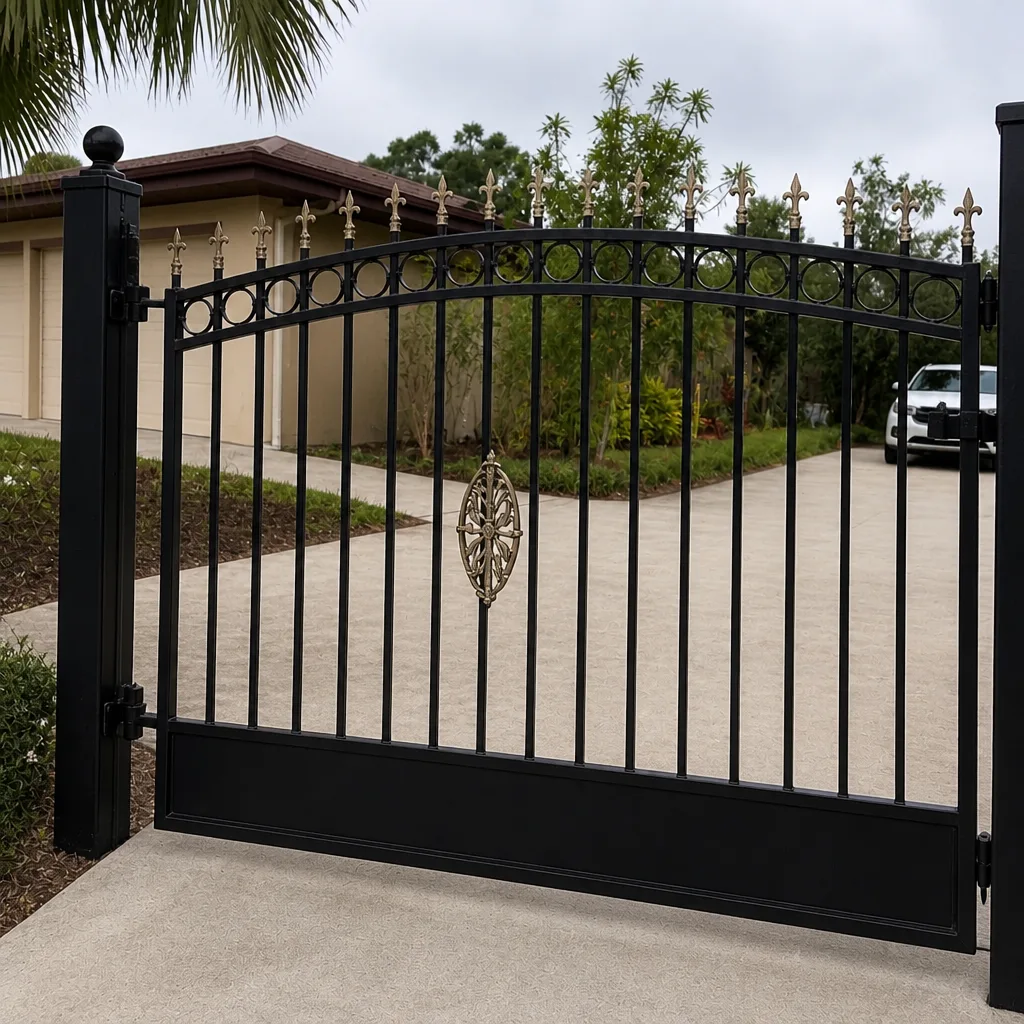 After
When to Call a Professional
Some seasonal care is well within reach of a homeowner with a checklist. Some of it isn’t, and knowing where that line sits protects both your gate and your safety.
Call us when the gate stops in the same place repeatedly, when a sensor fault survives dry weather, when you have moisture inside a control box or corrosion on terminals you can’t safely clean, or when a manual release won’t move. Call when a gate stalls, binds or drags after the ground has shifted, and call before the dry season if the October audit turns up anything you’re not confident fixing yourself. Electrical work inside an operator isn’t a task for guesswork; wiring and power at an automated gate are genuinely dangerous, and a trained technician should handle them.
Gate Repair Lehigh Acres offers free estimates in Lehigh Acres – call (888) 361-0704. Call (888) 361-0704. We answer 24/7. Fast dispatch from 7am to 7pm, Sunday through Friday.
Frequently Asked Questions
October. That’s when you address wet-season damage before the dry season sets it into permanent wear. The full audit, run in October, catches corrosion, moisture and electrical problems while they’re still cheap to correct.
Pricing is set per job by the written estimate, and you’ll get a clear figure before any work starts. The cost depends on whether the visit is a check, an adjustment or a repair. Call (888) 361-0704 for an exact quote – estimates are free.
Yes. Manual gates skip electrical problems but still take on moisture in hinges and latches during the wet season, and drying and soil movement in the dry season cause dragging and misaligned latches. Lubrication, adjustment and a spring and fall inspection cover most of it.
Water is the usual cause. Wet sensor lenses, condensation in the housing or a saturated buried wire can all trip a sensor. If the fault clears after drying and only appears with rain, it’s likely temporary. If it repeats consistently with no change in weather, it’s worth diagnosing the wiring.
Test the manual release in calm weather, identify how you’ll secure the gate so wind can’t swing or push it, and confirm the control box is sealed. Before the storm, put the operator into manual mode and secure the gate physically.
It does. Constant UV dries and cracks rubber seals, gaskets and limit switch covers, and lower humidity affects battery backup performance. Inspecting covers and testing the battery in December and January prevents failures later.
The Bottom Line
Gate care in Lehigh Acres runs on a two-season clock, and the transition months do the most work. Prep and waterproof in April and May, watch for water and wiring faults through the summer, and run the full audit in October before the dry season sets the damage in. December through March belongs to seals, covers and battery backup, and hurricane prep belongs on the same list every year. Get the calendar right and most gate problems stay small, predictable and cheap. Skip it and the same problems arrive as failures. Our technicians have up to 14 years of experience across nine gate brands, from residential operators to commercial systems, and we handle manual and automated gates alike. If your gate is due for its seasonal check, or something already looks wrong, call (888) 361-0704 for a free estimate. We answer 24/7, with fast dispatch from 7am to 7pm, Sunday through Friday. You can also see our gate repair work and learn more about the Lehigh Acres area we cover.
Written by the team at Gate Repair Lehigh Acres.